
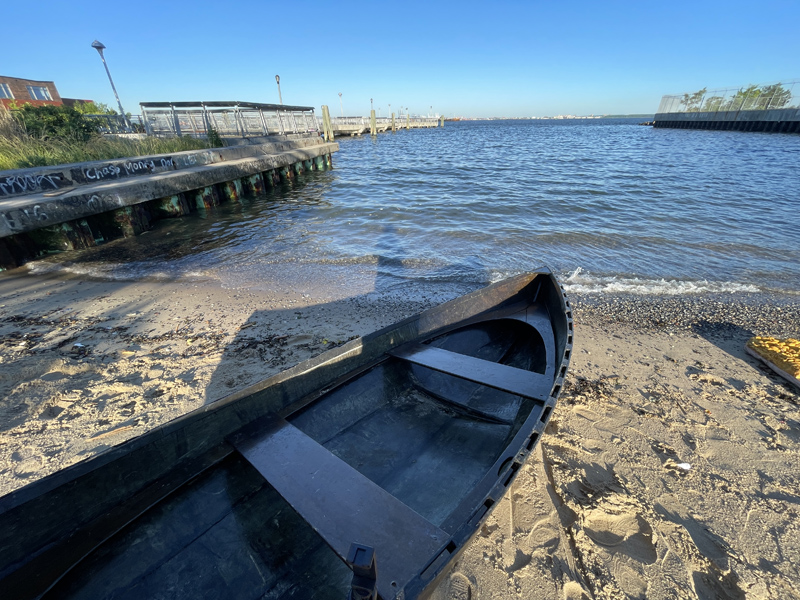
I met Sarah Yoes and Jordan Greenblatt at Valentino Pier in Red Hook and we launched into Gowanus Bay.
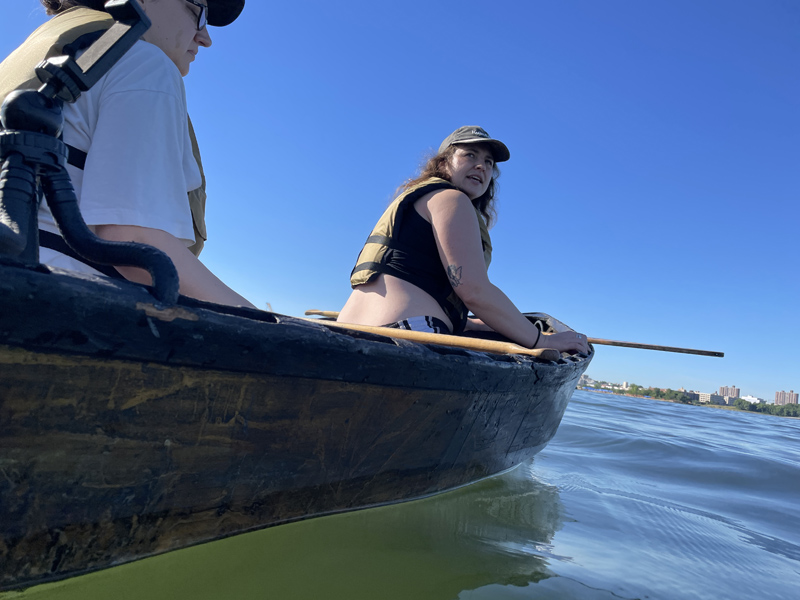
Out in the middle of the bay we were a mile from either shore, farther out than the Tide Taxi usually goes.
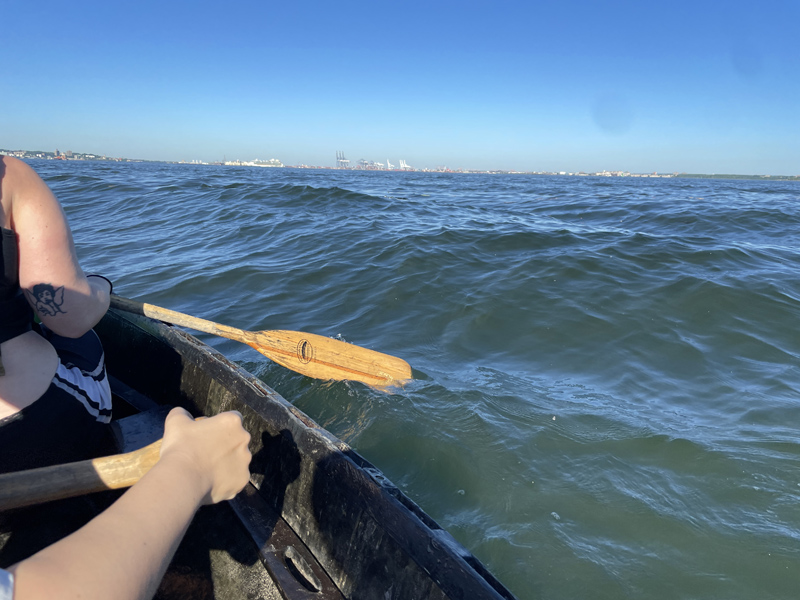
But the day was unusually flat and calm, and we stopped to enjoy the open space.
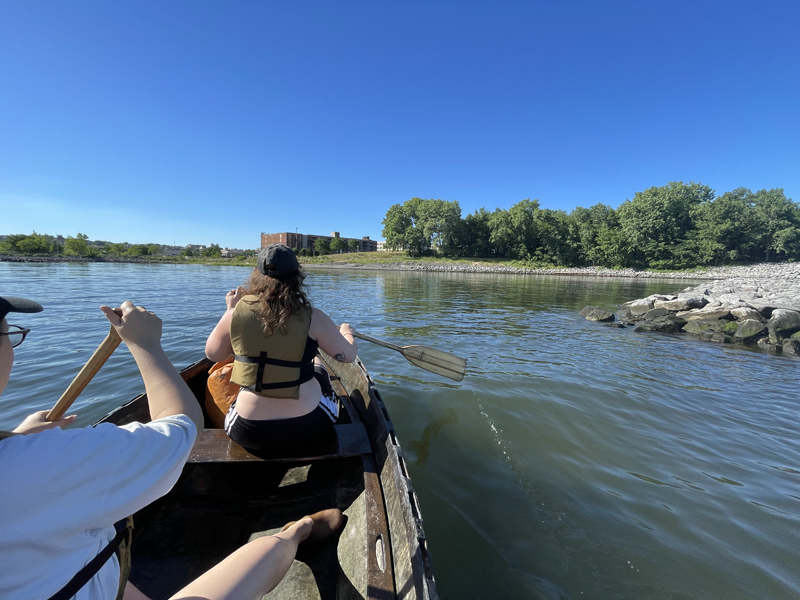
Our destination was the new beach at Bush Terminal, a park made from the old Industry City piers.

These piers were once a great center of manufacturing and shipping in Brooklyn. An advertisement from 1902 boasts “1,400-foot piers, 27 steamship lines, and every known storage facility.” (image from NYC Municipal Archives)

But by 1970 the piers had been left to rot, and the basins between them were filled with construction debris. (image from Brooklyn Public Library)

After years of community organizing, partnerships with the New York City Economic Development Corporation and the State Department of Environmental Conservation, and the largest brownfield cleanup grant in state history, a new park opened to the public in 2014. (photo from Bush Terminal Park’s website)
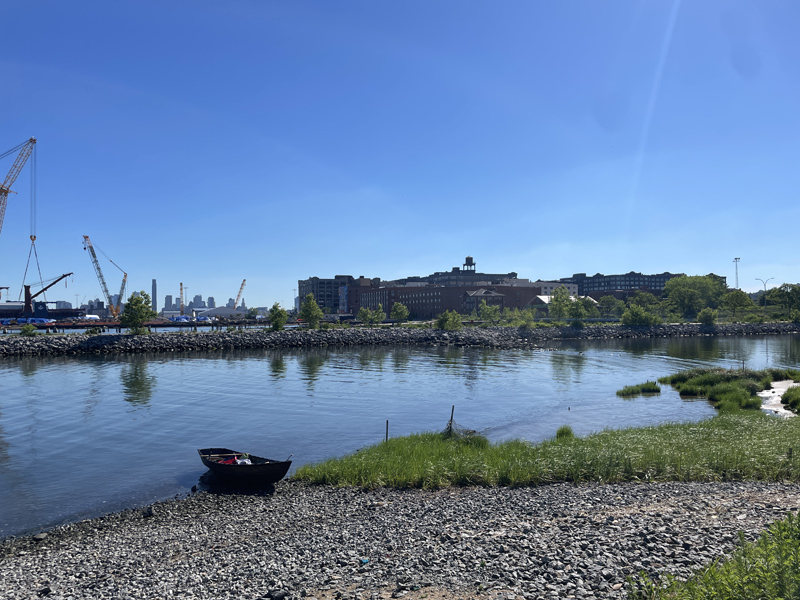
We drifted past a rocky breakwater separating the bay from the inlet and found a landing spot.
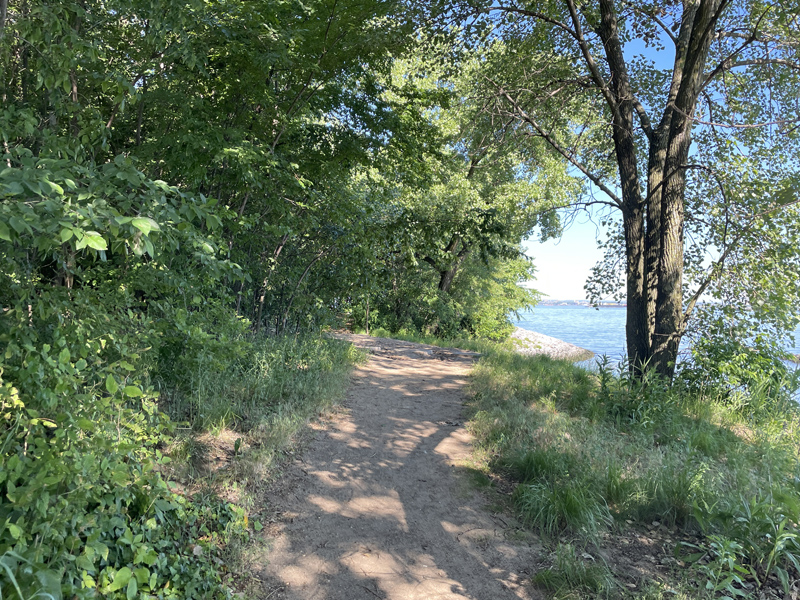
Jordan and Sarah were the perfect crew to read these newly constructed lands; they are designers at WXY, a firm that works on public space.

Jordan pointed out the edible plants along the shore, and I tried to sample everything.
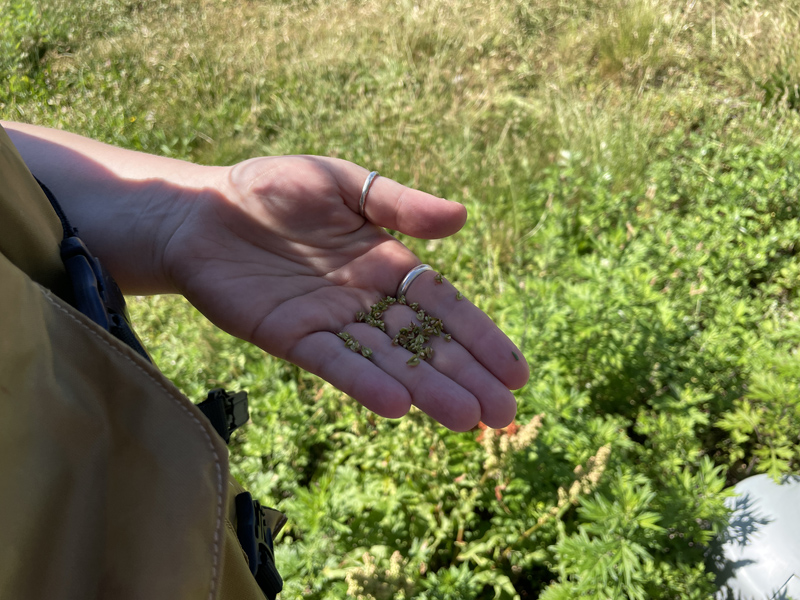
“This is a grain related to quinoa,” said Jordan. It was green tasting and deliciously bitter.
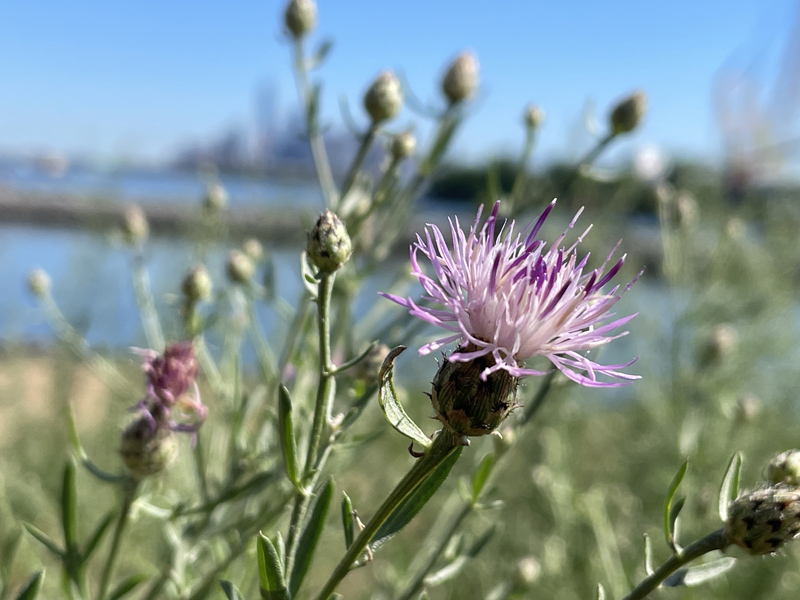
Jordan pointed out perfect tiny artichokes beneath each thistle flower.

We got back in the boat and paddled along the piers.

We saw the pieces of an enormous windmill, staged out and being loaded onto a ship.

Sarah described the ‘cyborg landscape’, an idea discussed in urban planning and architecture circles.
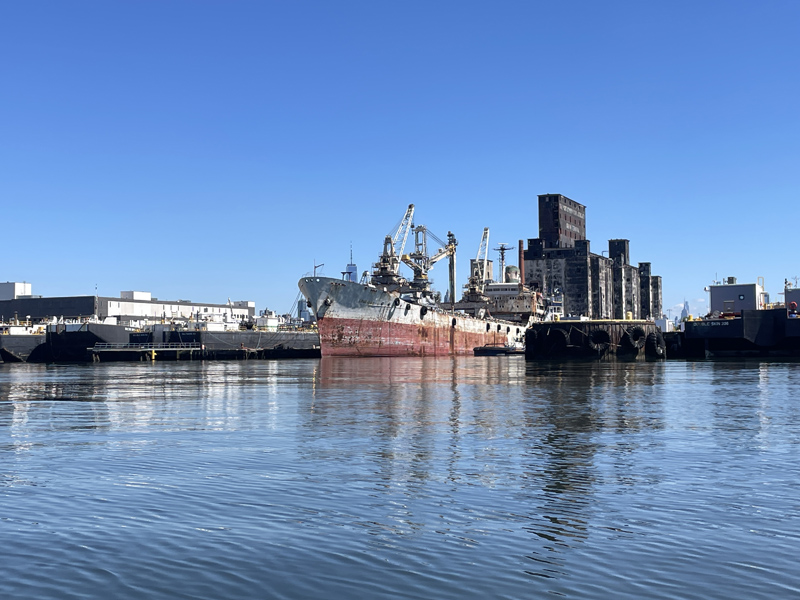
It refers to a place like the NYC waterfront, where you can no longer separate the natural from the engineered,

where tide ponds are built from chunks of broken-off highway and planted forests grow out over disused shipping terminals.

All the buried industry and fresh wind-energy components are part of one hybrid body, an interdependent system where living and non-living elements evolve together…
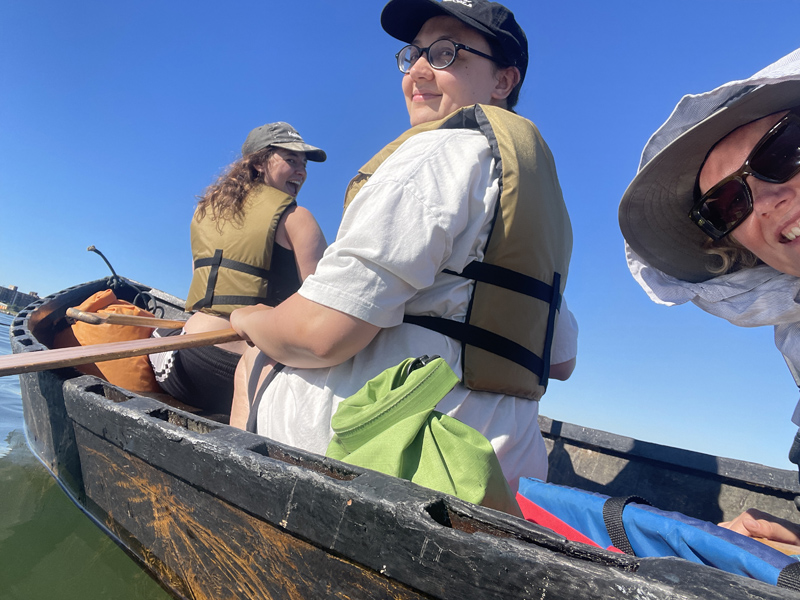
“You should write this book!” I said. “Somebody may already be working on it,” she laughed.

We were joined for the last leg into the Gowanus by Andrew Hammill, who is curating a show this month about water at 198 Gallery in Brooklyn.
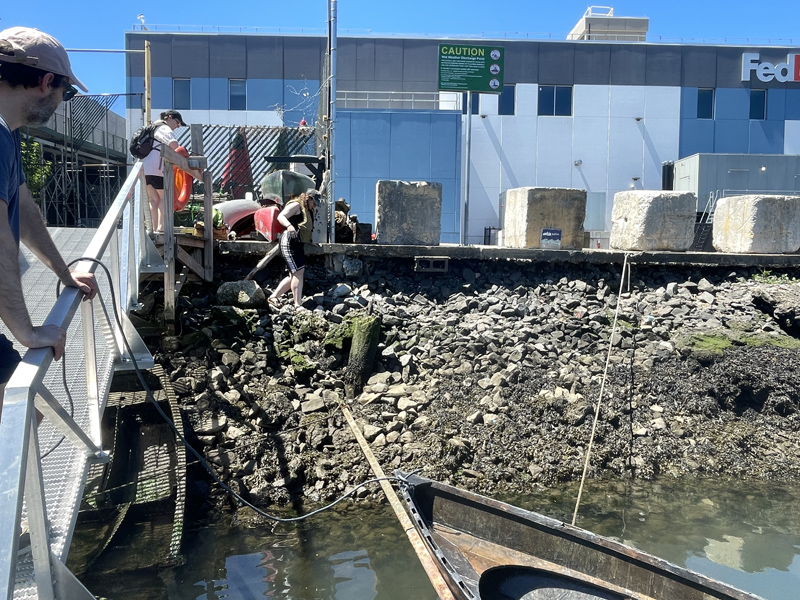
For the show, he designed a beautiful moving map of water from the land to the harbor, based on Eymund Diegel’s historical flow-field visualizations.
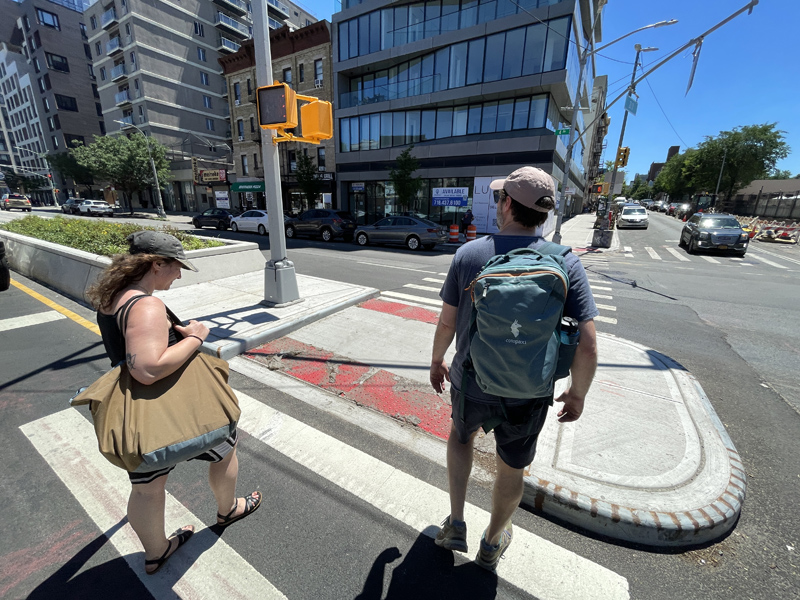
We walked up into the neighborhood and talked about the water that must be flowing there now, deep beneath the street.

Here’s my video from the show, which shows more of the trip!
↑ Return to Top of Page ↑