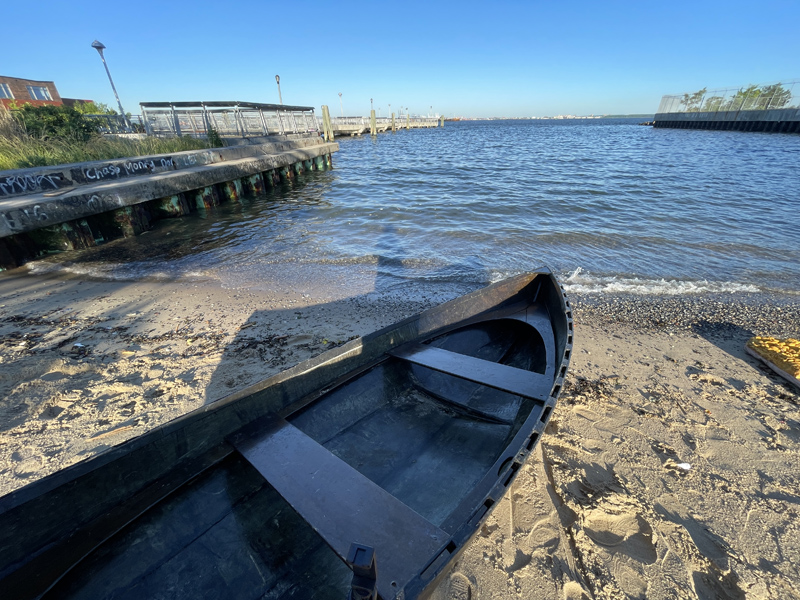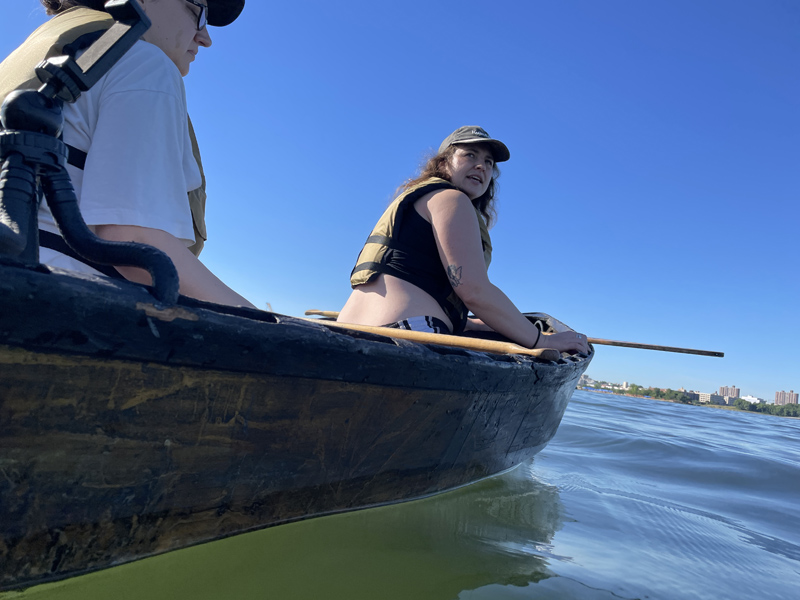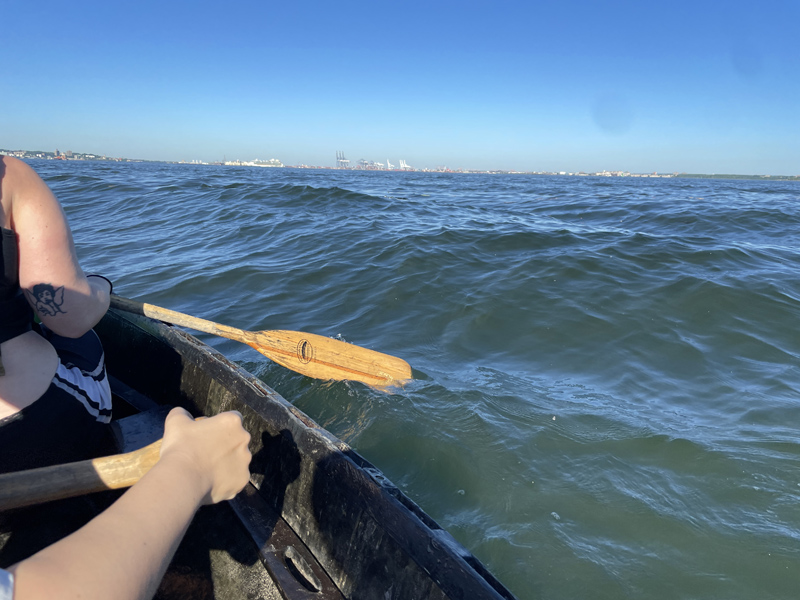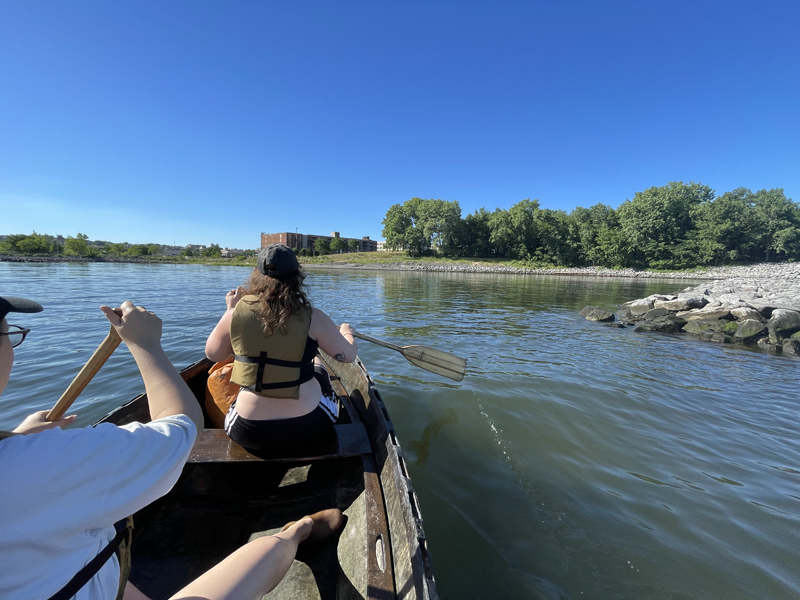
Mussel Island with Priscilla Stadler

June 18, 2026

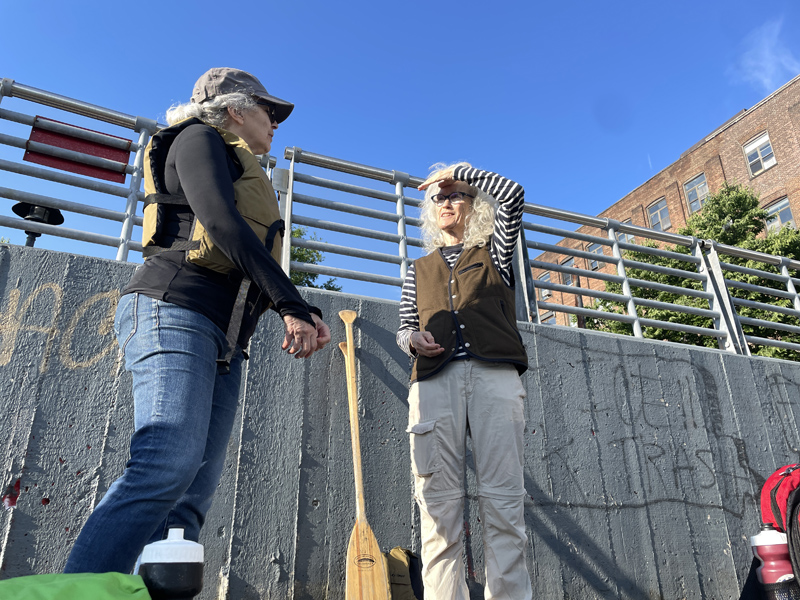
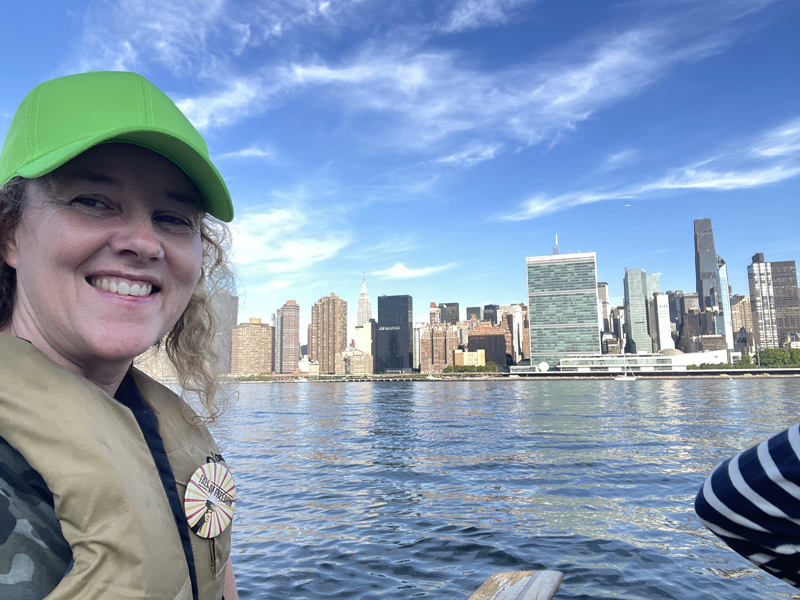
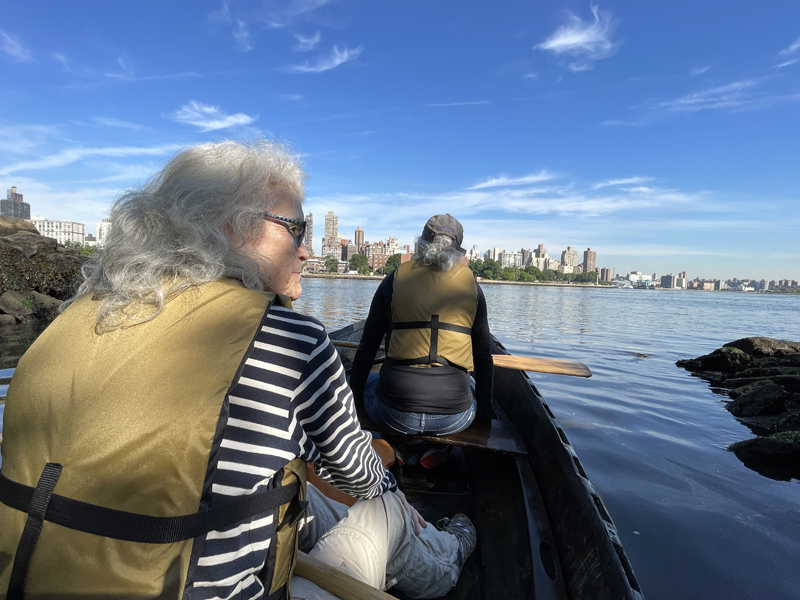
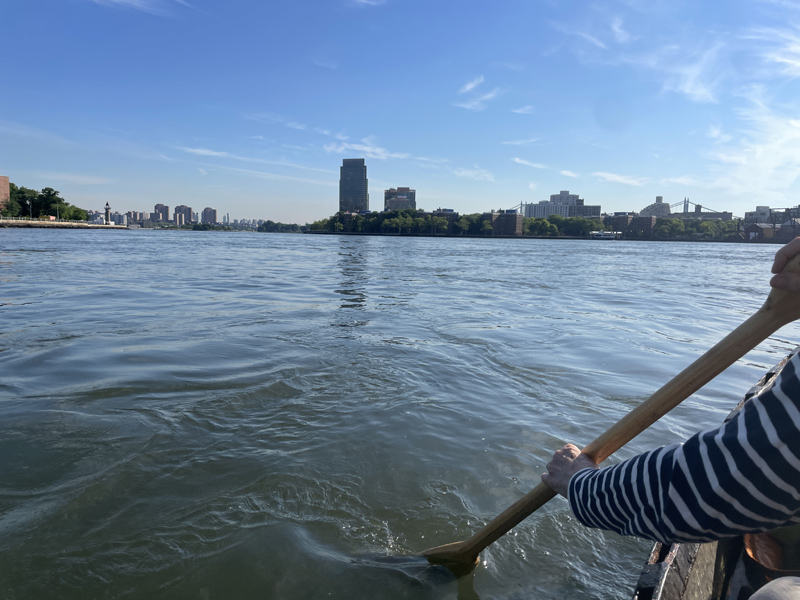
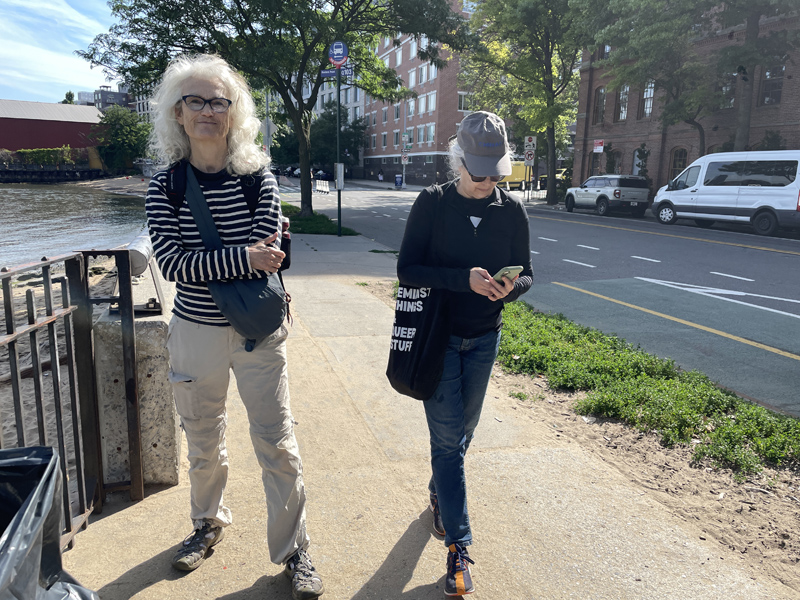
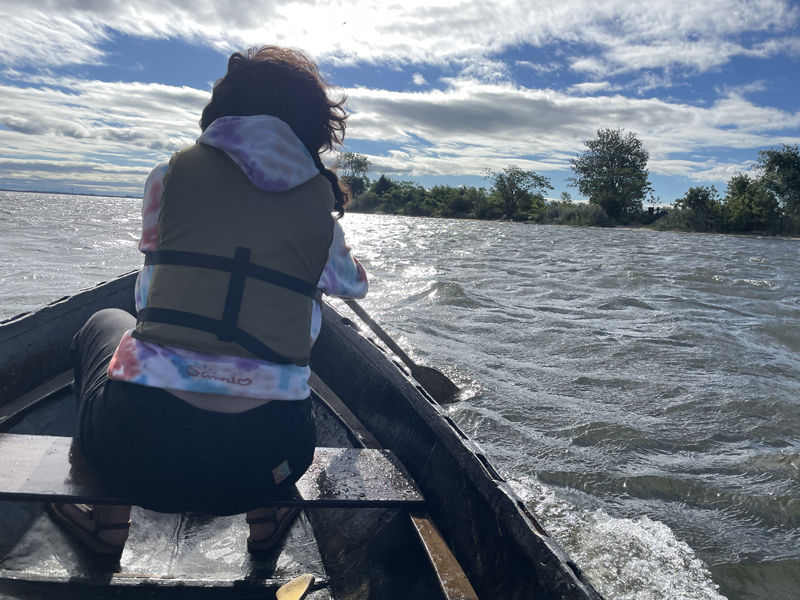
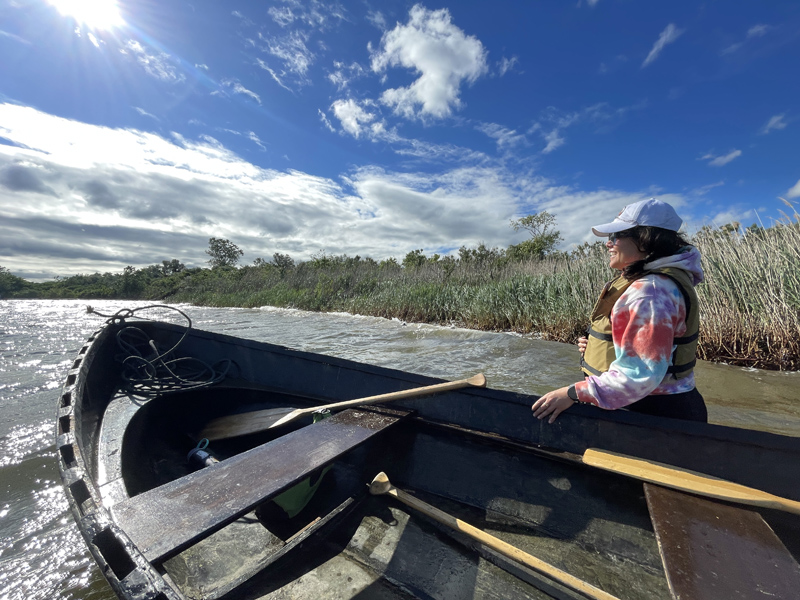
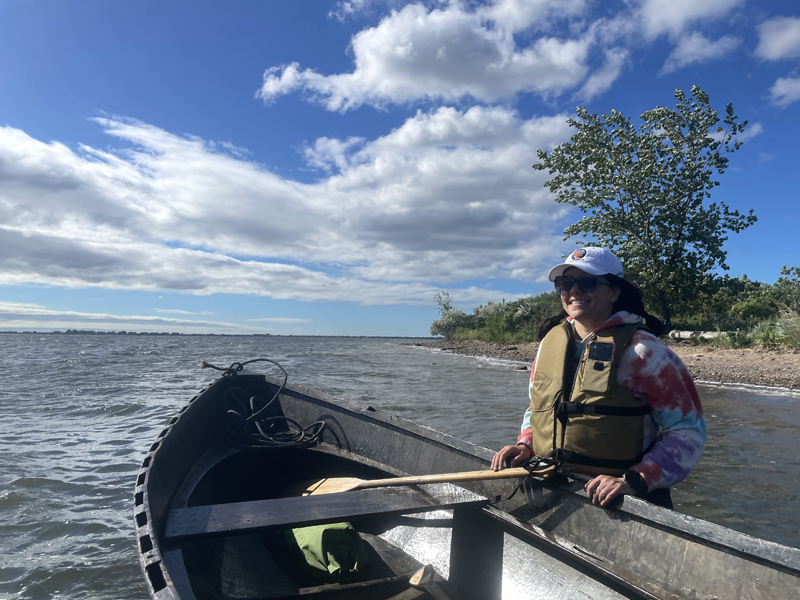
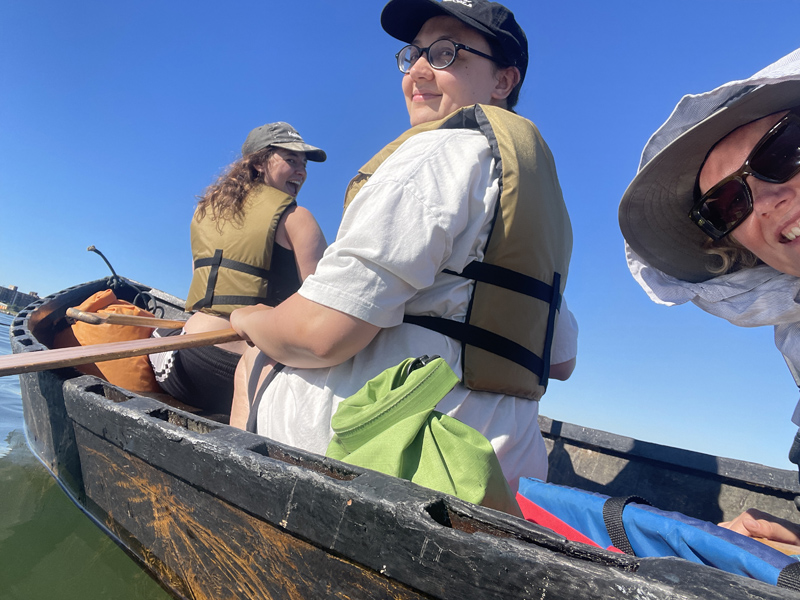
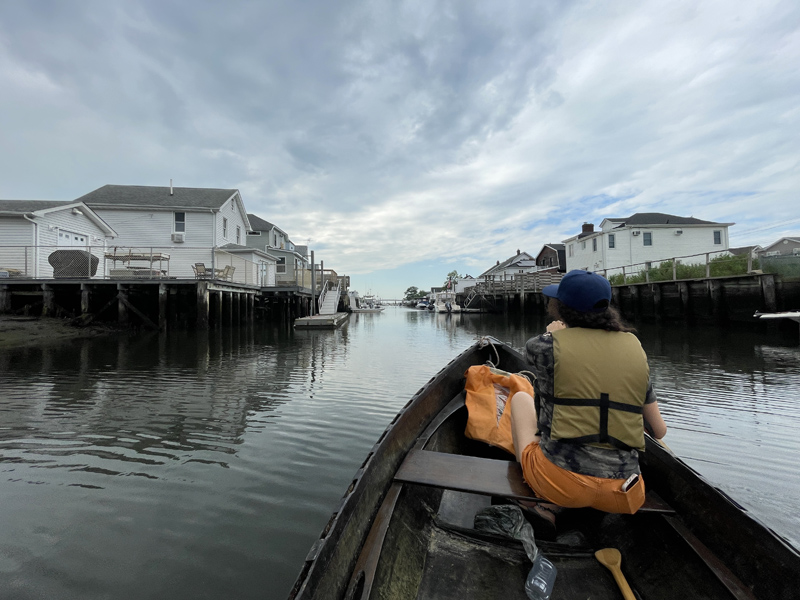
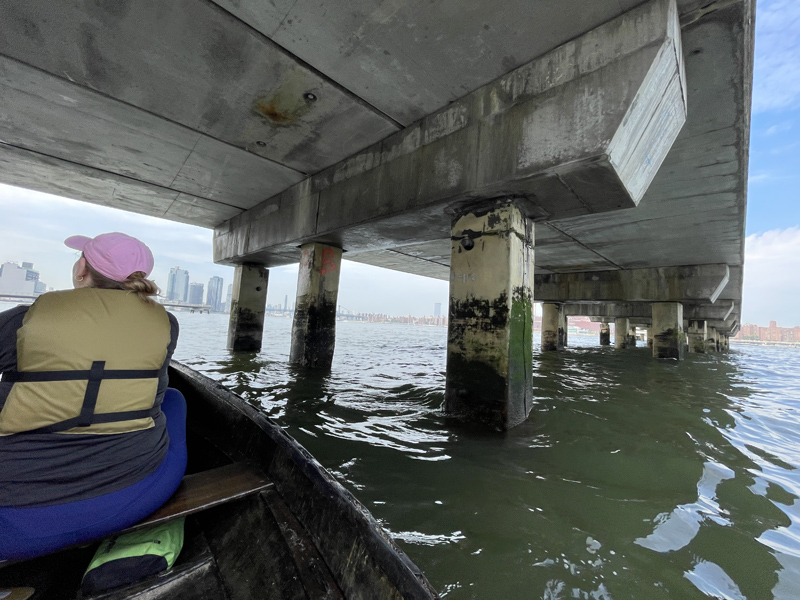
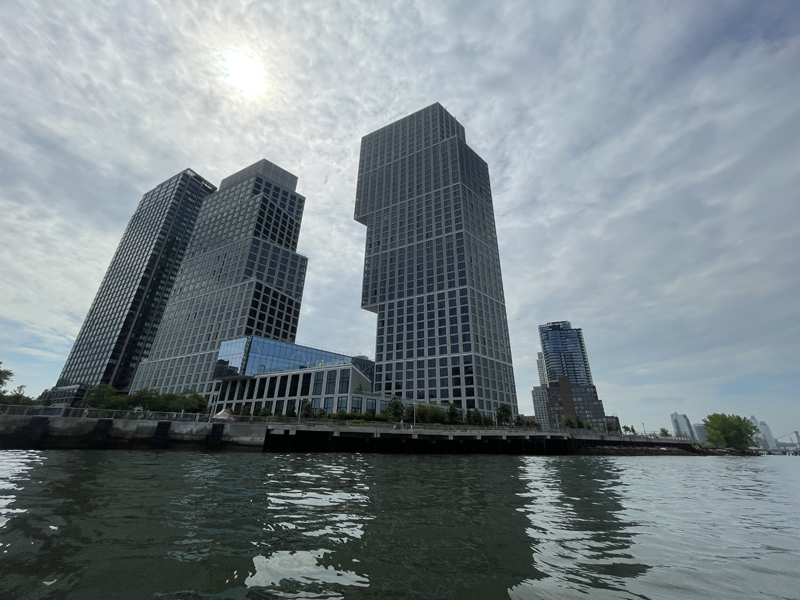
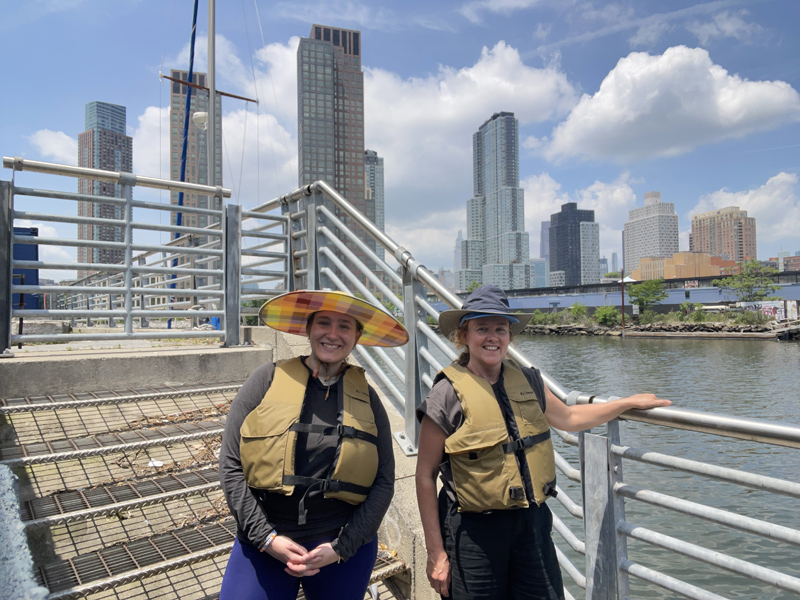
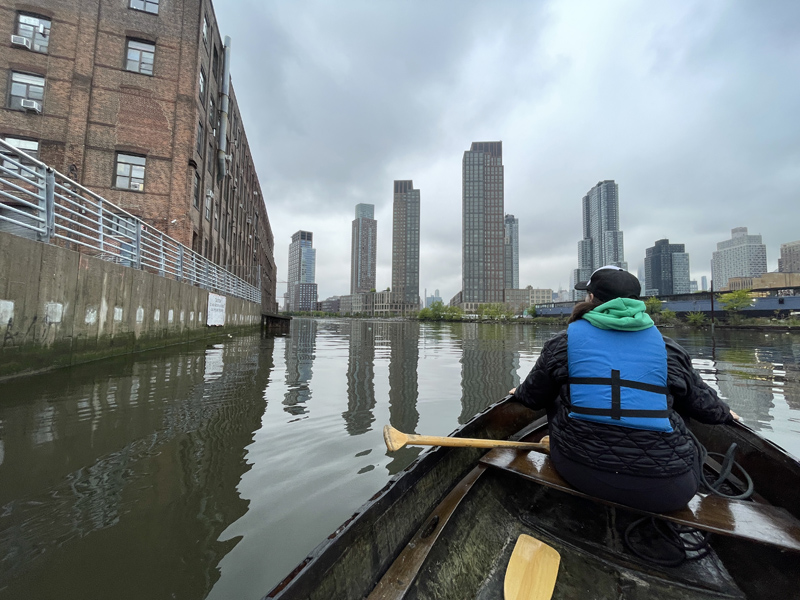
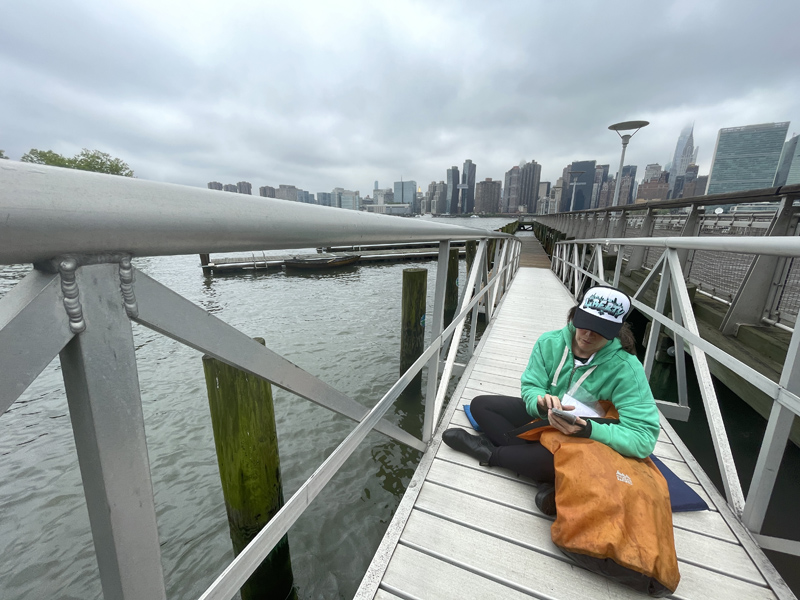
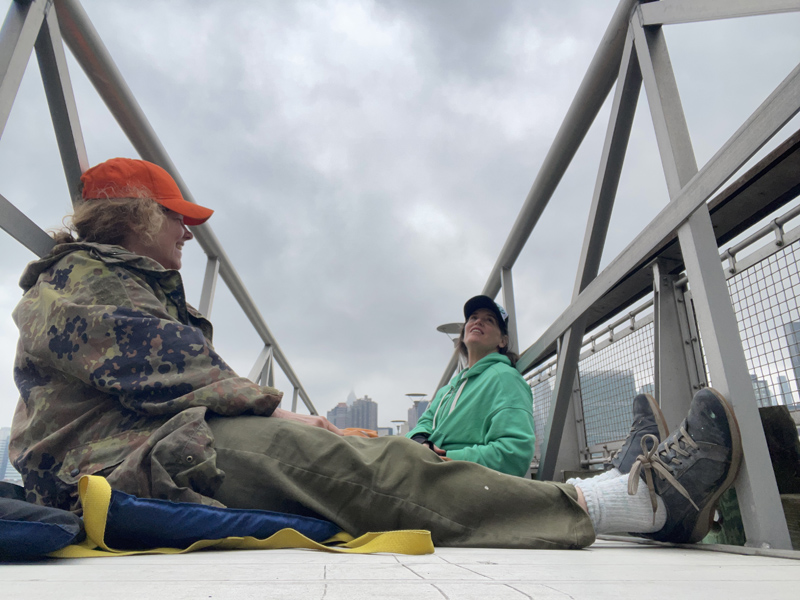
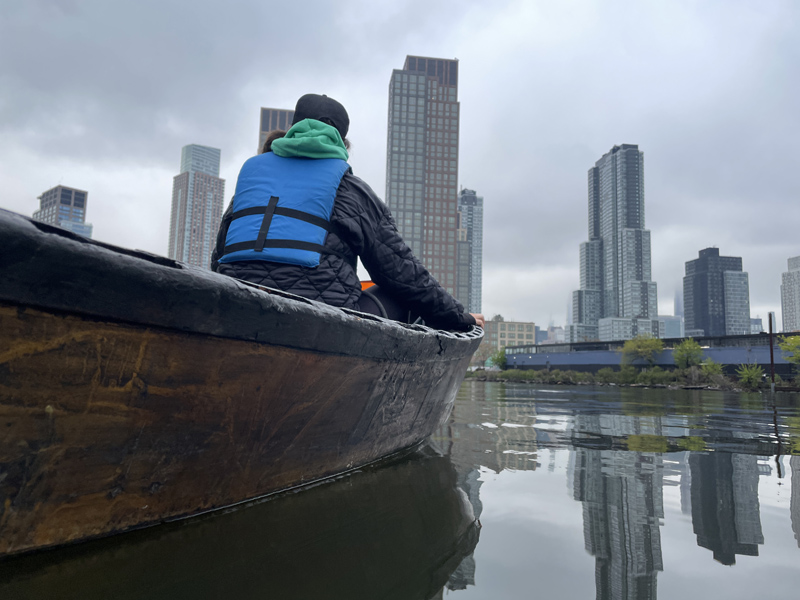
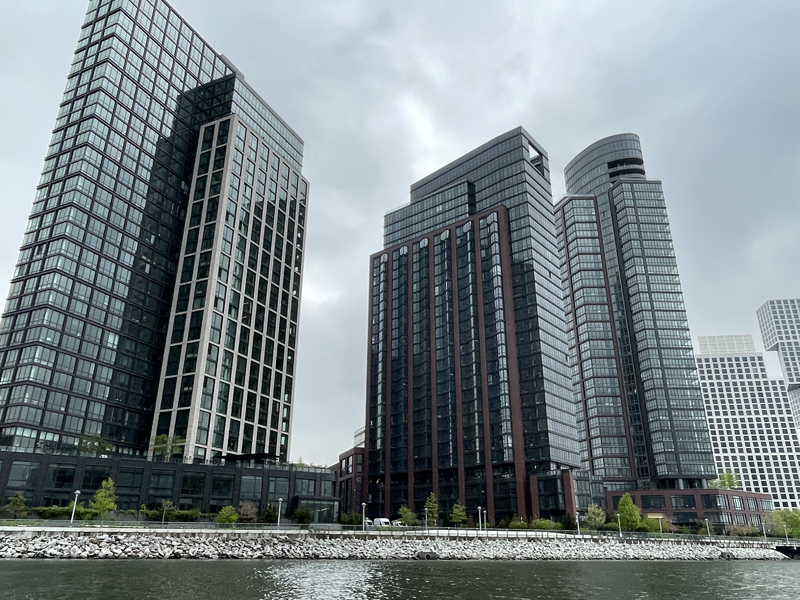
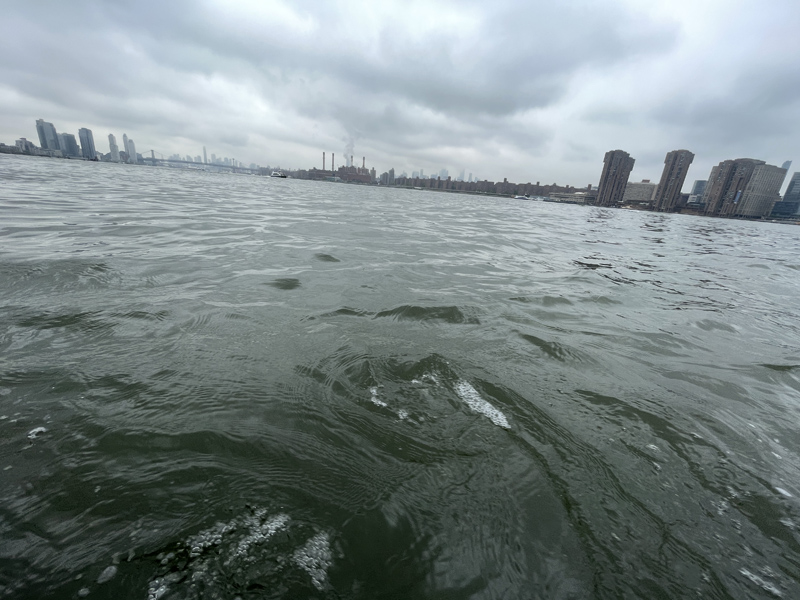
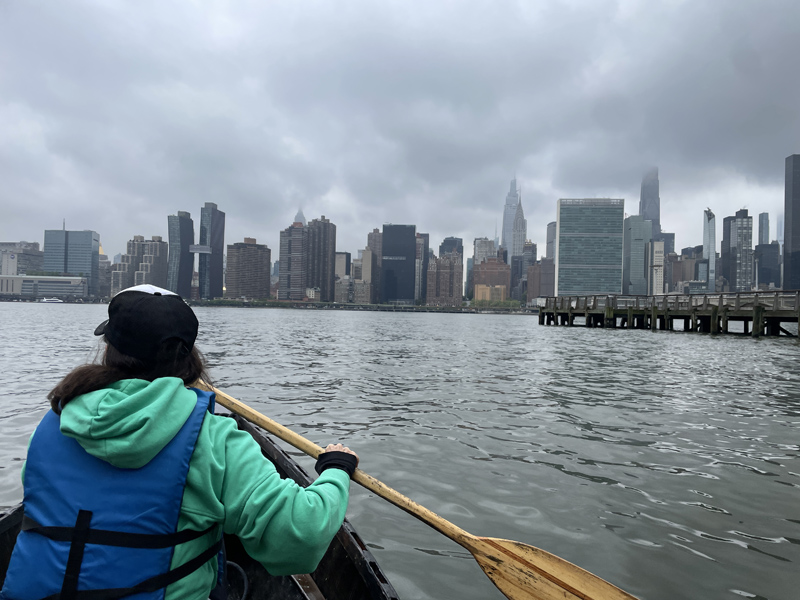
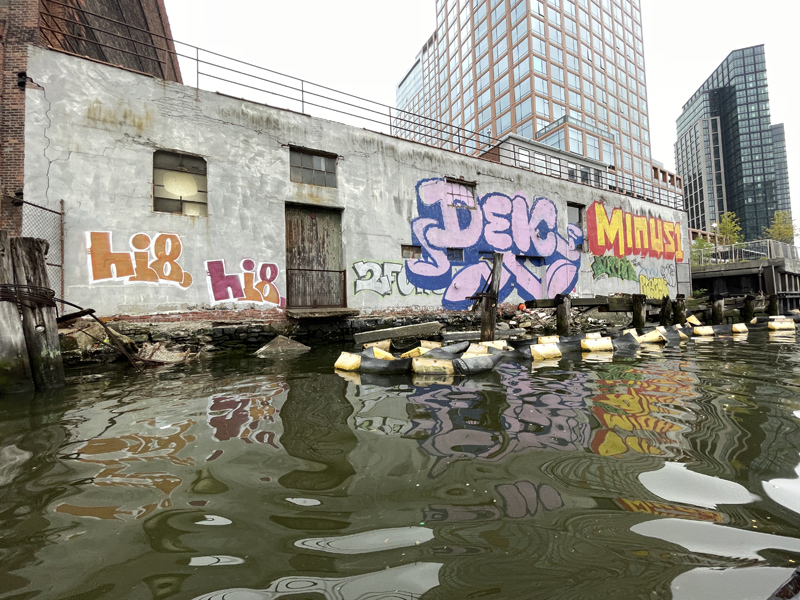
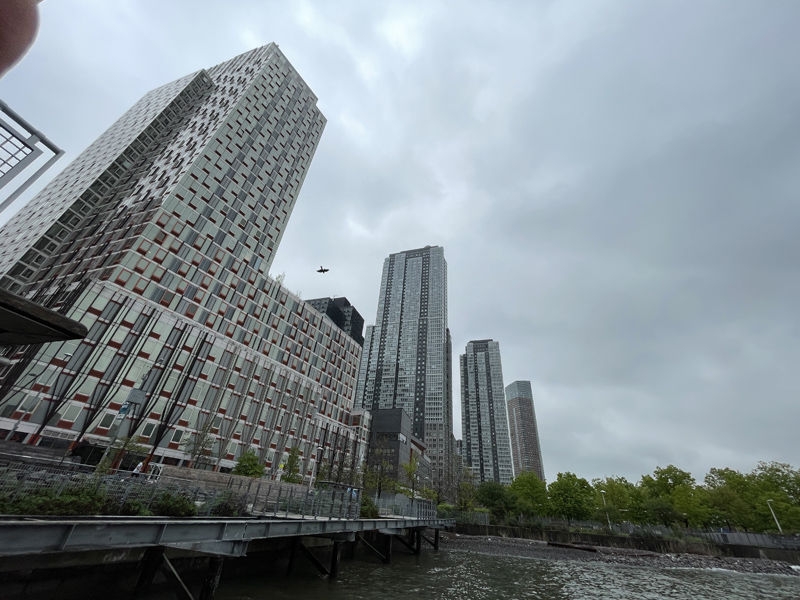
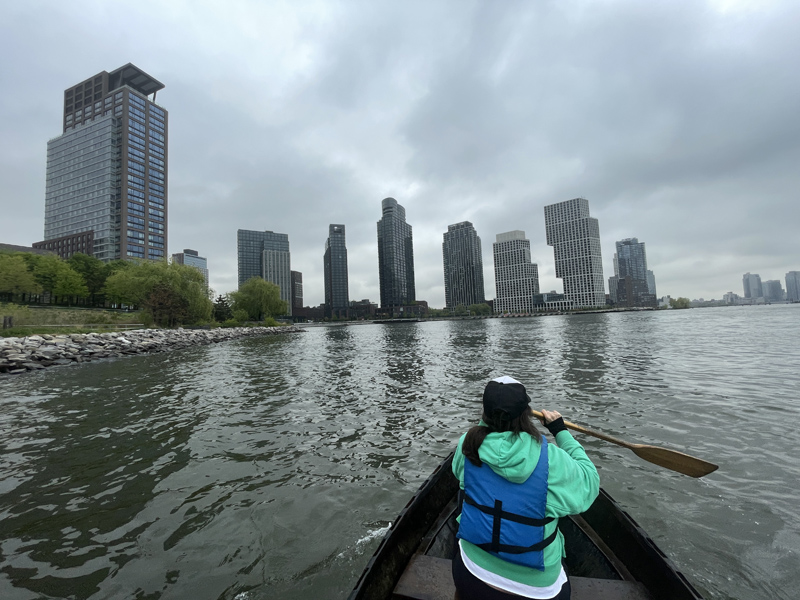
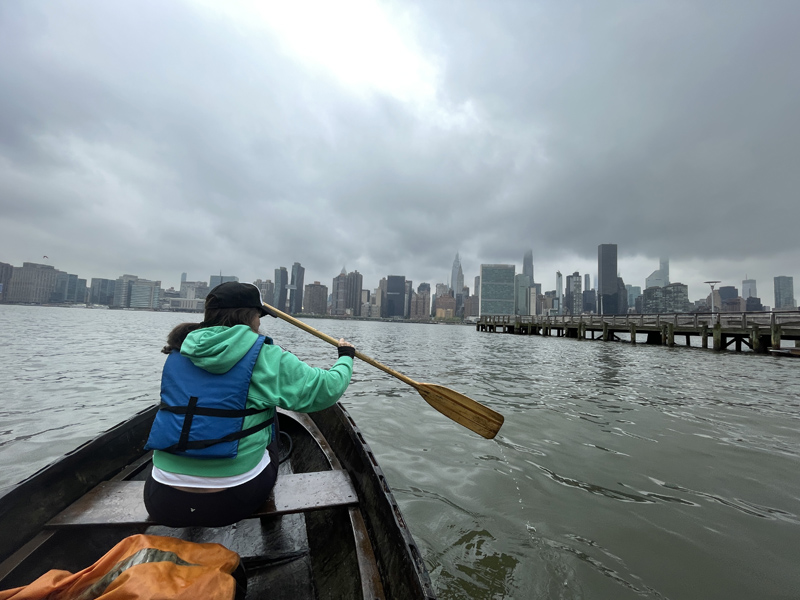
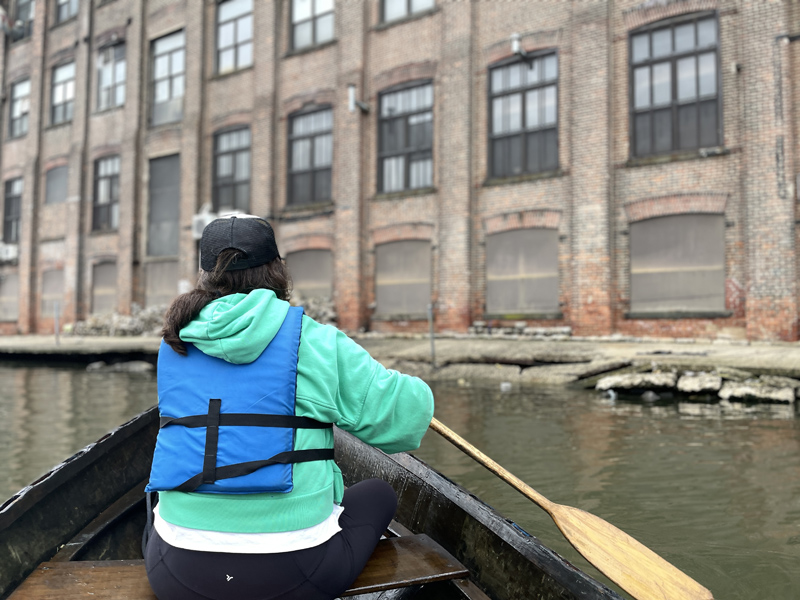
It was a perfect cloudy day to explore Newtown Creek with the artist, Priscilla Stadler.
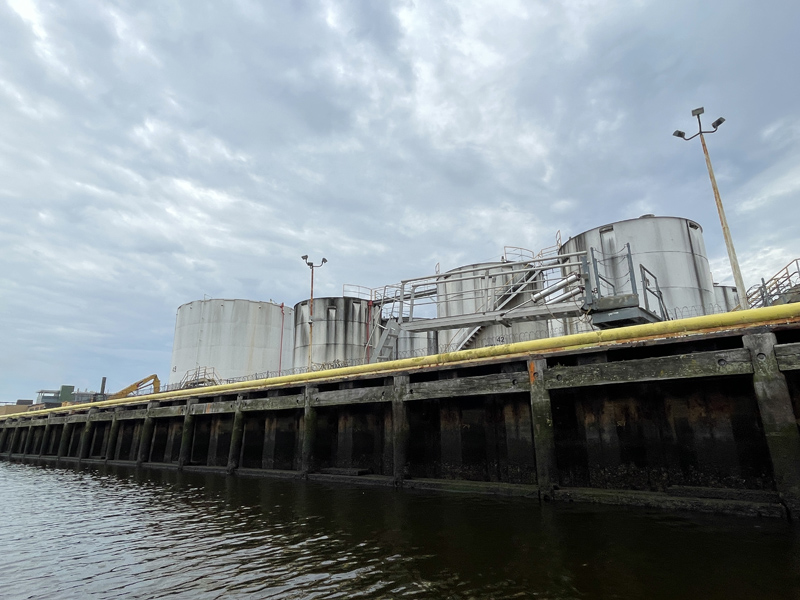
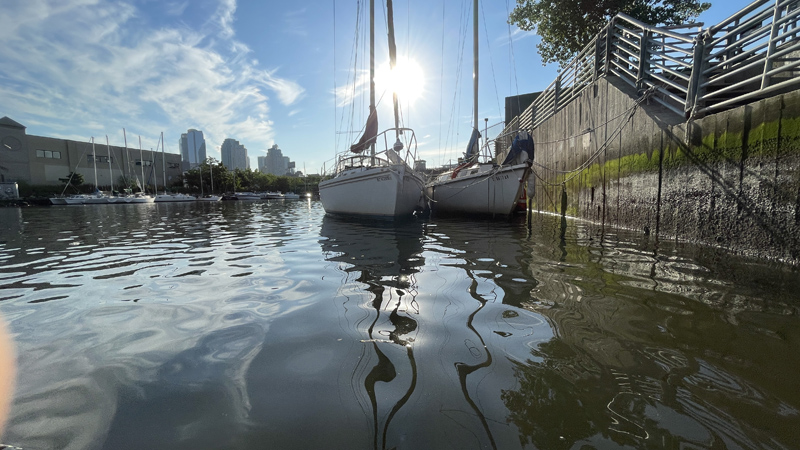
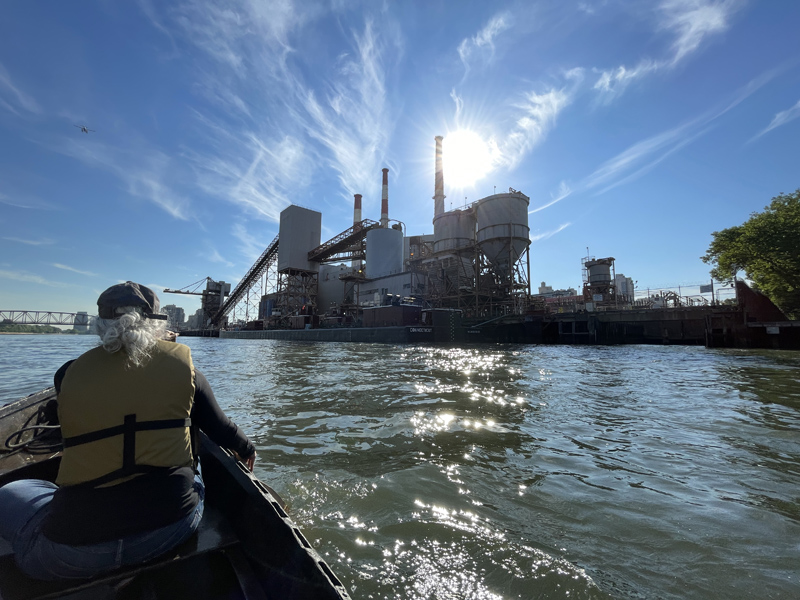
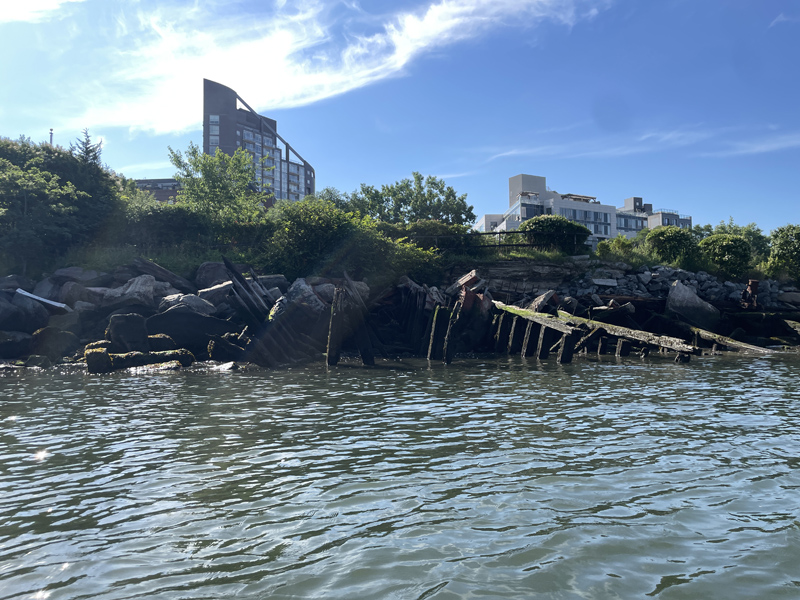
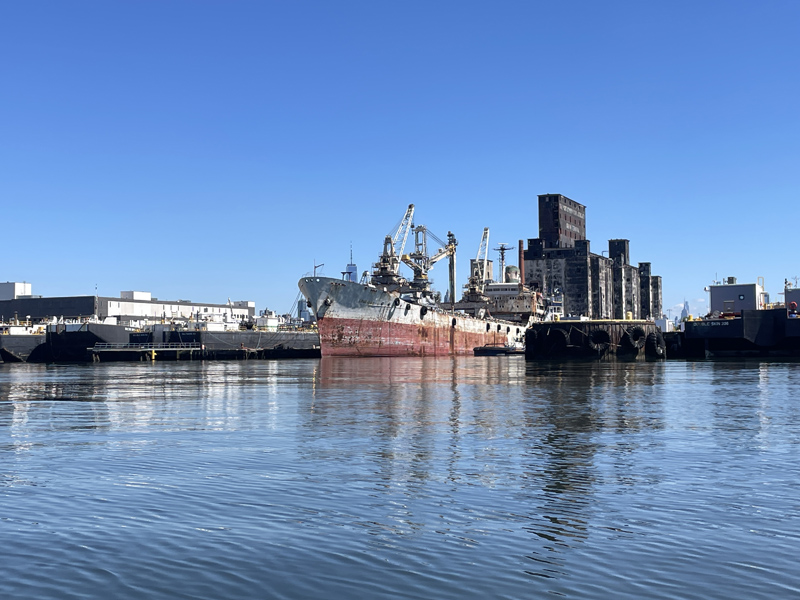
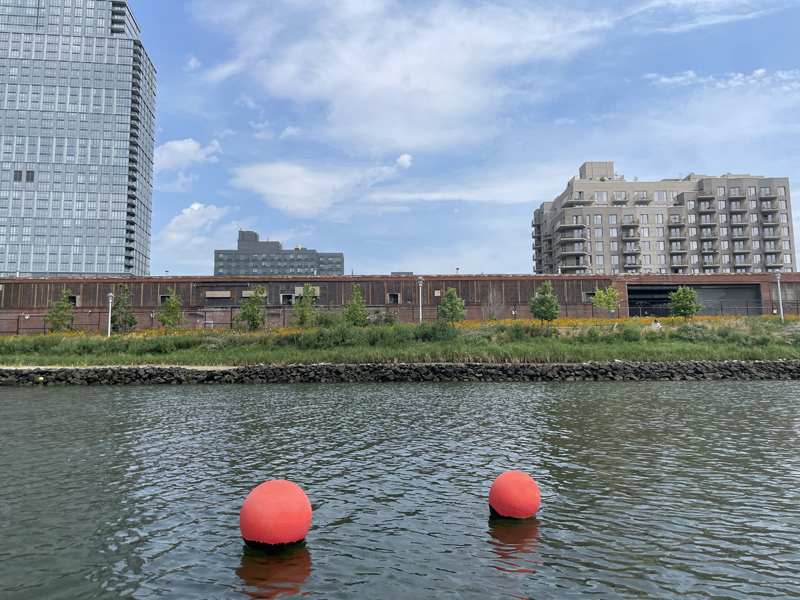
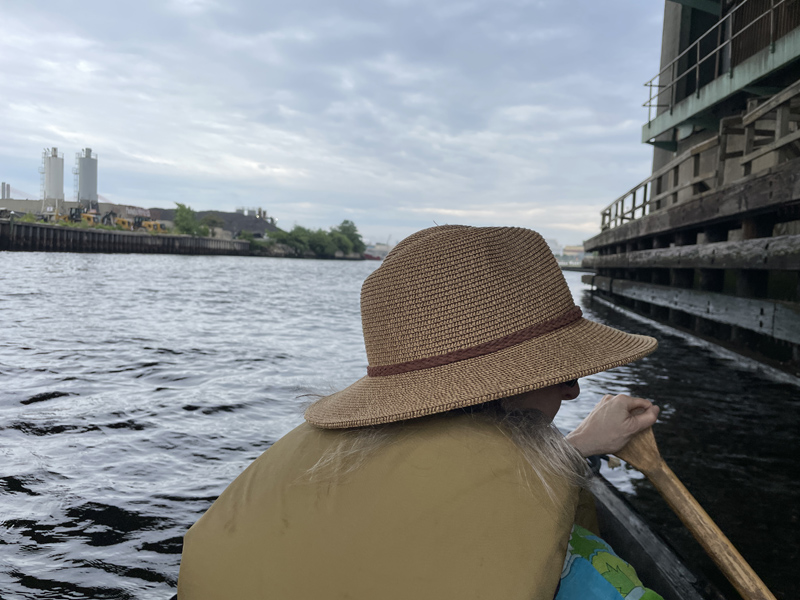
We passed the Metro Fuels storage tanks,
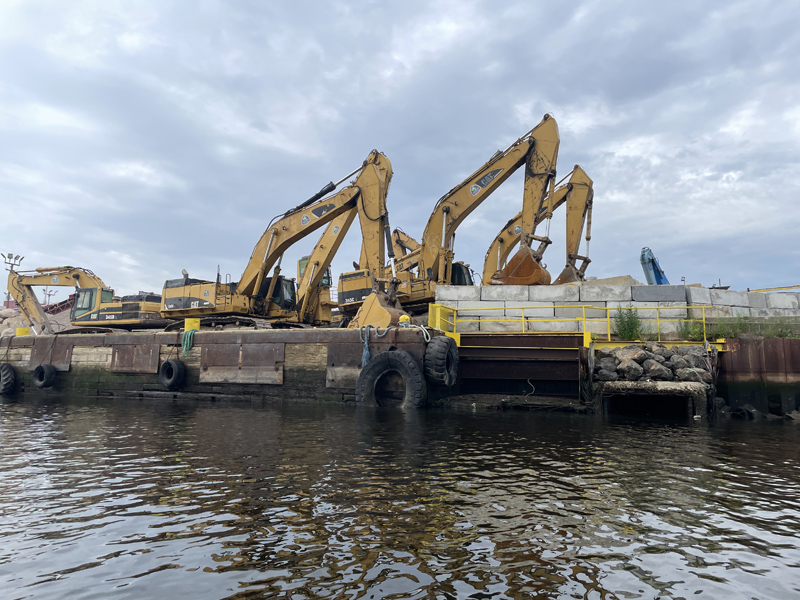
and the resting arms of a massive cement recycling plant on the edge of the creek.
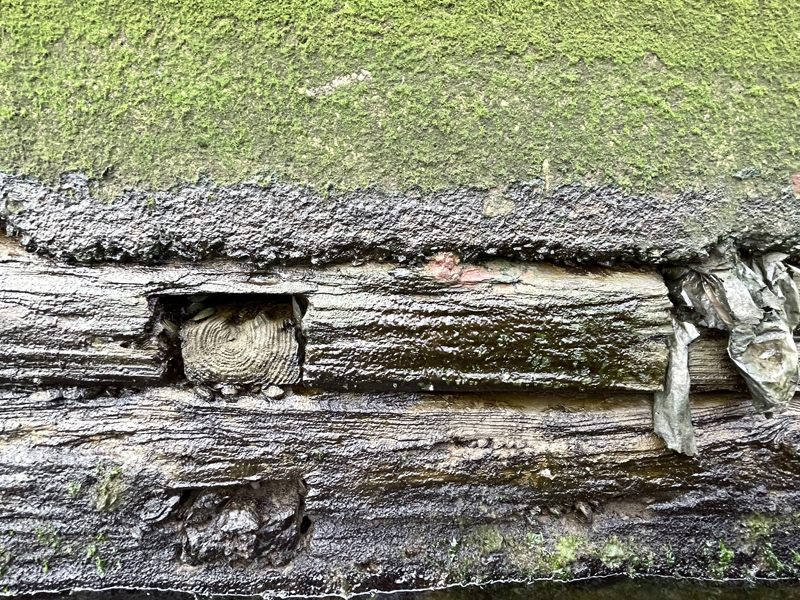
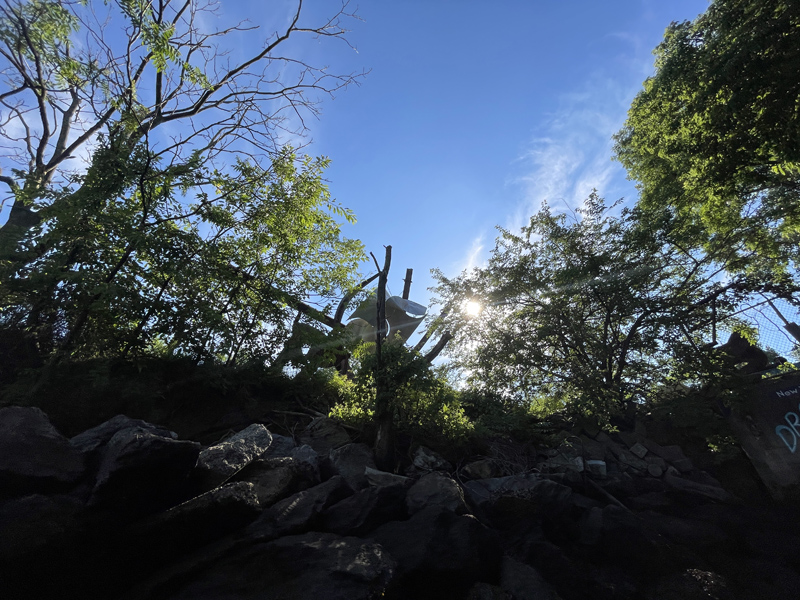
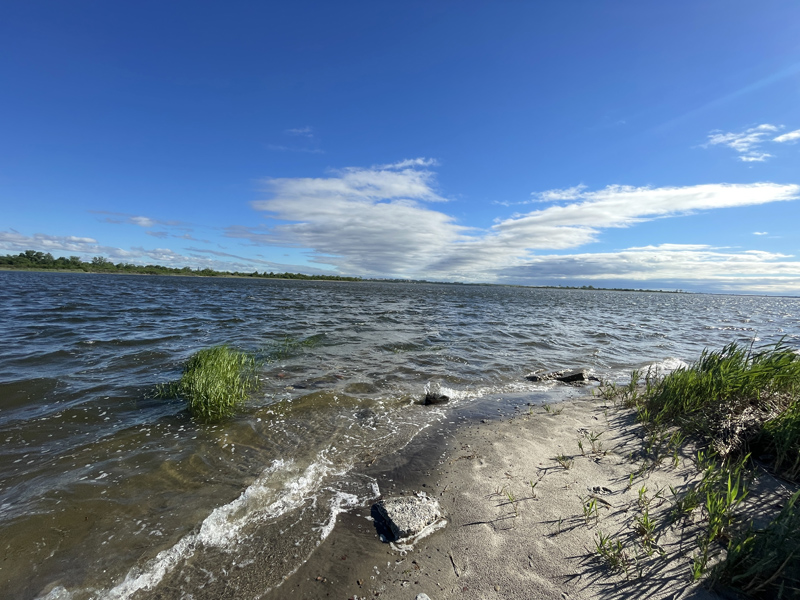
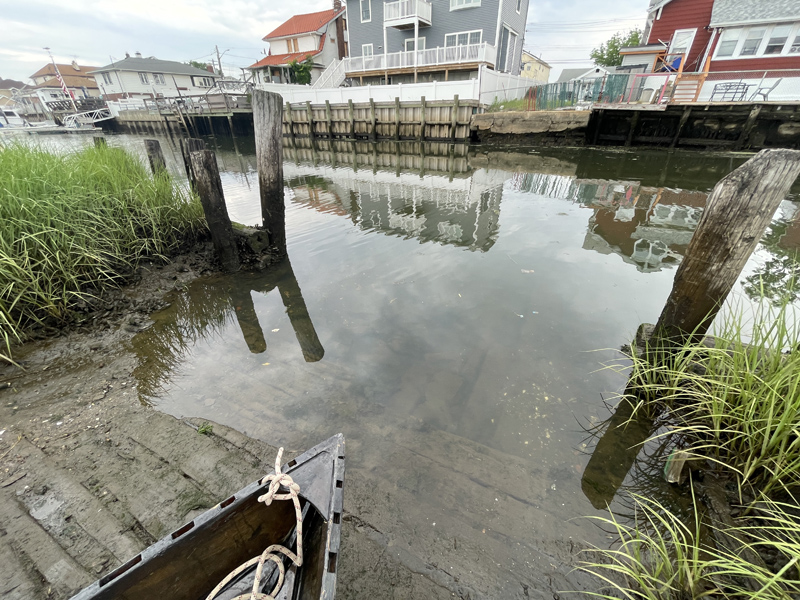
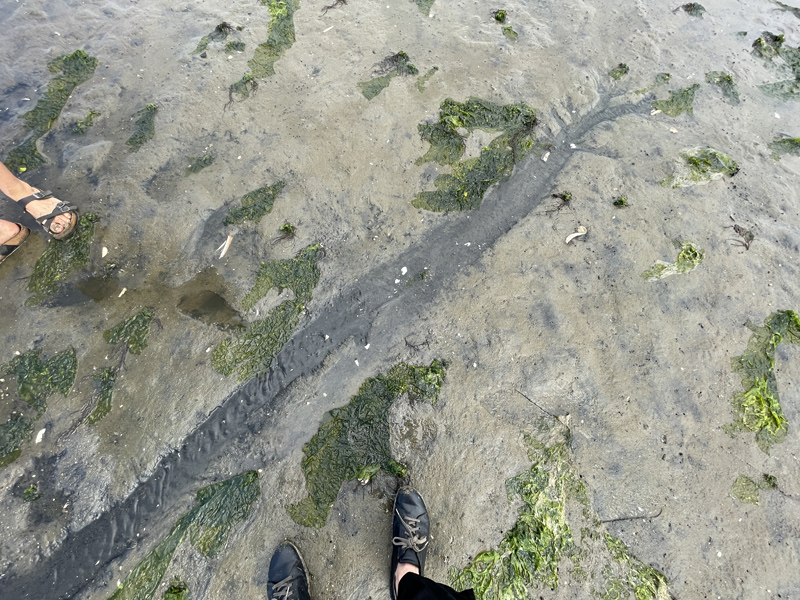
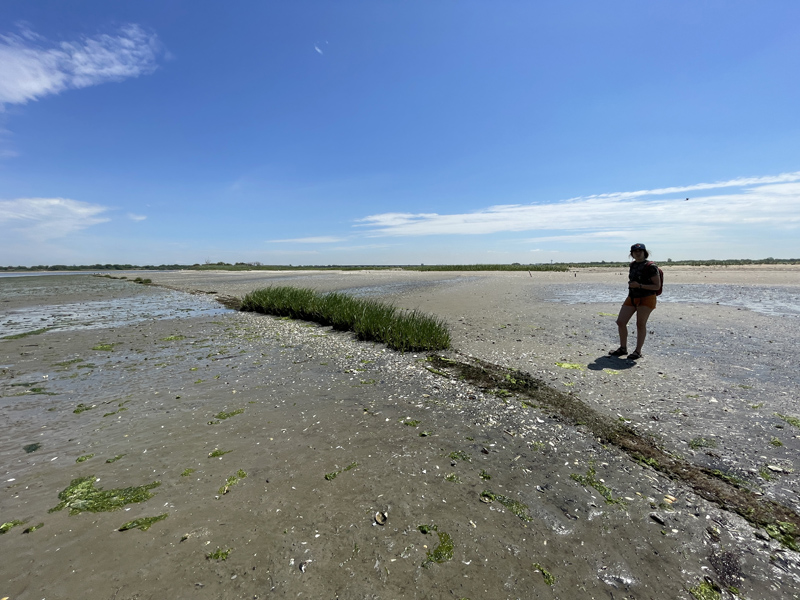
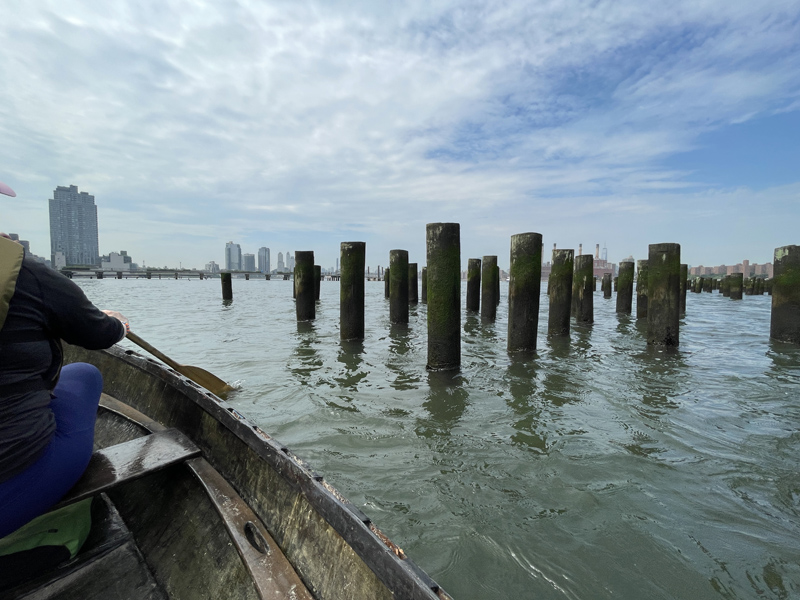
Sometimes it’s hard to remember anything grows here, but during a low tide like today, you begin to get an idea.
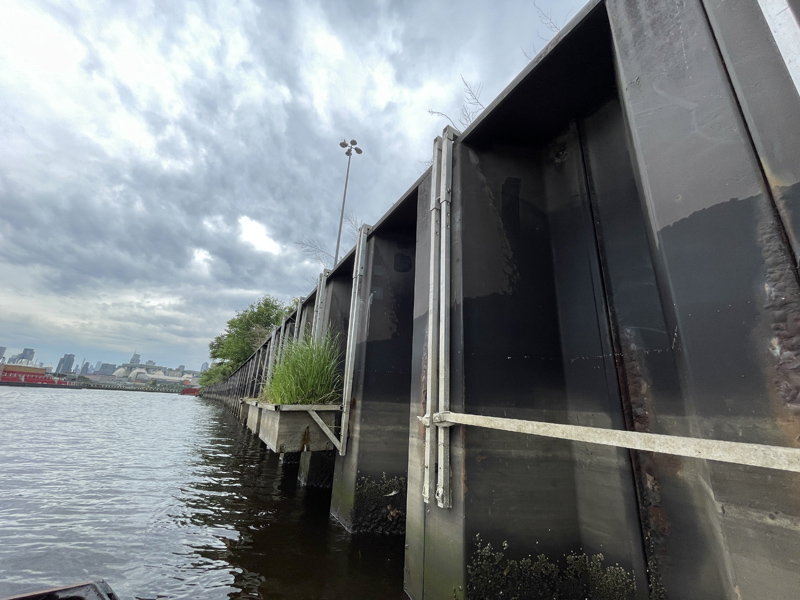
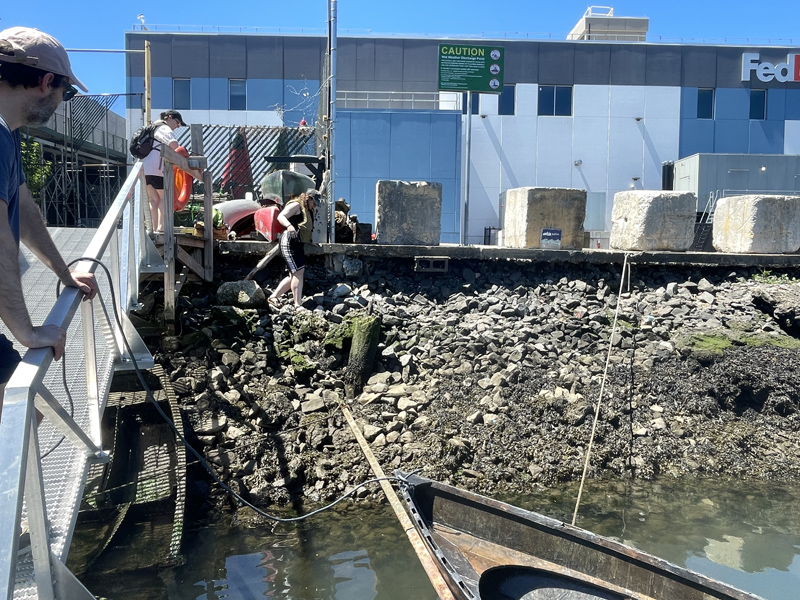
First, Priscilla wanted to check on Sarah Durand’s salt marsh test boxes.
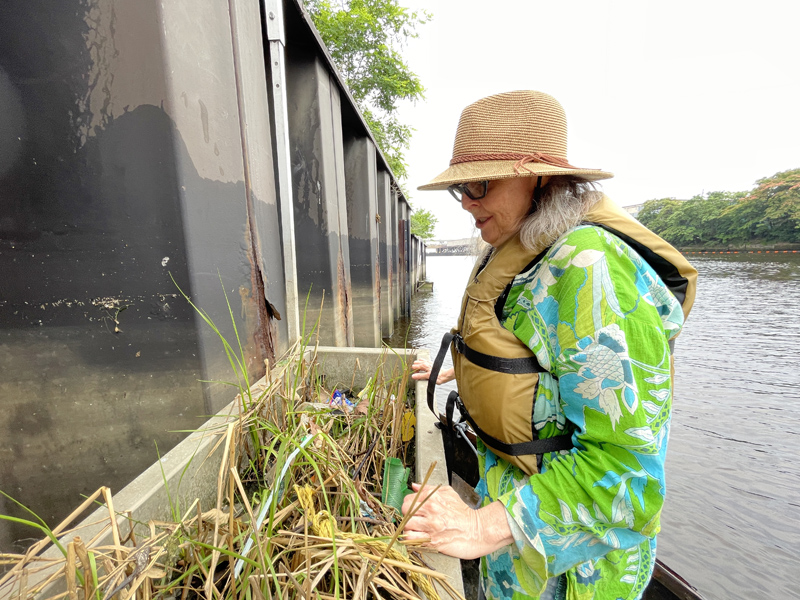
Sarah proposed the idea for these boxes to the Newtown Creek Alliance back in 2010: metal units that hold native salt marsh grasses along the creek’s bulkheads to help restore habitat.
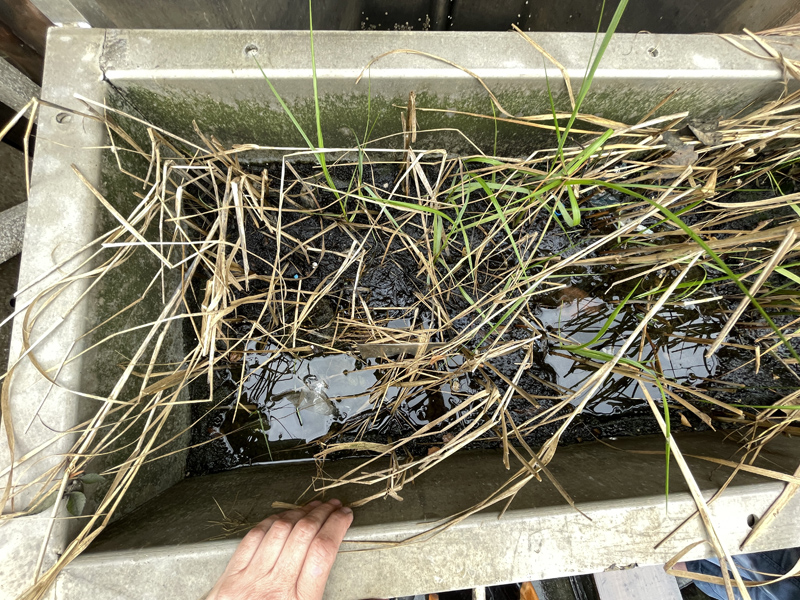
It looked like some marsh grass grew as planned, but the boxes weren’t draining as evenly as an actual salt marsh could.
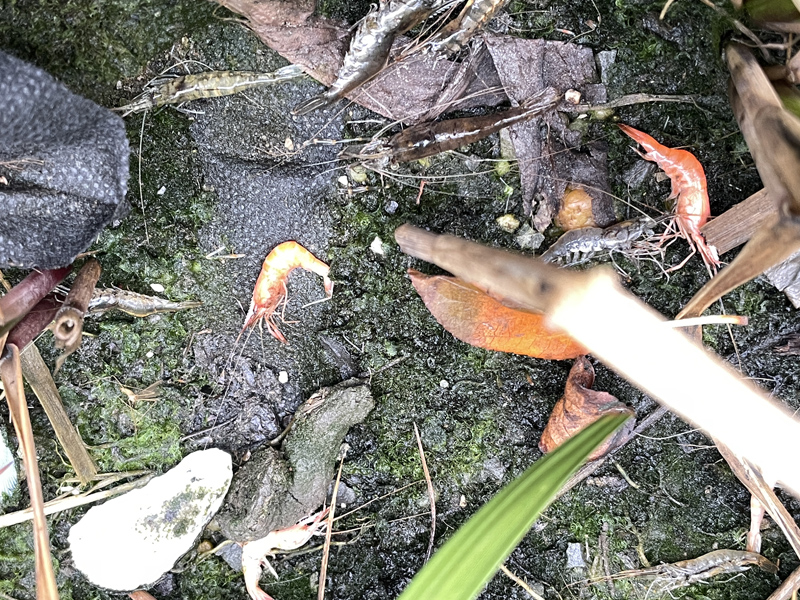
Some creek shrimp must have been trapped in the boxes too long, and they looked perfectly cooked!
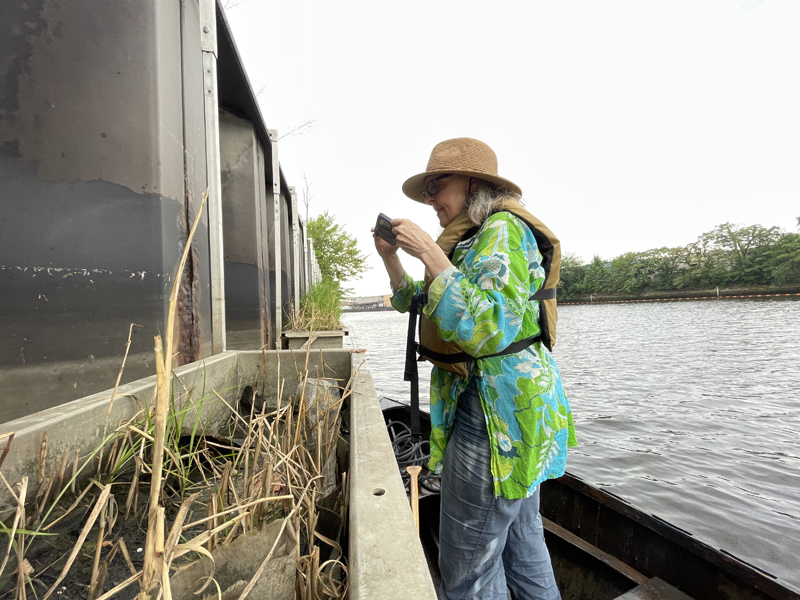
Priscilla photographed the boxes for the Newtown Creek Alliance; they are still working on the project with a larger system, and we would head there later today.
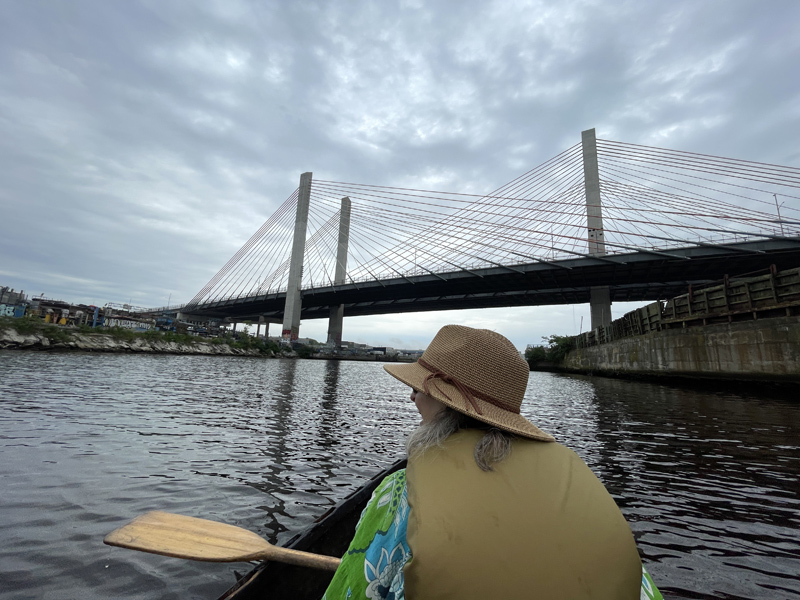
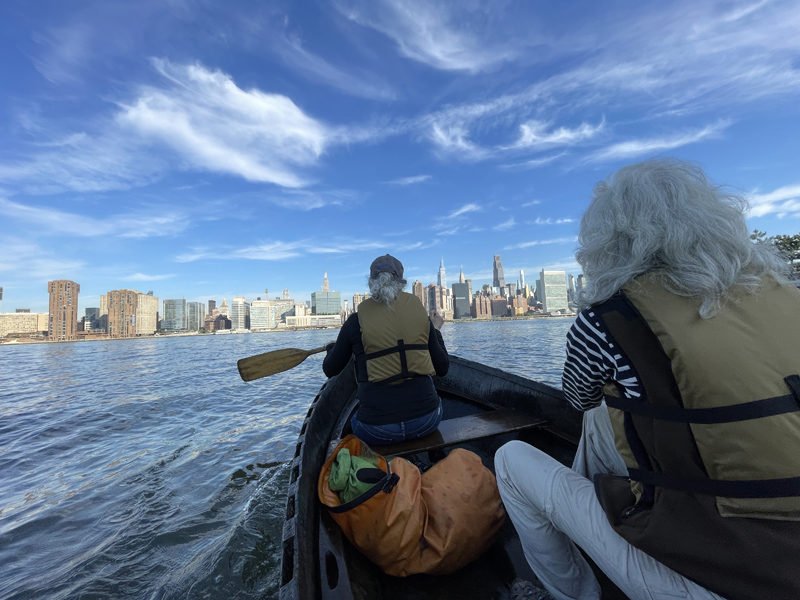
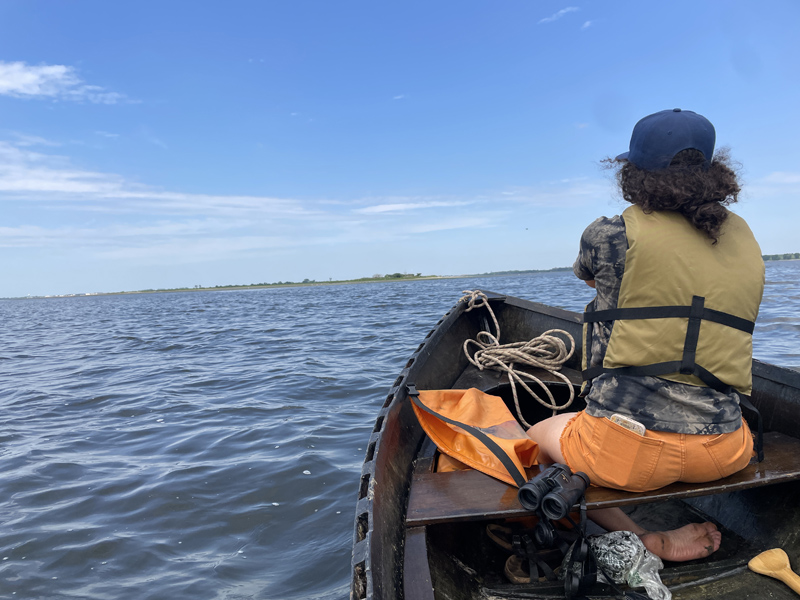
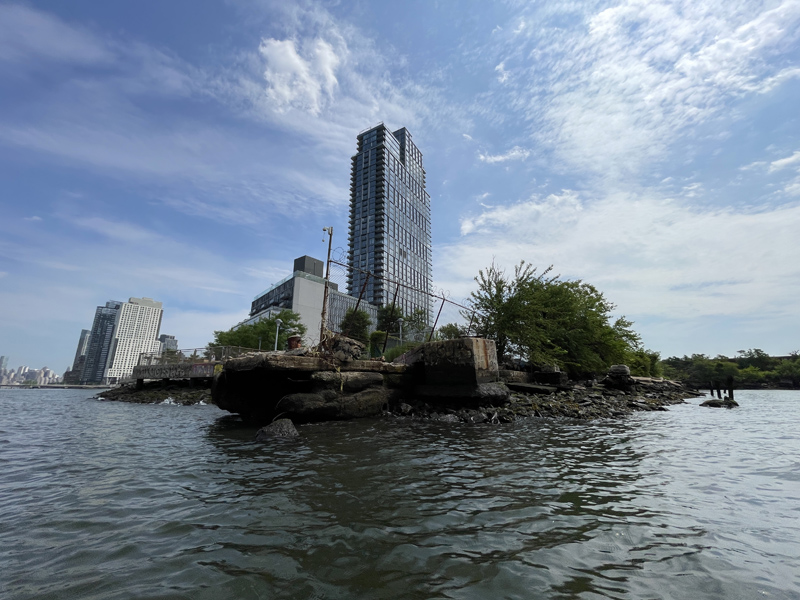
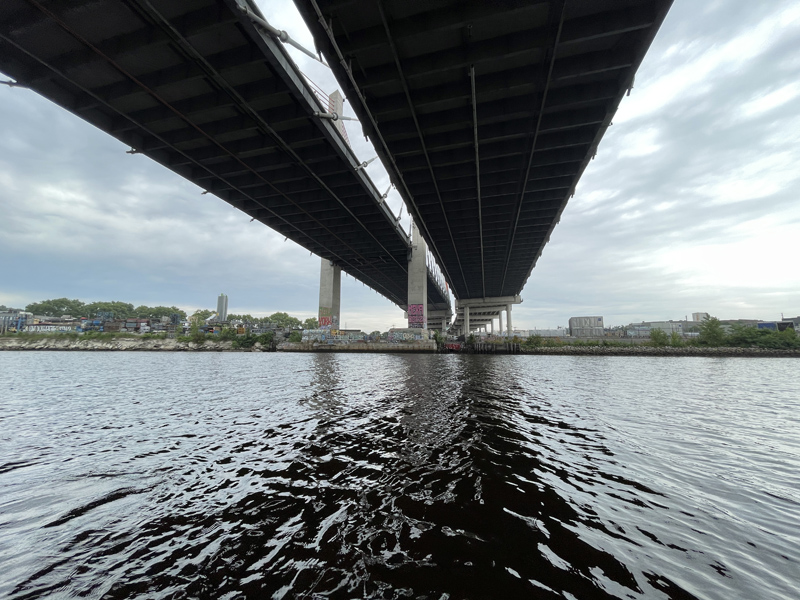
We continued our paddle toward the real destination: the Newtown Creek turning basin, once home to Mussel Island.
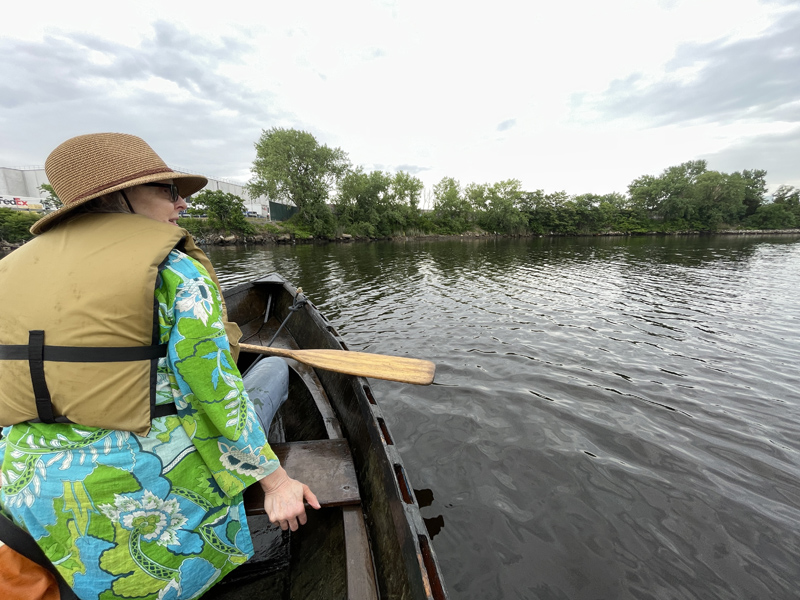
Priscilla is an artist and educator who has become obsessed with mussels, especially their history here on Mussel Island in Newtown Creek.
The island was dredged away around 1940 to make room for an open turning basin for the large ships that had begun to navigate the channel.
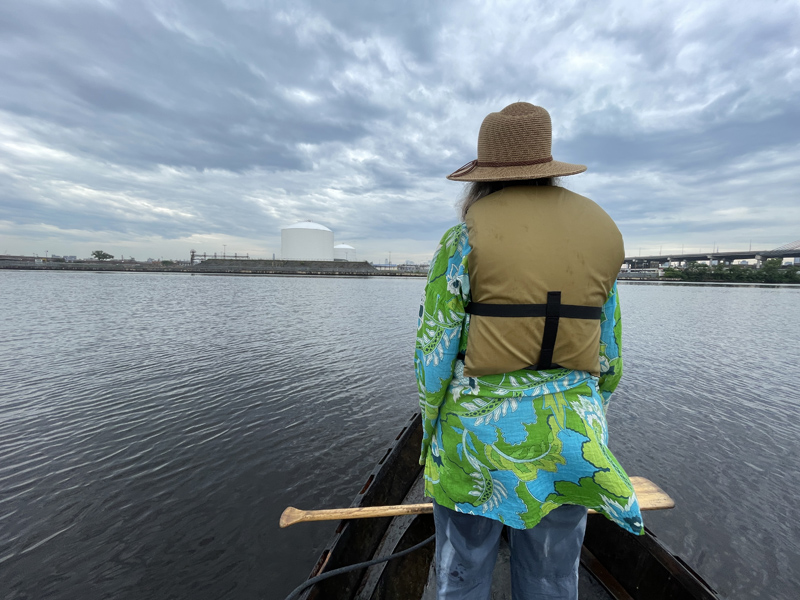
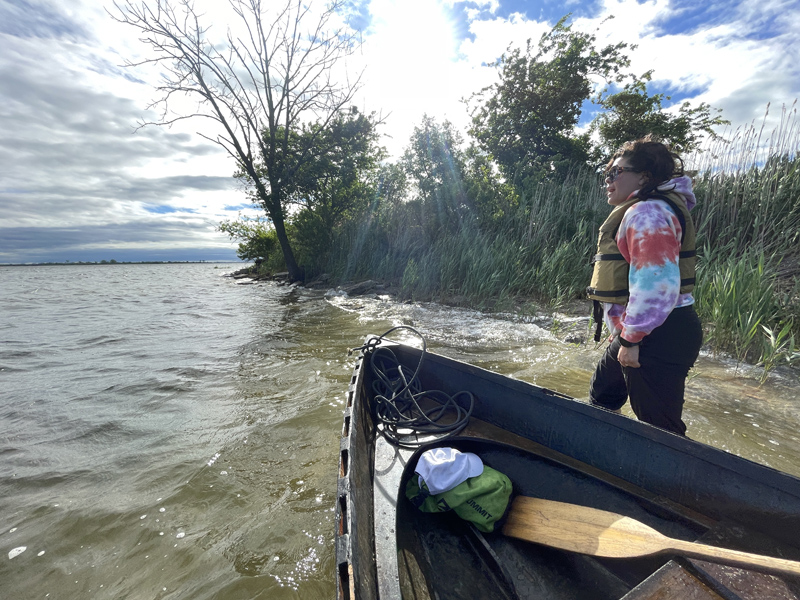
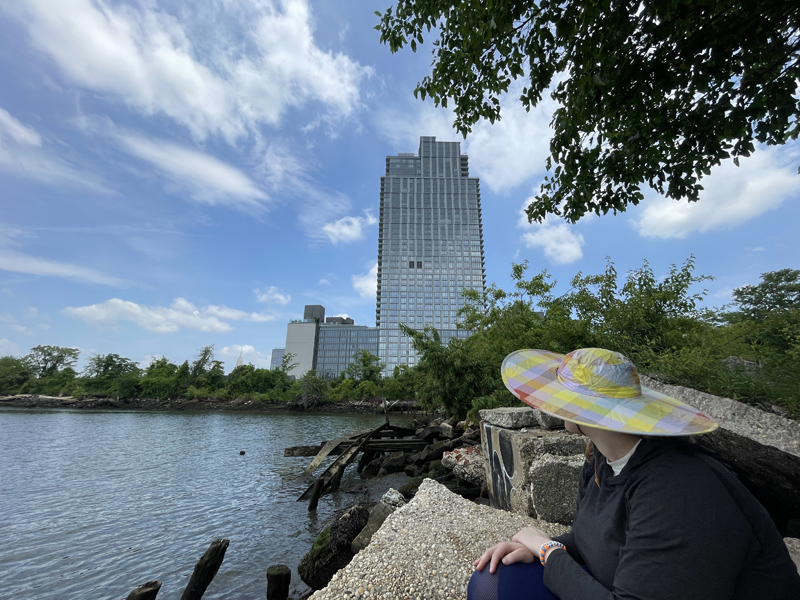
Priscilla stood looking out at the water where the island used to be,
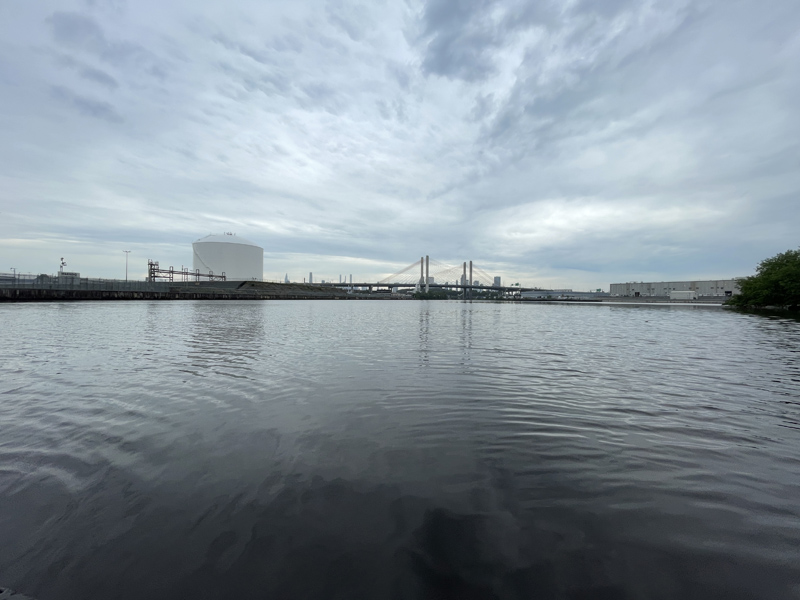
and we imagined it before industry took over, when a bristling layer of living mussels must have covered the bottom of the creek.
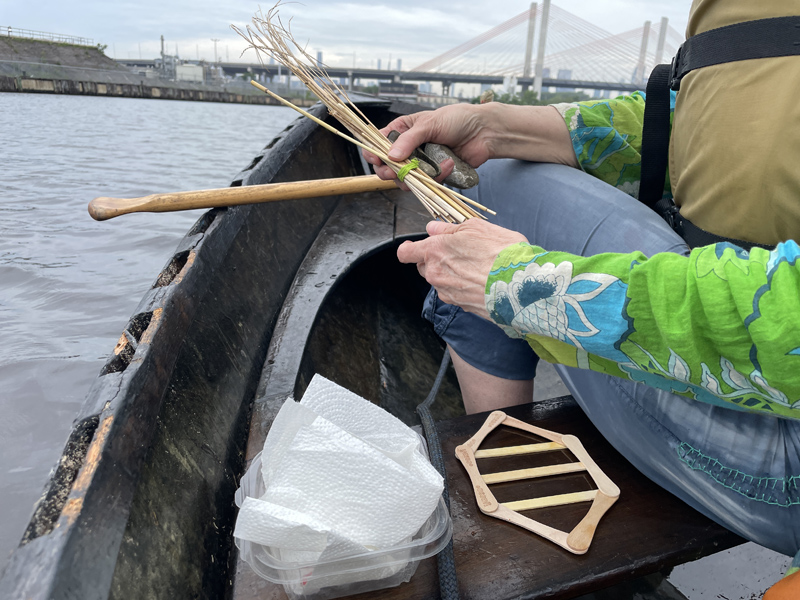
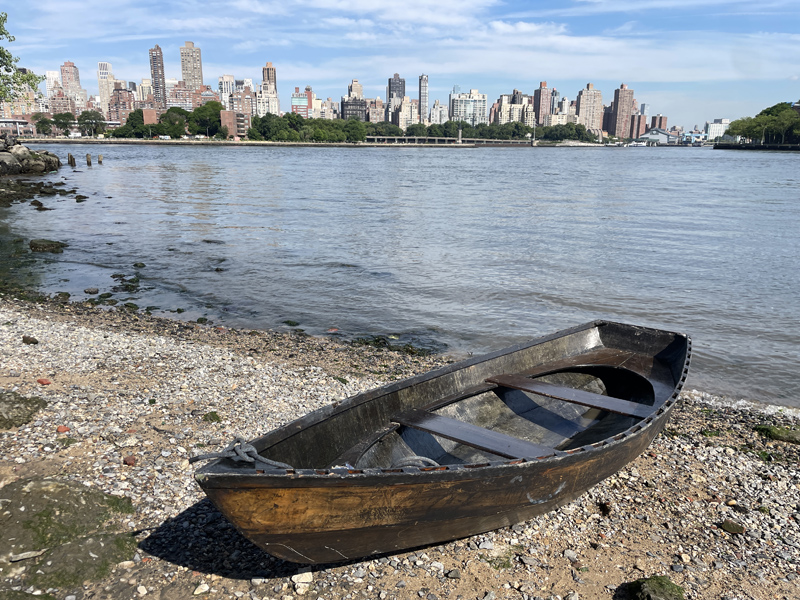
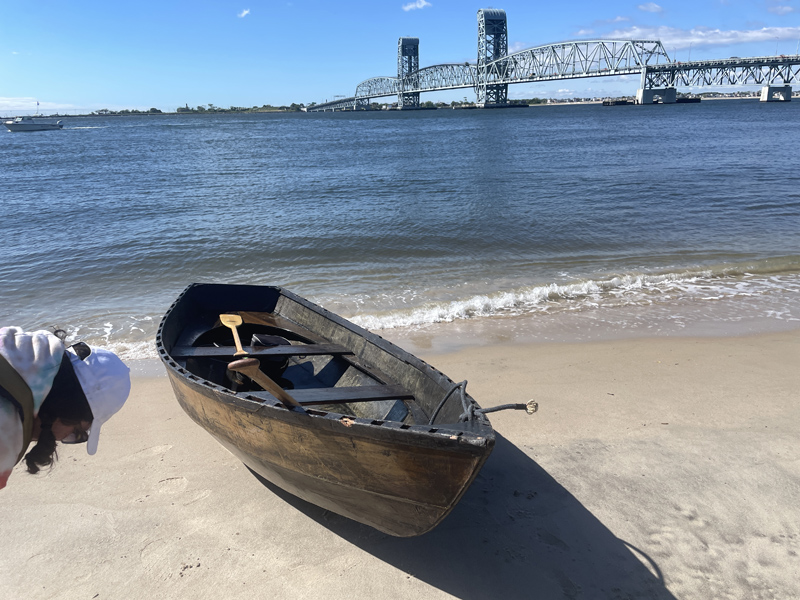
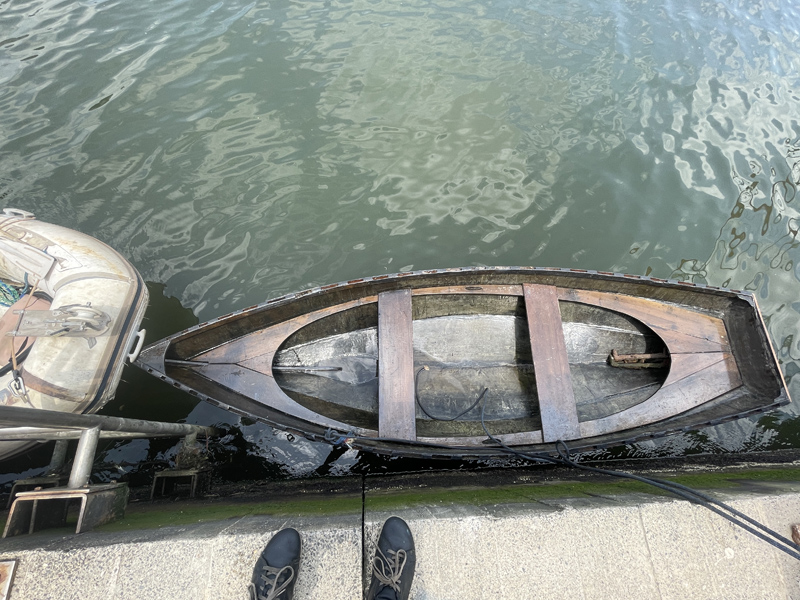
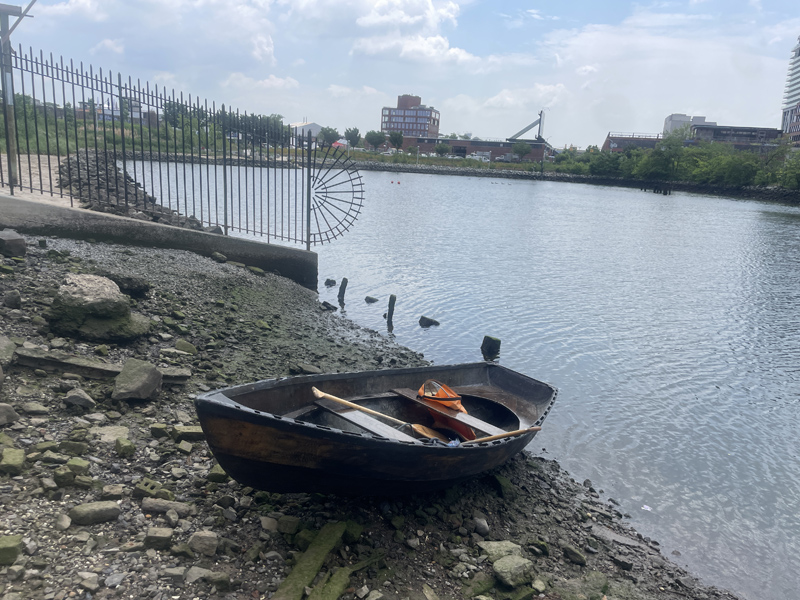
Priscilla made an offering to the mussels: dried cordgrass, a mussel shell, all held in a tiny boat.
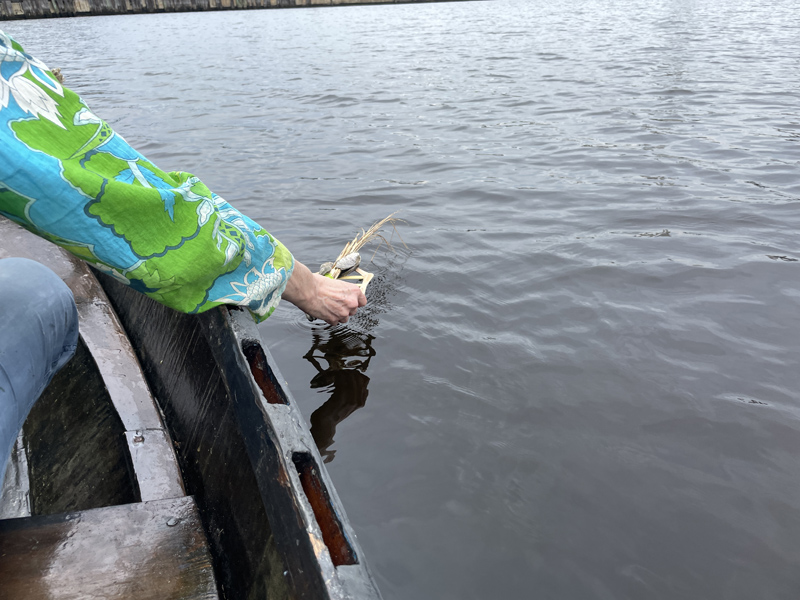
The idea was that the boat would fall apart and the mussel shell would sink to the bottom, right over mussel island, seeding a new mussel bed to grow.
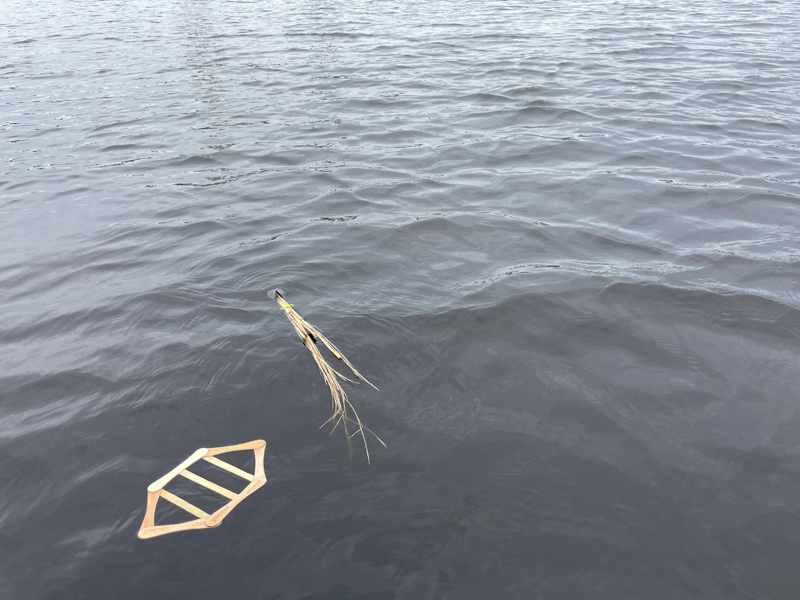
She set the boat adrift, and we watched it slowly break apart.
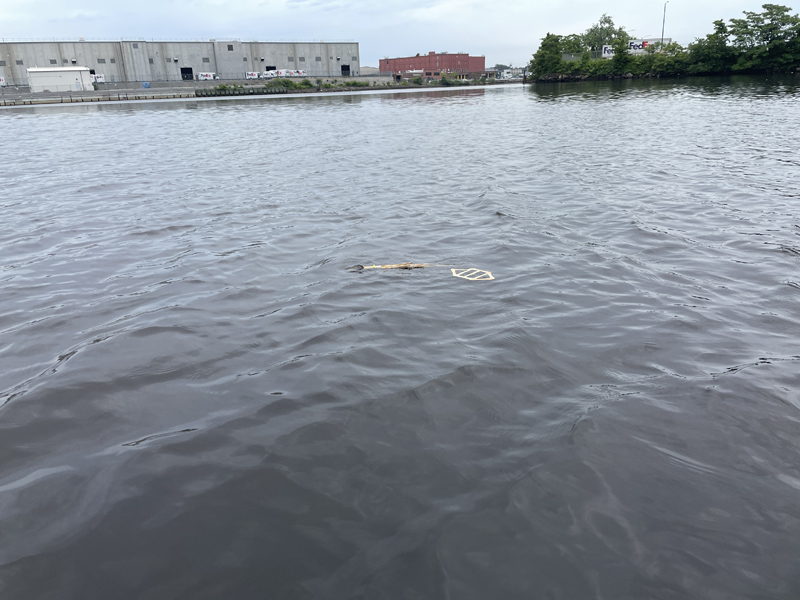
The mussel shell vanished to the bottom of the Newtown Creek.
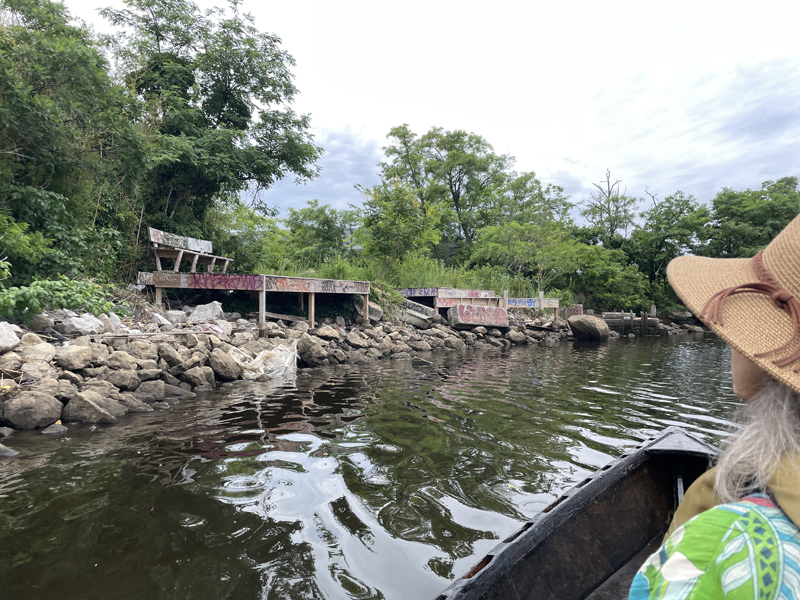
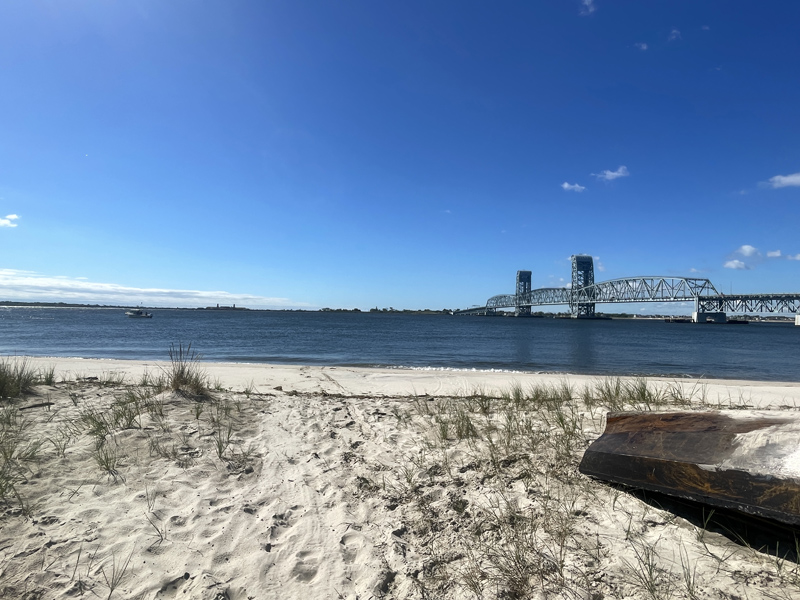
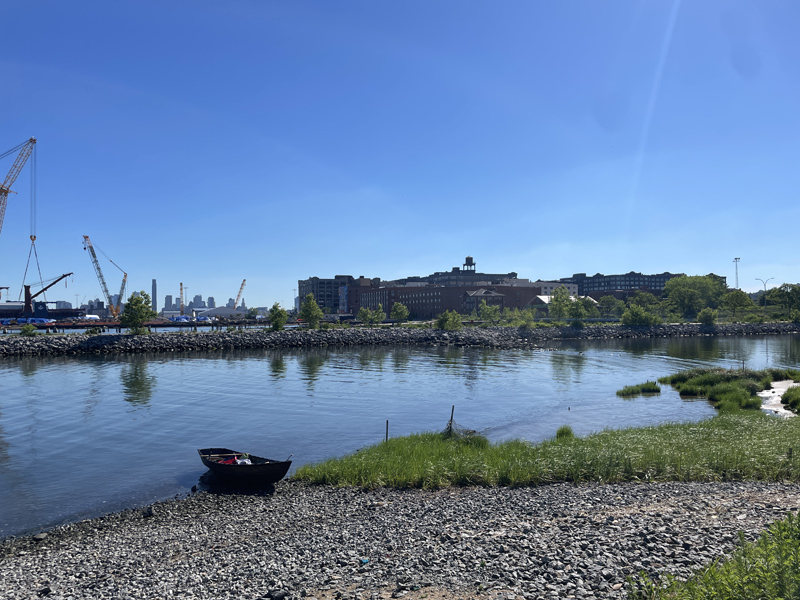
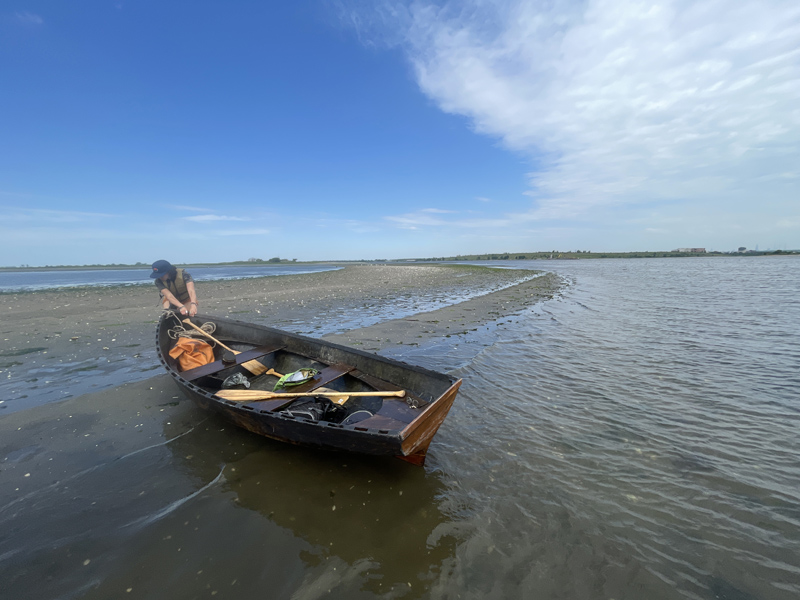
We took the boat out at the Plank Road Public Shoreline,
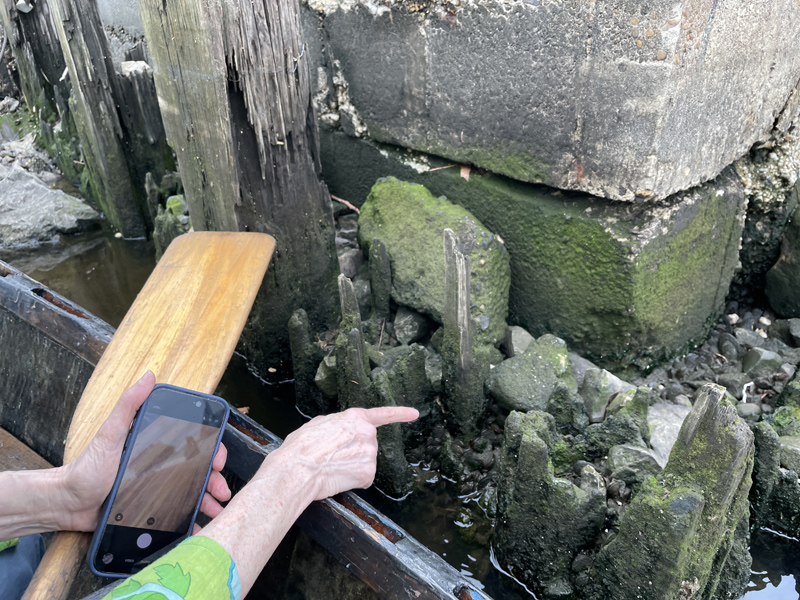
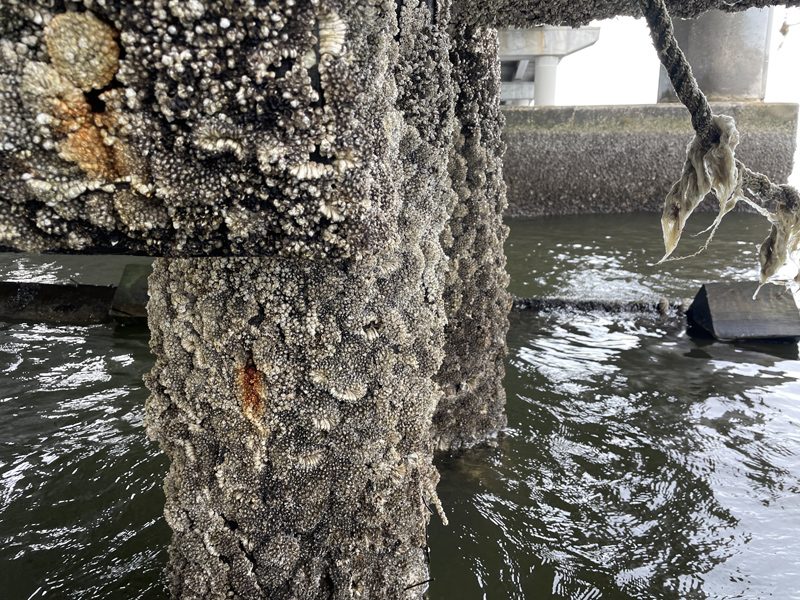
where Priscilla pointed out the mussels growing there, so abundant they seem to change the shape of the shoreline.
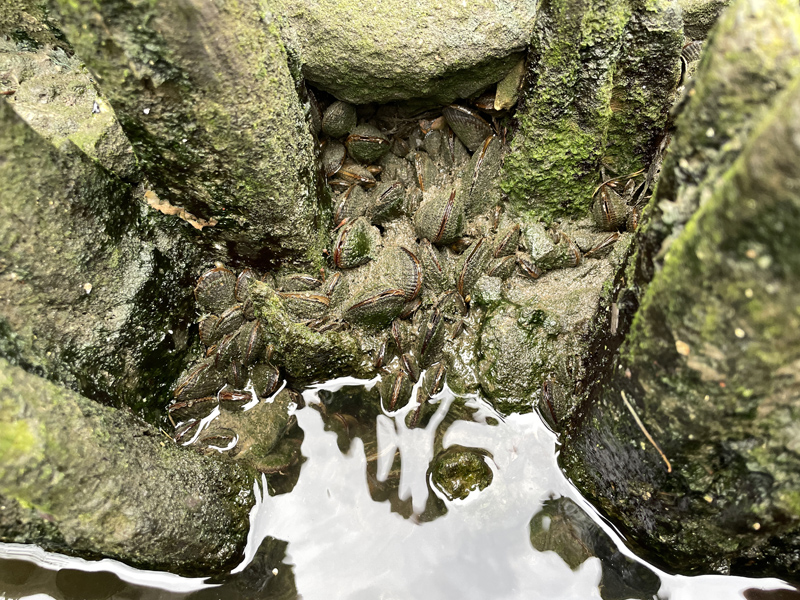
I’ve stepped over these guys for years without ever wondering whether they were thriving or barely hanging on.
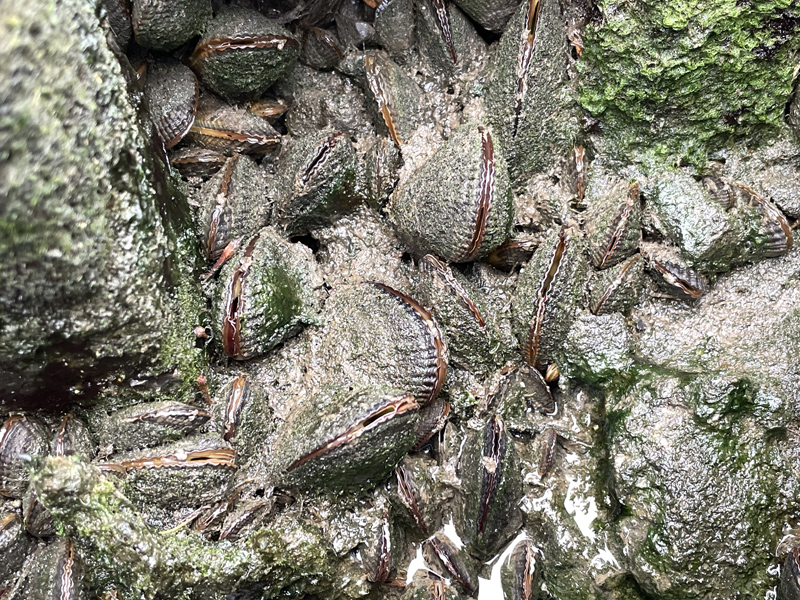
Priscilla showed me what a healthy mussel looks like: its shell held just barely open, you can actually see the creature inside getting ready to filter water.
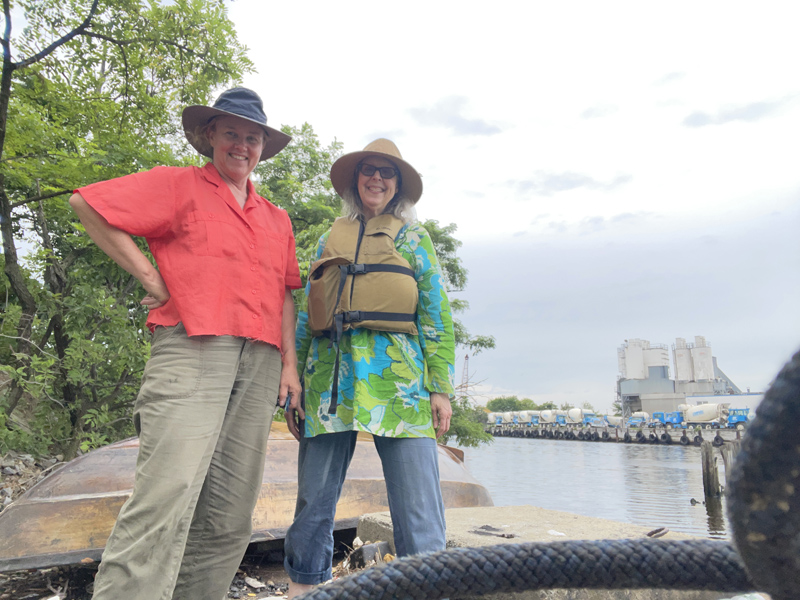
Thank you, Priscilla, for slowing down with me to mussel-watch,
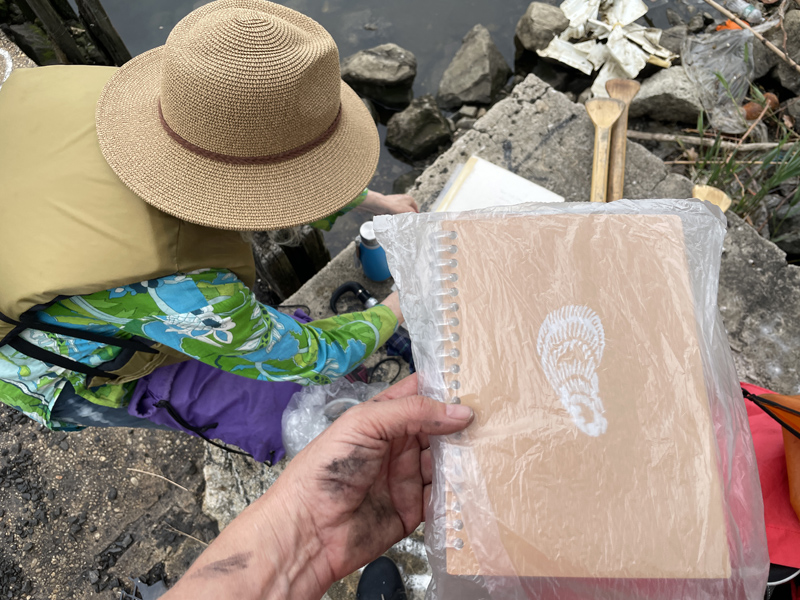
and for this beautiful mussel themed sketchbook, hand-printed by Priscilla.
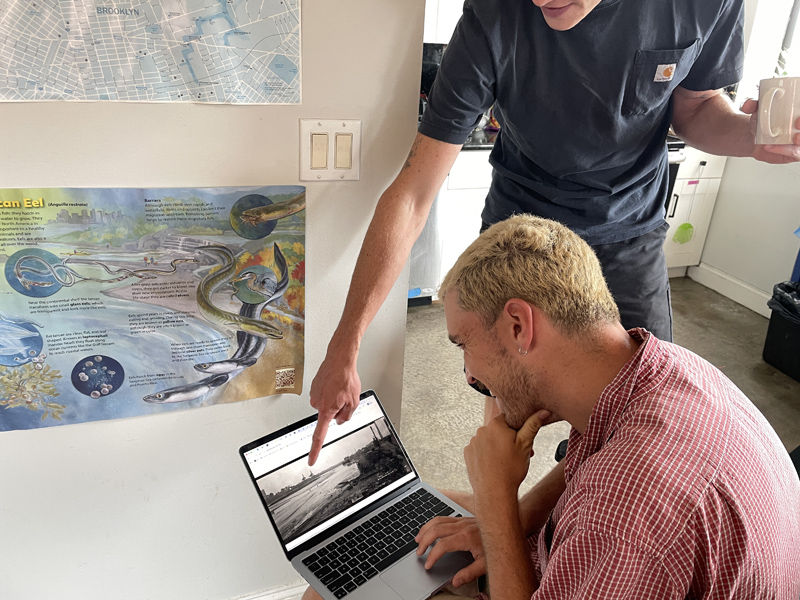
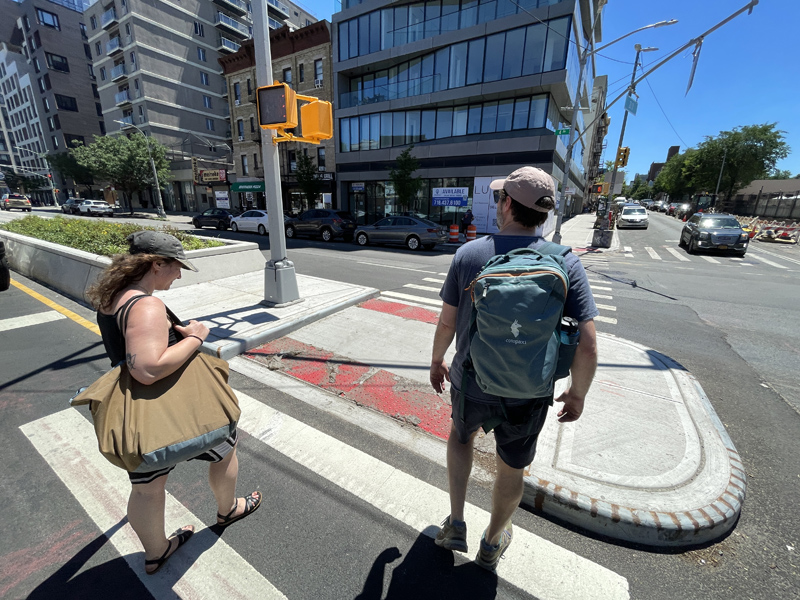
On the way home, we stopped at the Newtown Creek Alliance. Gus Perry and  Hart Mankin showed us the archive Gus built of old city photographs featuring the creek.
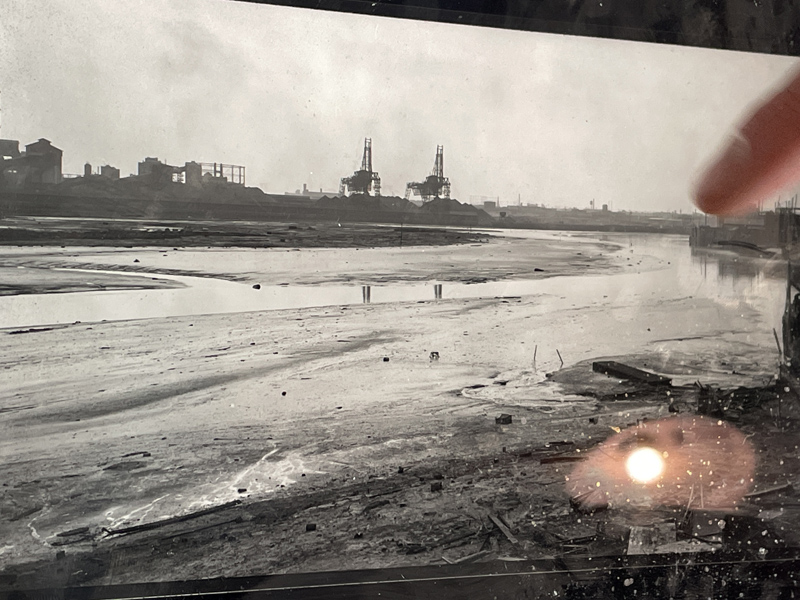
One is of Mussel Island, a distinct rise in the mudflat during an extremely low tide. (Check out the whole archive for an incredible dive into Newtown history)
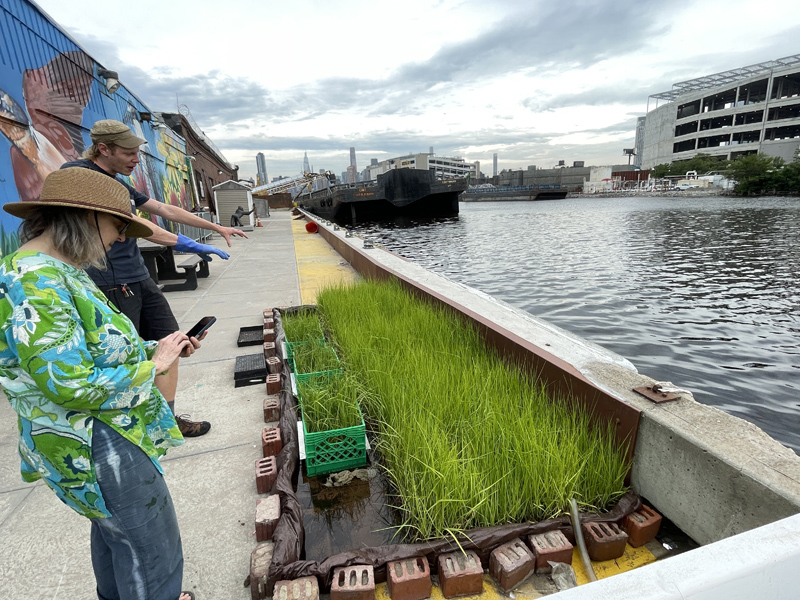
Then we walked out to NCA’s newest cordgrass tank, built as a living counter-proposal to the hard sealed bulkheads the EPA has planned for the creek’s cleanup.
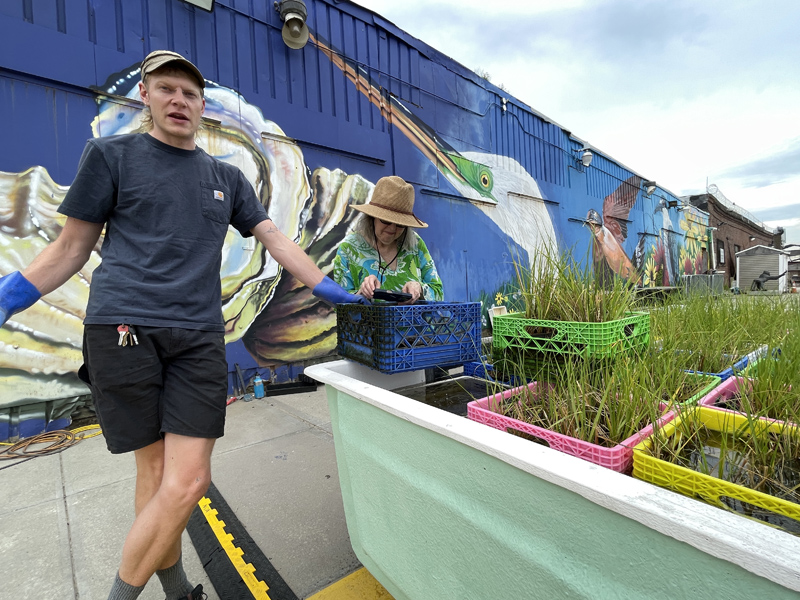
Gus showed us how the tank works; he can lift each crate to check on the mussels living underneath.
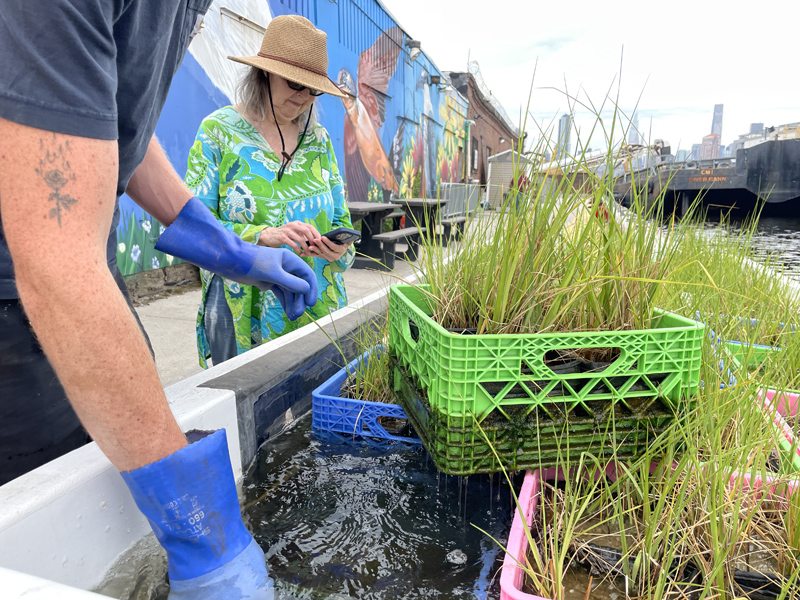
You can watch the mussels filtering water; pumps fill the tanks twice a day on a timer to match the tide, and hundreds of mussels clean the water, a miniature model of what the whole creek used to do on its own.
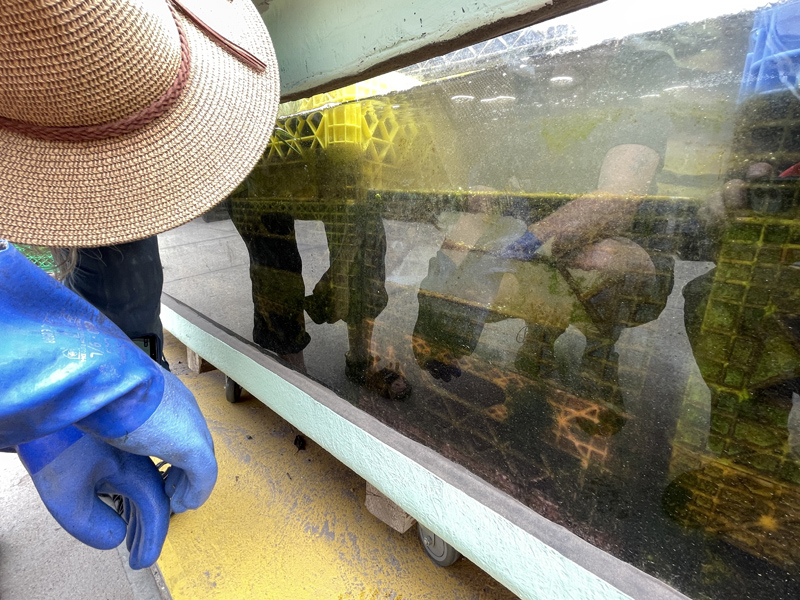
It is a perfect way to peek inside the machinery of an ecosystem,
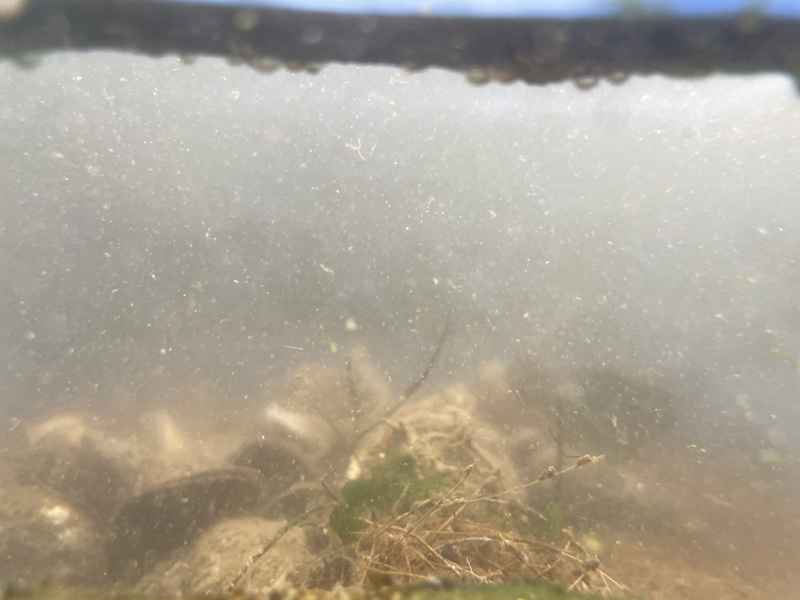
and to remember that it could all come back with careful stewardship.
East River with Jenny Polak and Ann Reynolds

June 17, 2026

I left Greenpoint on a beautiful windless day,

bound for Socrates Sculpture Park with an artist, Jenny Polak and an art historian, Ann Reynolds.

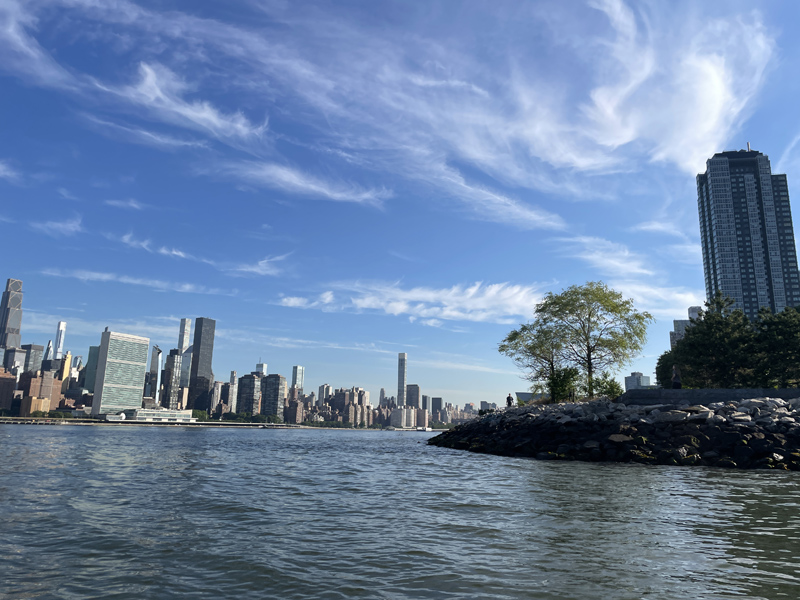
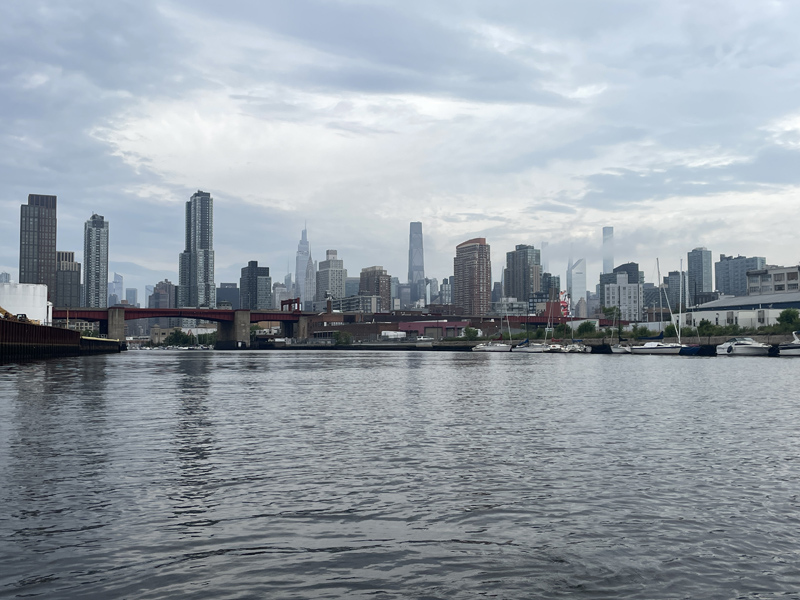
We passed through the intermittent shadows of the LIC condominiums around Hunters Point.

Jenny gave me a pin from the new website for Fall of Freedom, a gathering of artists and activists that she helped start with a group of artists including the playwright Lynn Nottage.

It’s a place for people to post artwork, actions, and resources about creative resistance to authoritarianism. Jenny says the ‘fall’ is not a warning but a time frame. It started last November with a wave of 600 events, and it’s building toward an even bigger push this October 2–4.

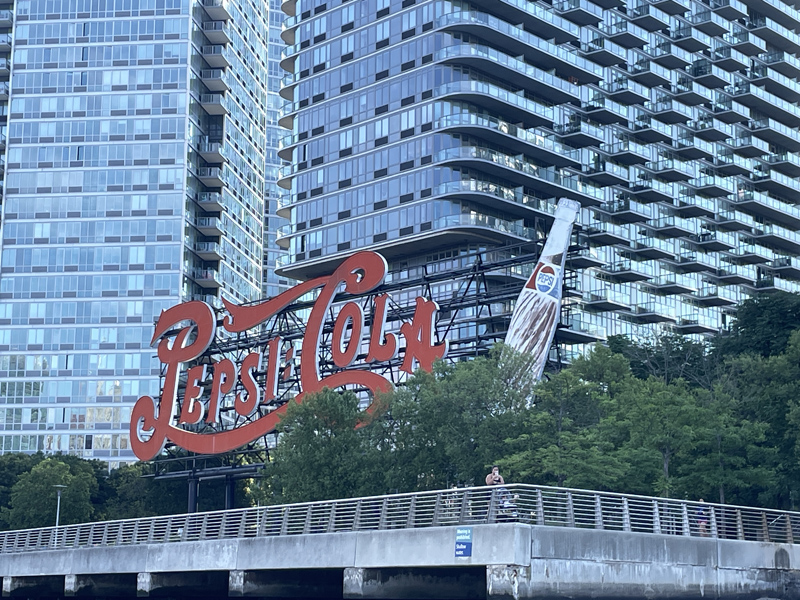
We passed the Pepsi sign in LIC, and I asked how the area looked when Jenny lived here in the 90s.

“Empty lots,” said Jenny. She and her friends used to crawl under a fence around the Pepsi sign and watch fireworks over the East River.

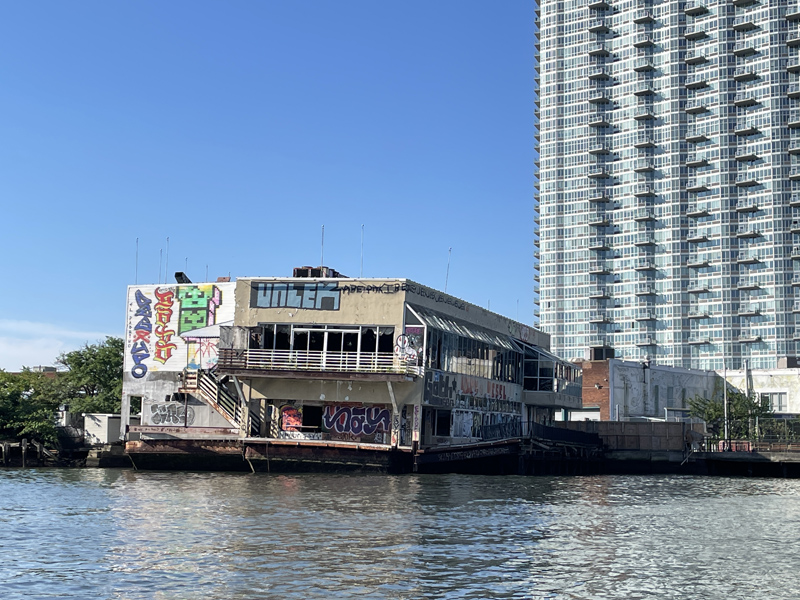
We passed a derelict floating restaurant right beside shining new towers,

and thought about how investment and crumped disinvestment can sit side by side here.

The current was pushing us 5 or 6 knots, but it was hard to tell,

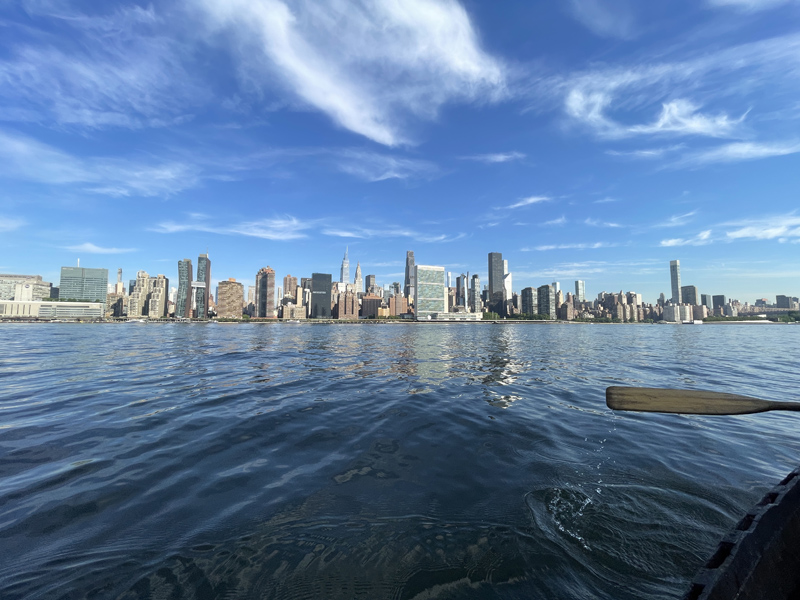
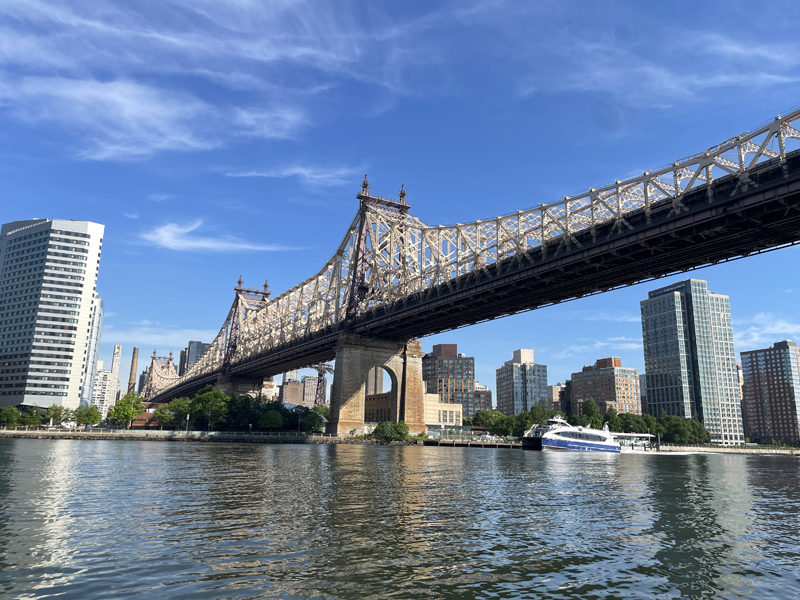
until we got to the Queensborough Bridge and we could see the water pushing against the bridge piers as though it was a moving barge.

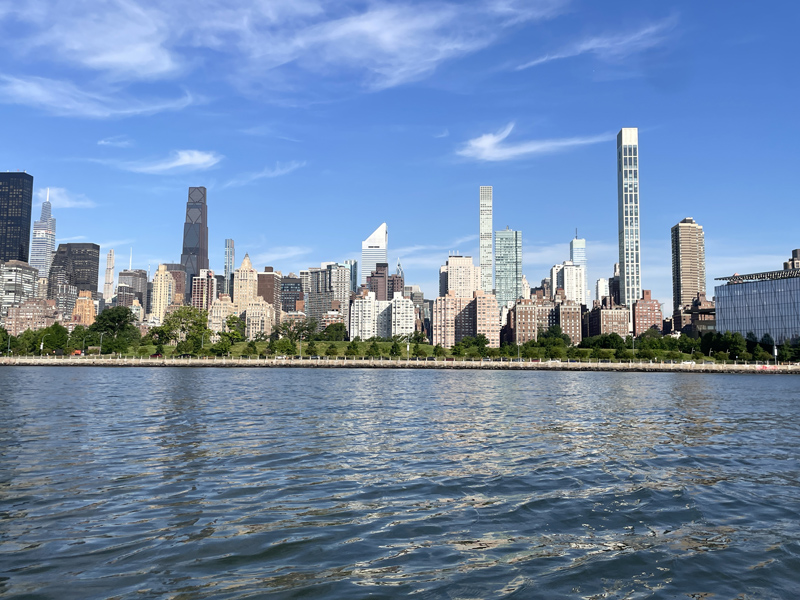
We floated past Roosevelt Island,

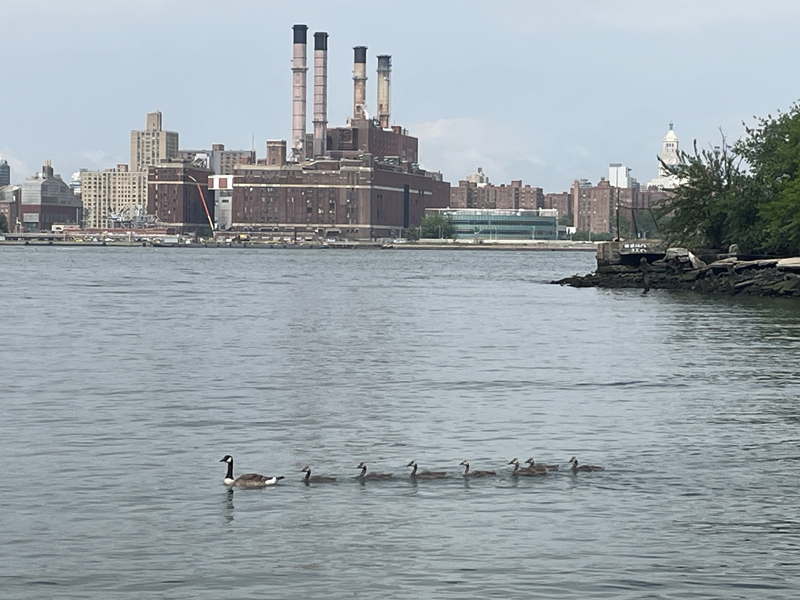
and the Ravenswood Power Station,

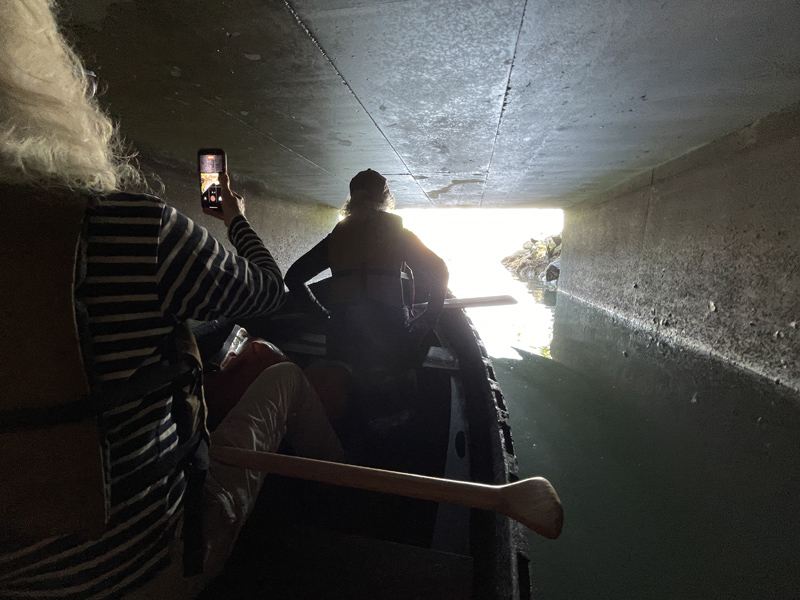
and up to the drainage pipe just south of Socrates, looking up at the Mark di Suvero sculptures.

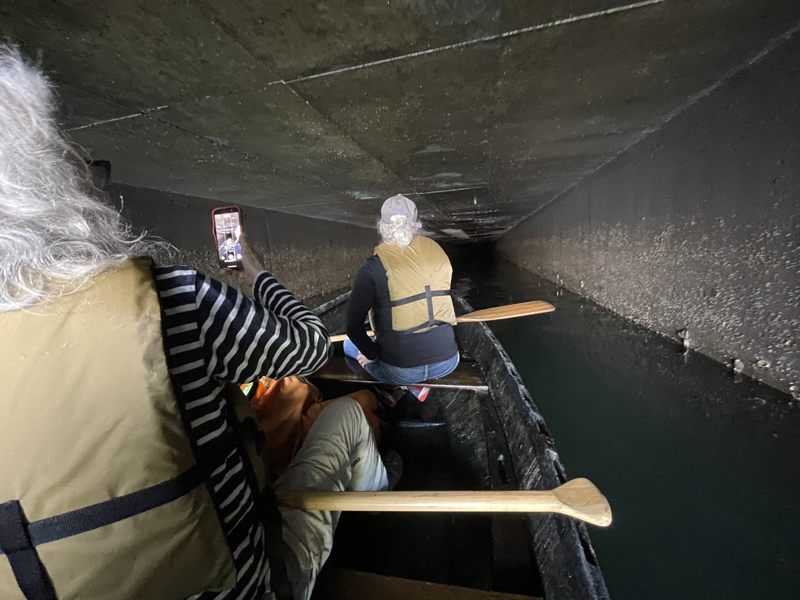
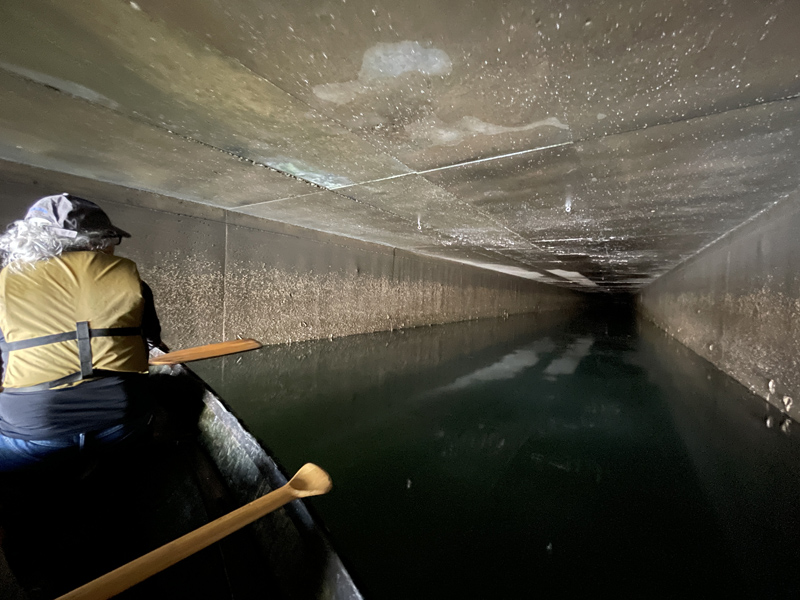
As we floated into the sewer, Ann told us about Primary Structures, the 1966 exhibition at the Jewish Museum.

This was when sculpture was considered the vanguard of all cultural production, and the debates that surrounded minimalism reverberated through society.

She said someone like Robert Morris might not have even called his work sculpture at the time. For him, objects were primary units of information.

Di Suvero was the opposite: building from assemblage, collaging things out of the actual world, using remnants of industry with all their messy references.

Ann narrated the whole argument as we rounded the cove of Socrates Sculpture Park.

I thought about how an art object outlives its argument, and goes on making new ones for new generations.

We landed on a beach near Socrates to take a look around.

I think of Socrates Park as one of di Suveros’ great works, because it’s not just one kind of object, but many. It continues the debates of his generation, but in many different ways.

Jenny showed us an image of her piece, which was there in 2024, Offshore, made from letters by incarcerated people.

She started working on it during the pandemic, and she’s still thinking about new forms that it can take.

We sat on the beach and talked about more things, the slippery nature of language, etc.

I was inspired by Jenny and Ann to be braver,

not just about water and boating, but about everything.

Floyd Bennett Field with Megan Elevado

June 15, 2026

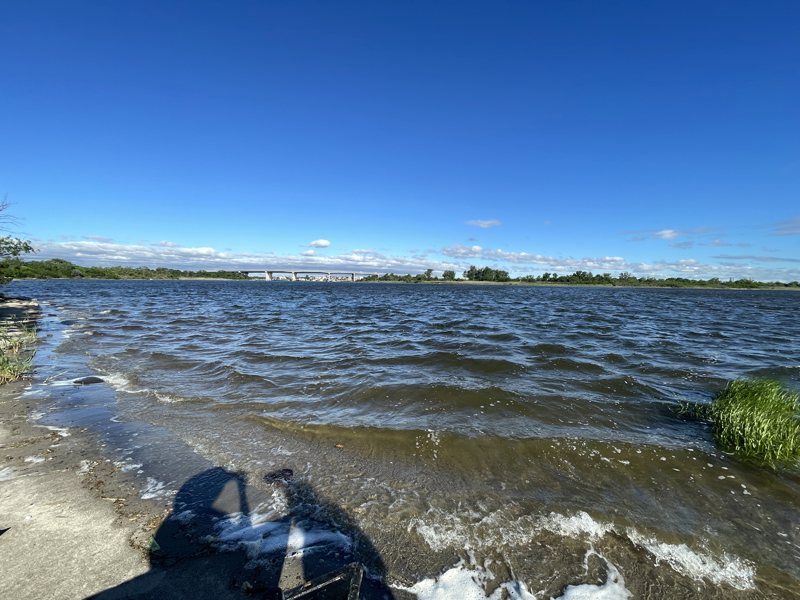
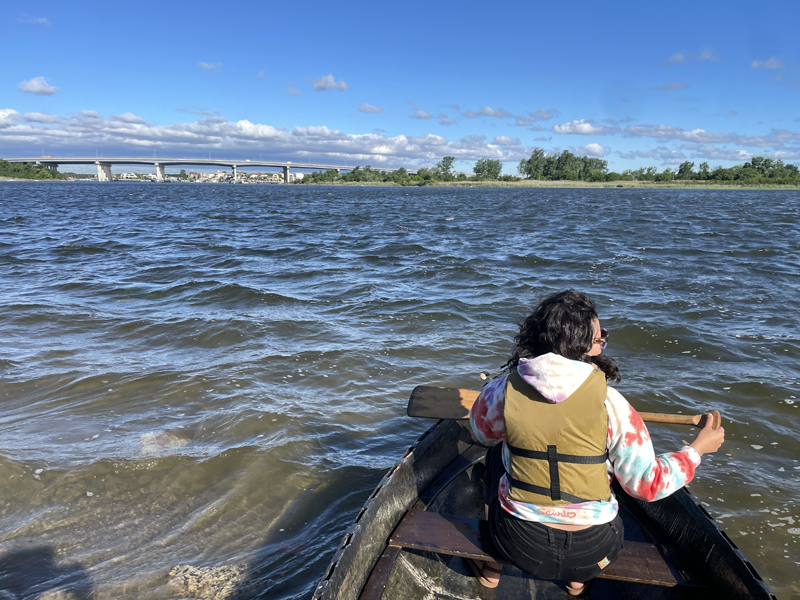
Megan Elevado and I met at Floyd Bennett Field for a trip up into Four Sparrow Marsh,

but we couldn’t move the boat against the wind.

We fought it for a while,

then gave up and walked, pulling the boat in the other direction.

Once around the point, I thought the wind would be at our backs,

It was almost too much, and we surfed along on the rolling waves.

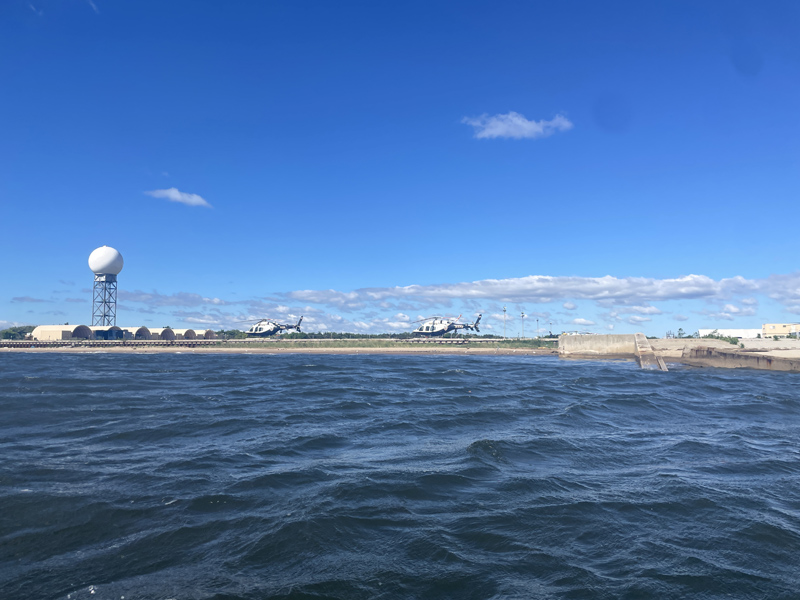
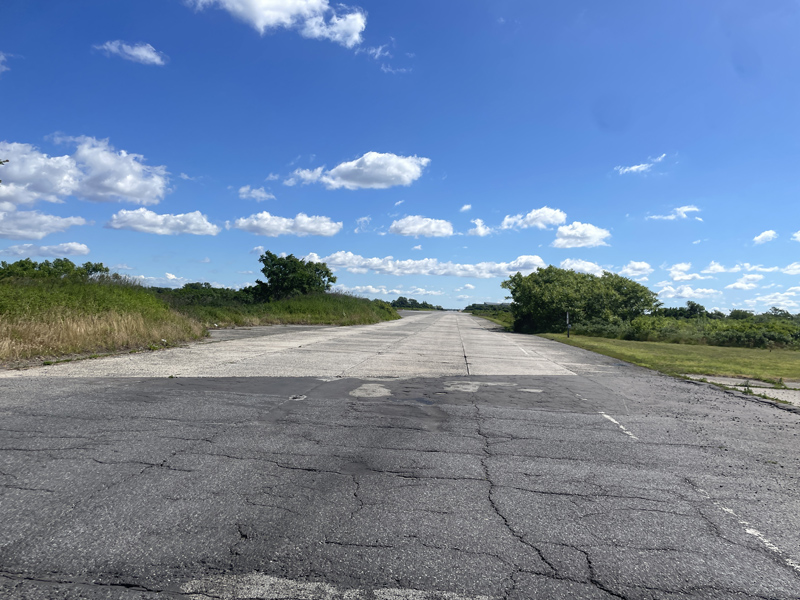
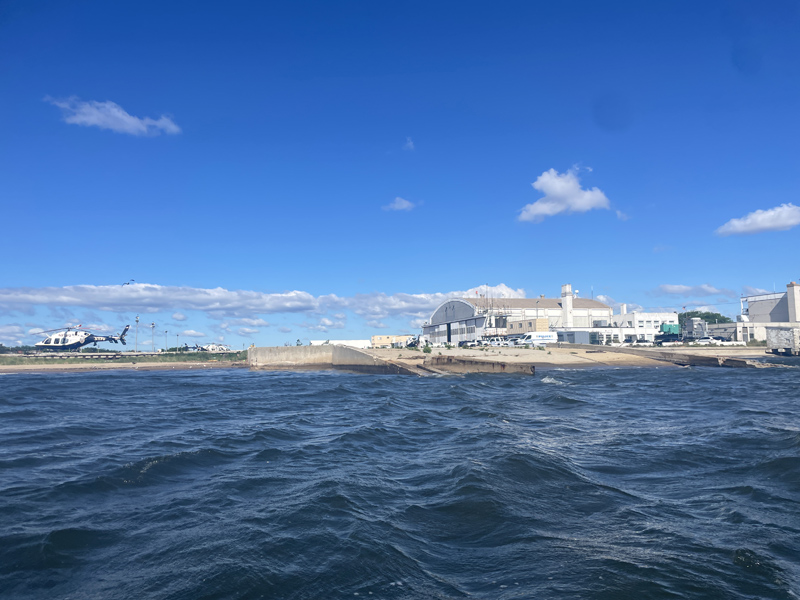
We passed the old hangars of Floyd Bennett Field,

and Megan told me about the aviation museum, with planes from when it was a naval air station during World War II.

We got to the other side of Floyd Bennett Field faster than the boat has ever been and left the boat on the Bottle Beach side to walk back across the field on foot.

Megan is an artist and historian who has spent years researching the natural and human history of this place. Megan grew up out here and knows all about the area,

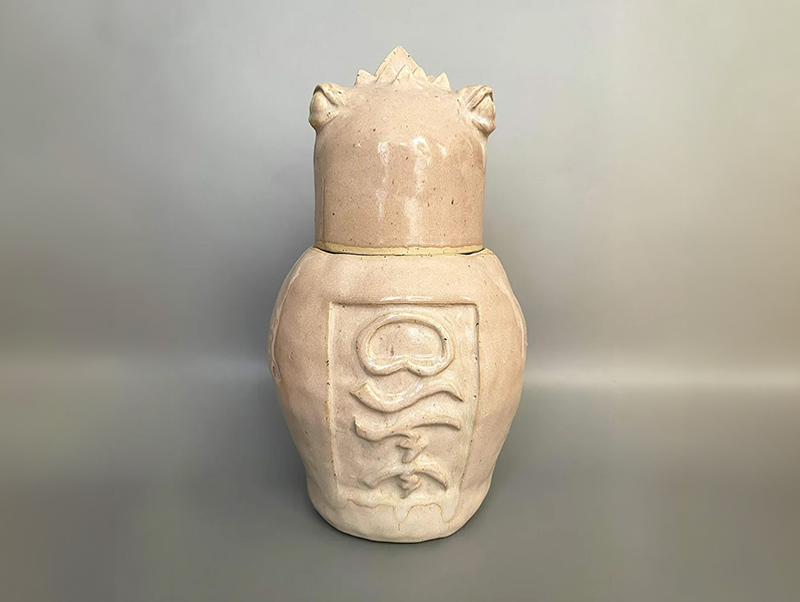
She makes creatures out of clay, real and imagined, avatars and guides for a less human-centric world.

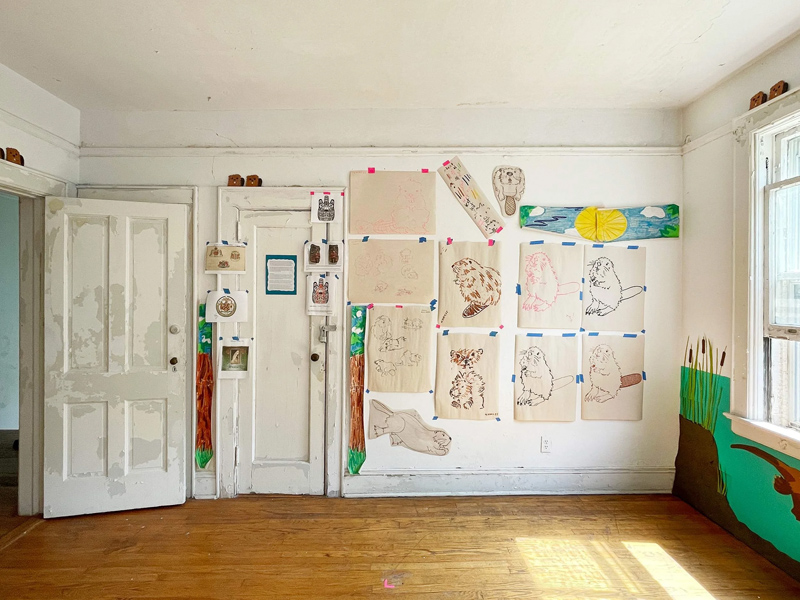
Her installation about beavers, Building Like Beavers, was on Governors Island last year during her AnkhLave residency.

She finally explained one thing I’d always wondered: that Jamaica Bay got its name from the Lenape word for beaver, which were abundant before European trappers hunted them for the fur trade.

As a historian, she looks for non-Western and Indigenous knowledge, and has worked at the American Museum of Natural History, Cooper Hewitt, and the Tenement Museum.

She was just named their 2026 Curatorial Fellow for AnkhLave, a nonprofit arts residency for BIPOC artists on Governors Island.

Also, she told me she wants to build a boat. I told her, if you still want to after today, that’s a good sign.

Later that day, she texted, “It was nice to be reminded that humans are beholden to the elements and we have to know when to respond and change plans instead of power through!”

Thank you, Megan!

Gowanus Bay with Sarah Yoes and Jordan Greenblatt

June 13, 2026

I met Sarah Yoes and Jordan Greenblatt at Valentino Pier in Red Hook and we launched into Gowanus Bay.

Out in the middle of the bay we were a mile from either shore, farther out than the Tide Taxi usually goes.

But the day was unusually flat and calm, and we stopped to enjoy the open space.

Our destination was the new beach at Bush Terminal, a park made from the old Industry City piers.

These piers were once a great center of manufacturing and shipping in Brooklyn. An advertisement from 1902 boasts “1,400-foot piers, 27 steamship lines, and every known storage facility.” (image from NYC Municipal Archives)

But by 1970 the piers had been left to rot, and the basins between them were filled with construction debris. (image from Brooklyn Public Library)

After years of community organizing, partnerships with the New York City Economic Development Corporation and the State Department of Environmental Conservation, and the largest brownfield cleanup grant in state history, a new park opened to the public in 2014. (photo from Bush Terminal Park’s website)

We drifted past a rocky breakwater separating the bay from the inlet and found a landing spot.

Jordan and Sarah were the perfect crew to read these newly constructed lands; they are designers at WXY, a firm that works on public space.

Jordan pointed out the edible plants along the shore, and I tried to sample everything.

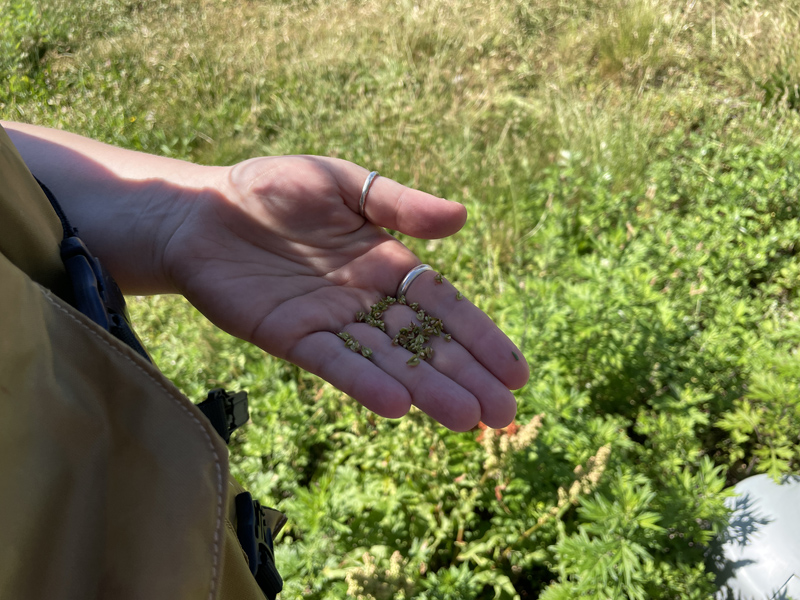
“This is a grain related to quinoa,” said Jordan. It was green tasting and deliciously bitter.

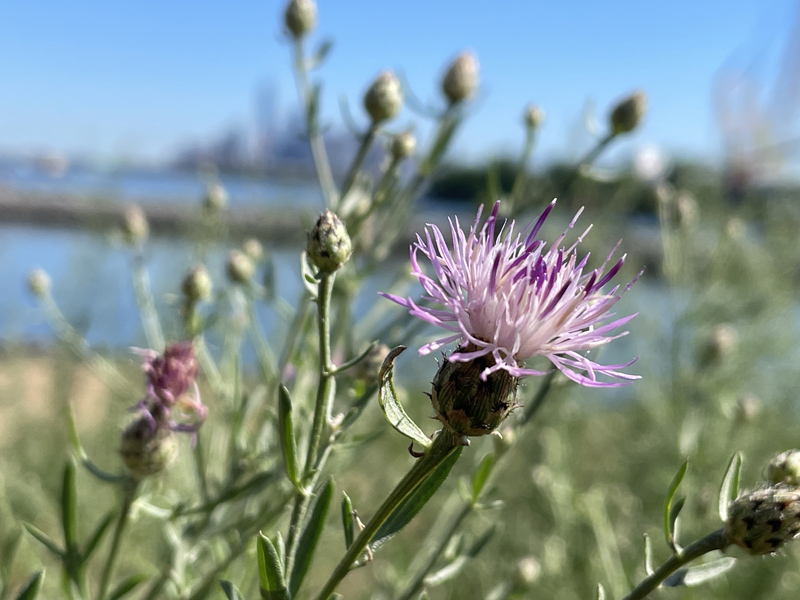
Jordan pointed out perfect tiny artichokes beneath each thistle flower.

We got back in the boat and paddled along the piers.

We saw the pieces of an enormous windmill, staged out and being loaded onto a ship.
Sarah described the ‘cyborg landscape’, an idea discussed in urban planning and architecture circles.

It refers to a place like the NYC waterfront, where you can no longer separate the natural from the engineered,

where tide ponds are built from chunks of broken-off highway and planted forests grow out over disused shipping terminals.

All the buried industry and fresh wind-energy components are part of one hybrid body, an interdependent system where living and non-living elements evolve together…

“You should write this book!” I said. “Somebody may already be working on it,” she laughed.

We were joined for the last leg into the Gowanus by Andrew Hammill, who is curating a show this month about water at 198 Gallery in Brooklyn.

For the show, he designed a beautiful moving map of water from the land to the harbor, based on Eymund Diegel’s historical flow-field visualizations.

We walked up into the neighborhood and talked about the water that must be flowing there now, deep beneath the street.

Here’s my video from the show, which shows more of the trip!

Elders Point with Jessica Maffia

June 12, 2026

We had plans to paddle out into Jamaica Bay from Floyd Bennett Field, but realized that canals already surrounded our meeting point (This is the Howard Beach A train stop.)

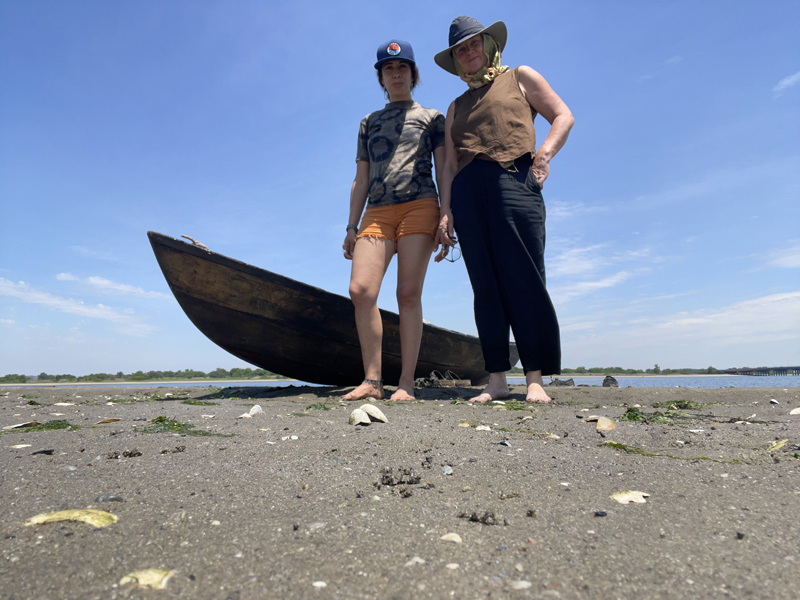
So we found a pretty launching spot,

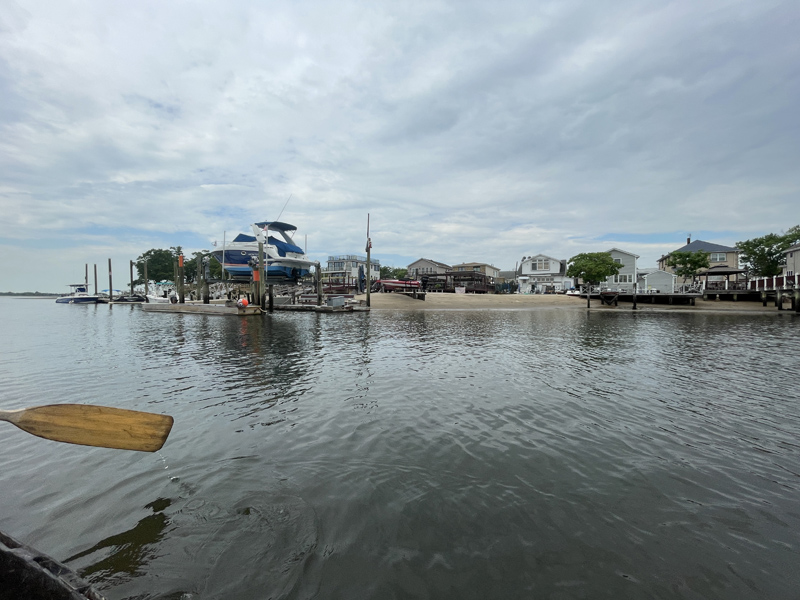
and paddled out between houses on stilts and motorboats.

It felt more like Maryland than New York City.

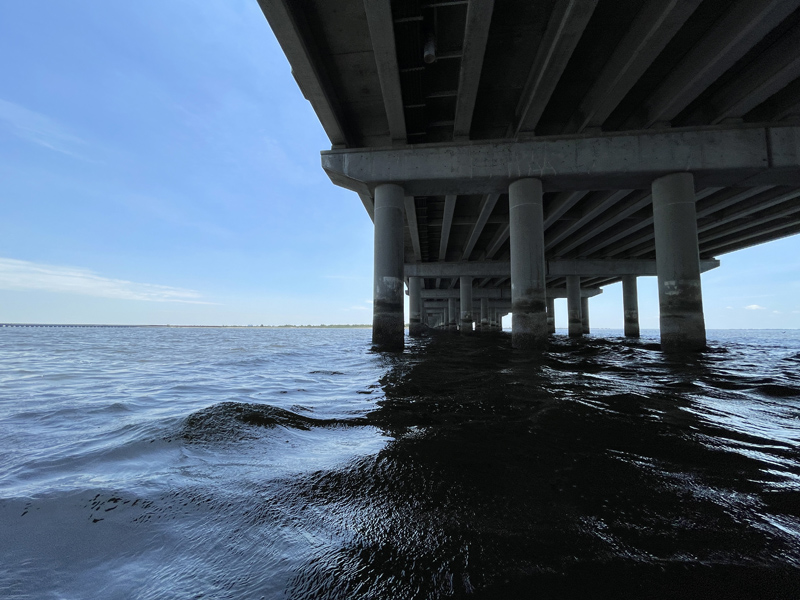
Then out into the bay under the Cross Bay Boulevard.

Tiny mollusks clung to the bridge.

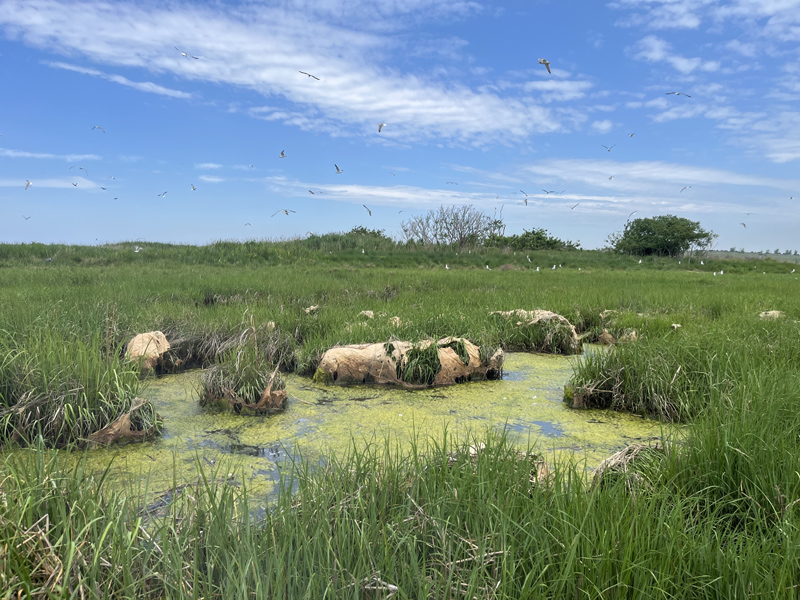
We paddled against the wind to Elders Point,

a little strip of an island near the Canarsie Pier.

The tide was going out,

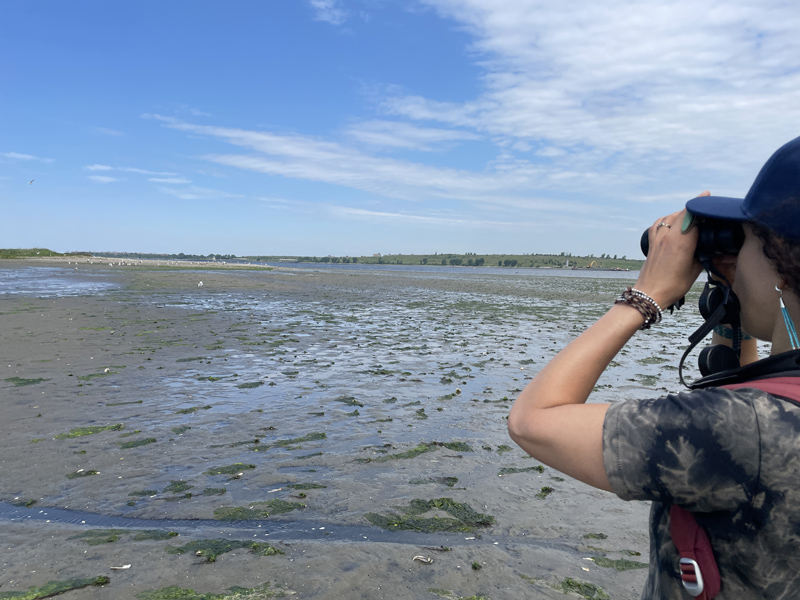
and we walked the perimeter of the island.

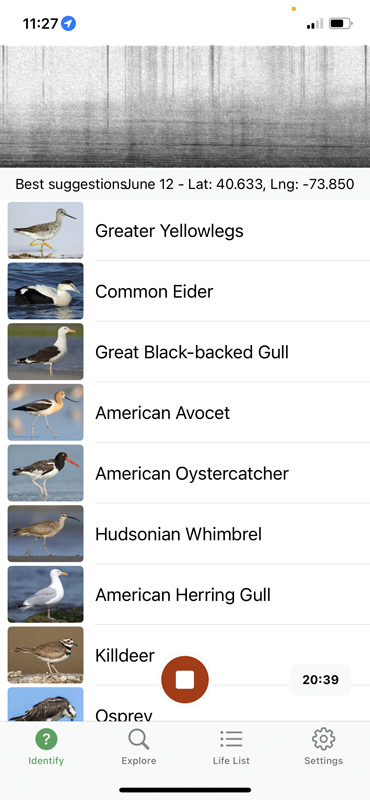
It was interesting to be out there armed with apps. In a few minutes, Merlin Birdfinder identified six bird species by sound.

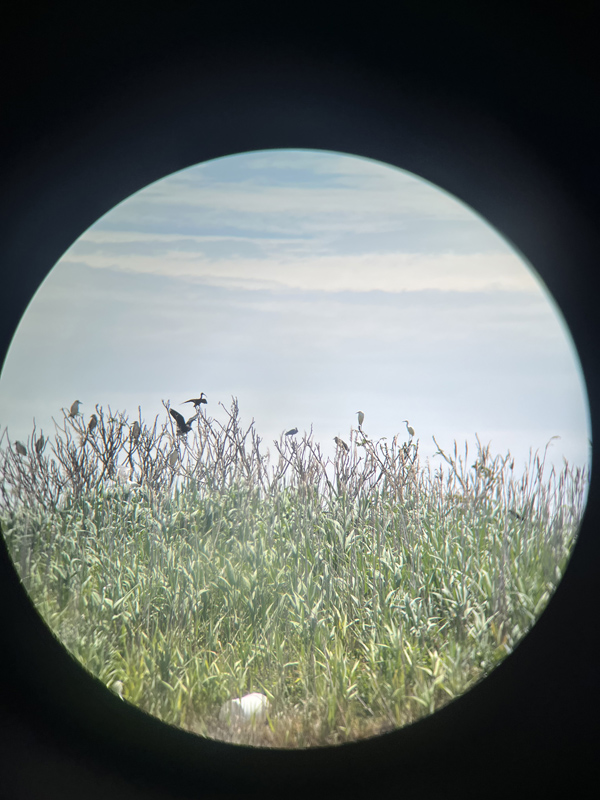
But Jessica identified the most special one the old-fashioned way, with her sharp eye and knowledge of the area.

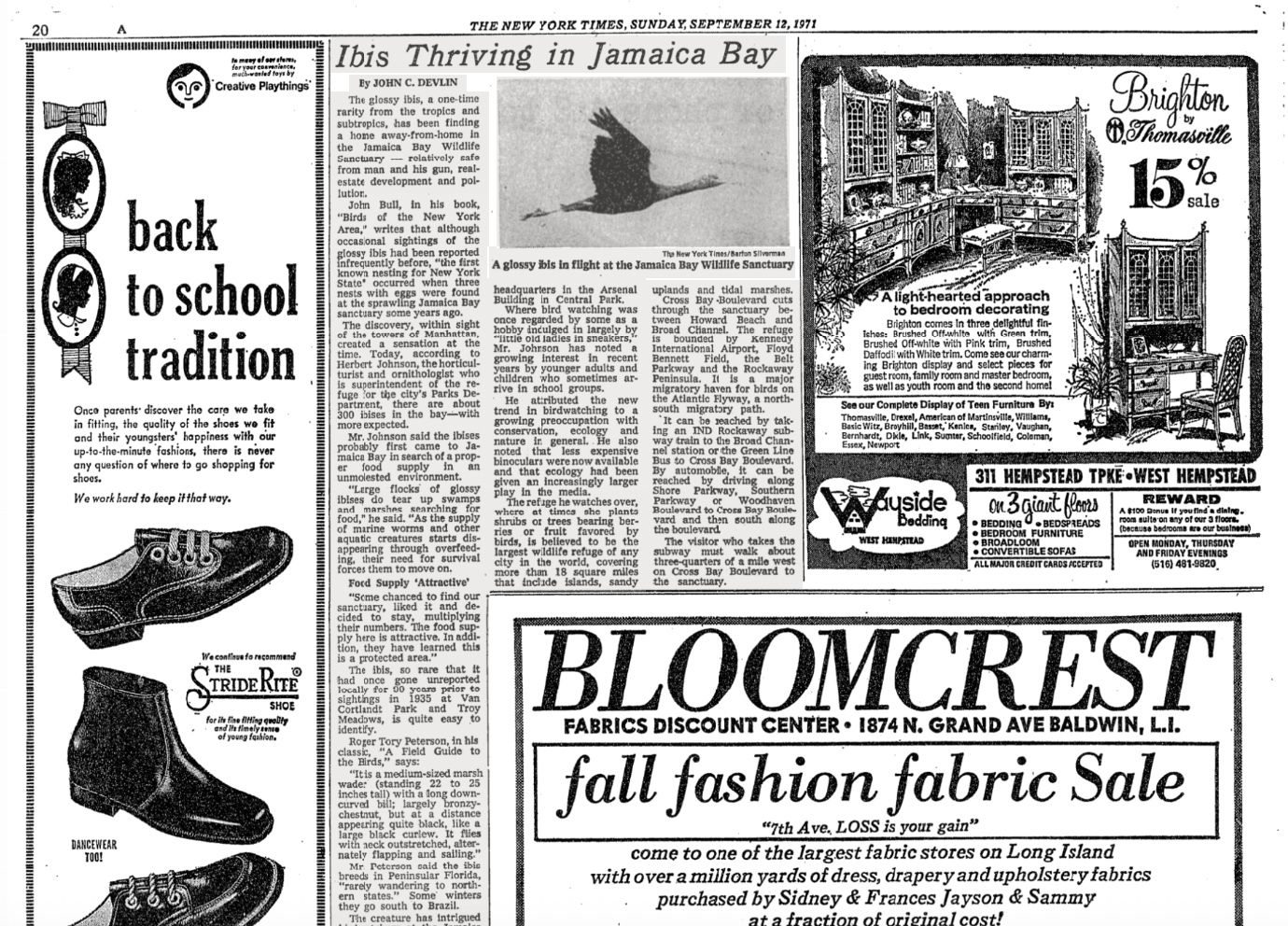
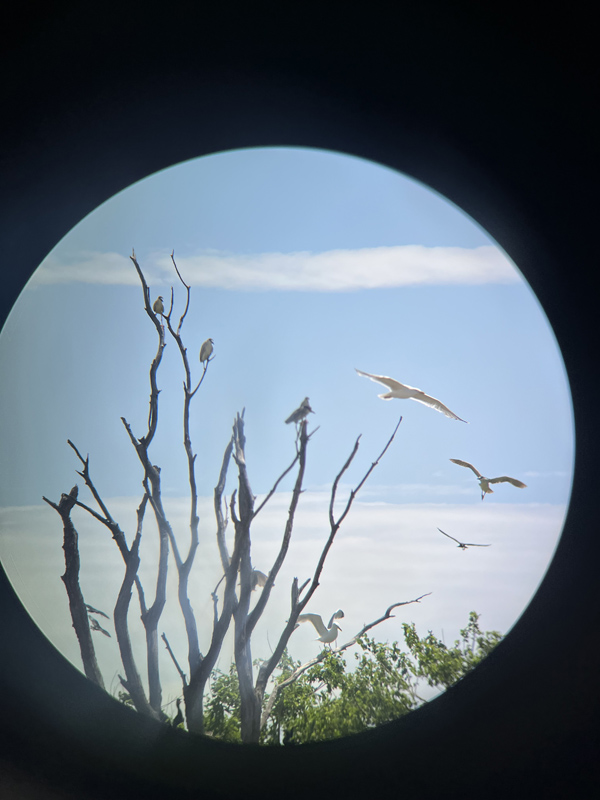
A Glossy Ibis. Not just one, but what seemed like a whole colony.

They are rare and relatively new to the area. Here is an article in the New York Times about their arrival in 1971.

Now their numbers are in decline, along with others here, the Night Heron and Egrets. (These are Jessica’s shots, holding her iPhone up to the binoculars.)

Jessica grew up in Manhattan, not thinking too much about nature.

But one day, she took a walk around a Brooklyn block with Lisa Nett, organized through the Brooklyn Brainery. Something shifted. She started noticing the trees and the birds, and all the living things that surround us in the city.

Now her art practice centers on natural things; how they intersect with our bodies and emotions. This is an image from her artwork Mugwort Rising, Whispering Women, 2024, a video installation projected on long pieces of gauze.

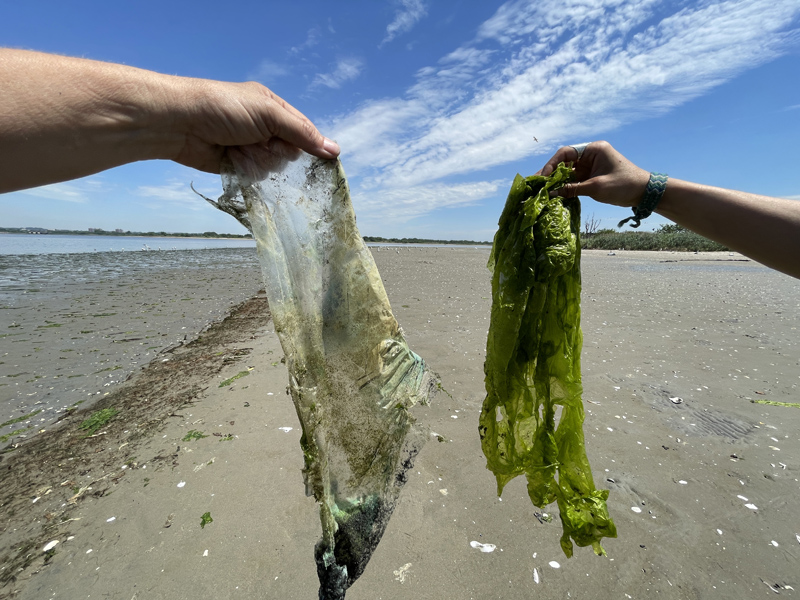
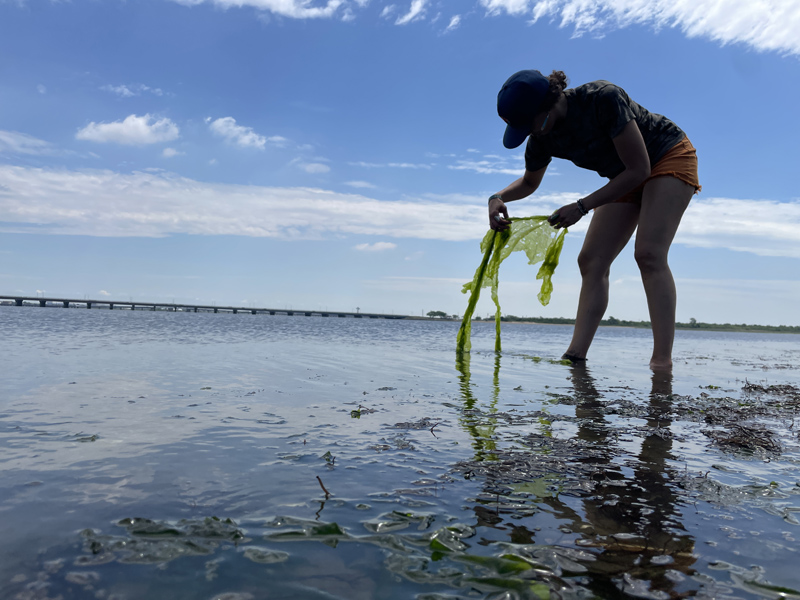
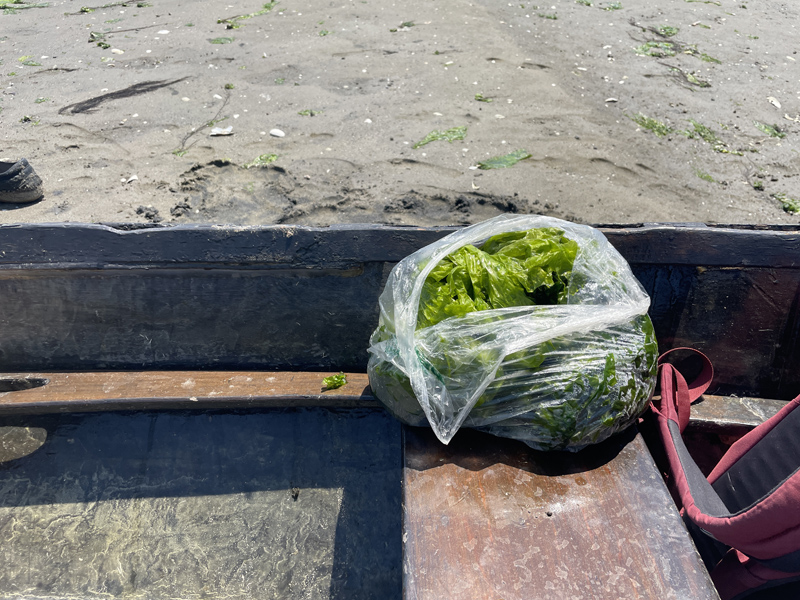
As we were leaving the island, Jessica collected some plants. “Sea lettuce,” the phone said.

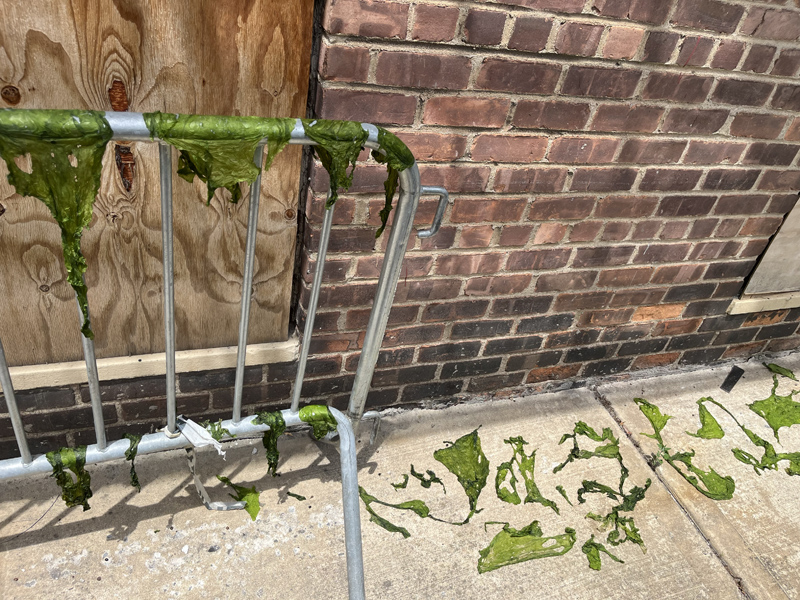
We had seen it dried like perfect paper mâché sculptures around the cord grass.

She sent me a picture later, the beginning of a new experiment.

This weekend, Jessica performs Comfort Sculpture at Glasshouse (251 Springtown Road, New Paltz) for Upstate Art Weekend, June 27–28. Here’s the info!


Bushwick Inlet with Lila Gould

June 11, 2026

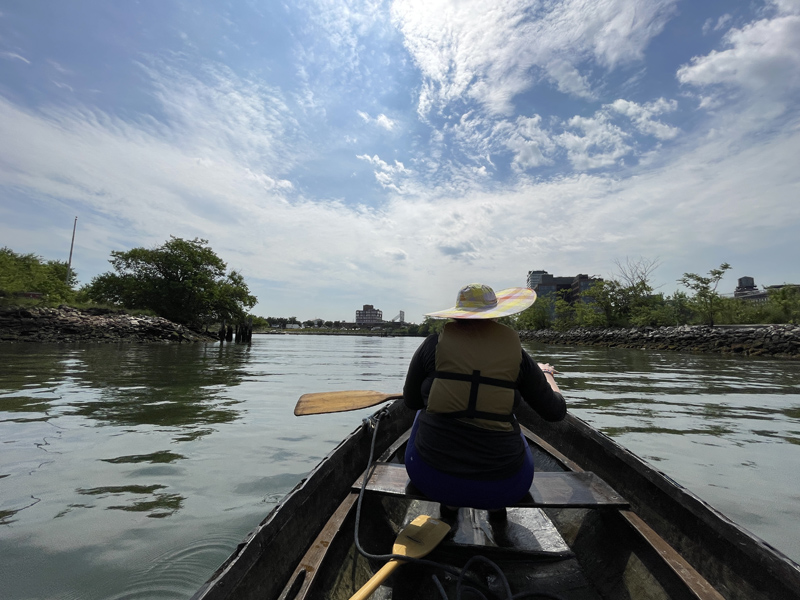
Lila Gould and I left from Greenpoint and traveled south with the tide to the new Bushwick Inlet Park.

We were in the middle of a heat wave, but it was nice and cool on the water.

The tide was moving fast, and we steered through remnants of the old piers,

past the new towers along the Greenpoint waterfront,

and pulled the boat into the Bushwick Inlet.

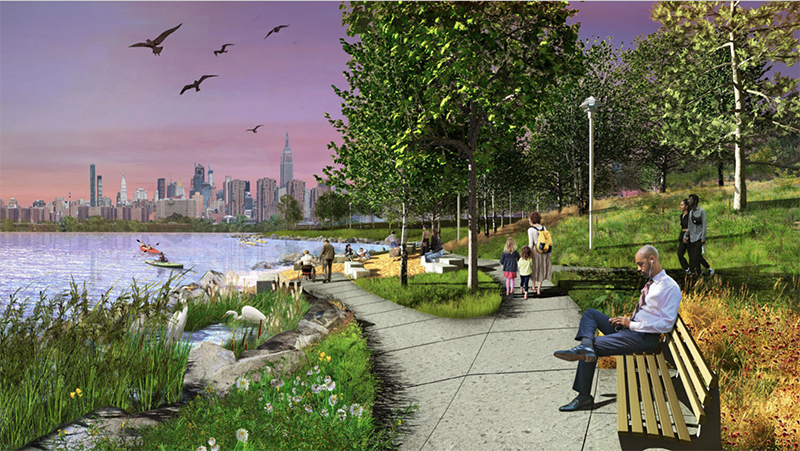
The park exists now because in 2005, the city promised North Brooklyn 28 acres of waterfront to sweeten the rezoning that let all those luxury towers go up.
It delivered only a fraction, and even that took years of inventive activism: paddle-ins, fence banners, a whole film festival for the park. (Rendering by landscape architect Abel Bainnson Butz.)
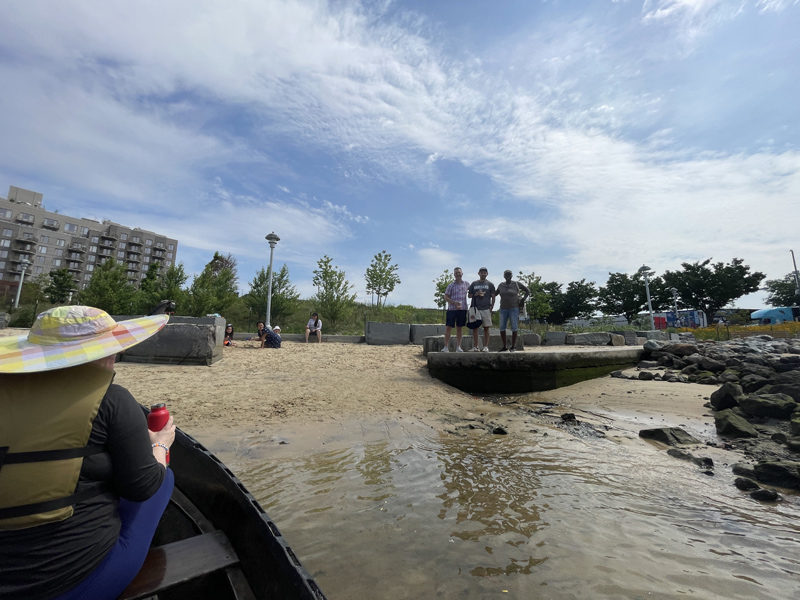
The real thing looks even better, with people hanging out on the bank, sitting and chatting.
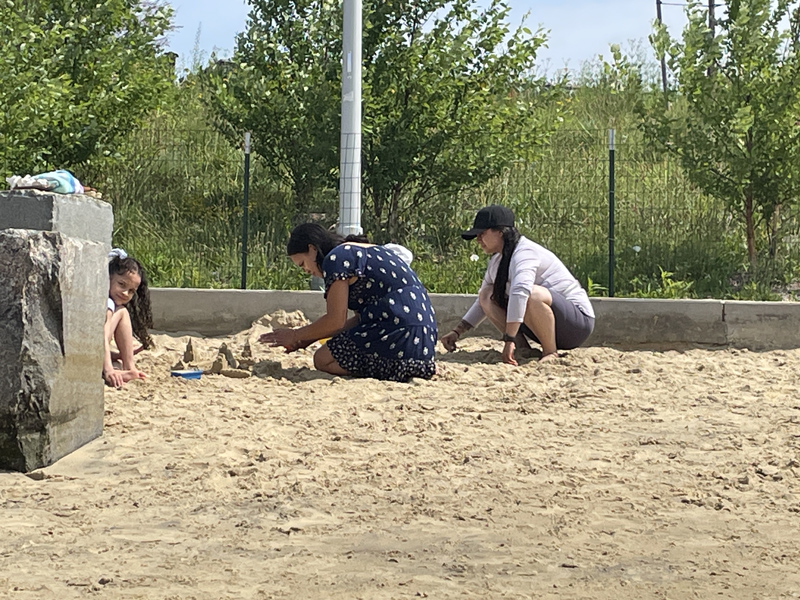
The most amazing thing was a family building sandcastles at the water’s edge.

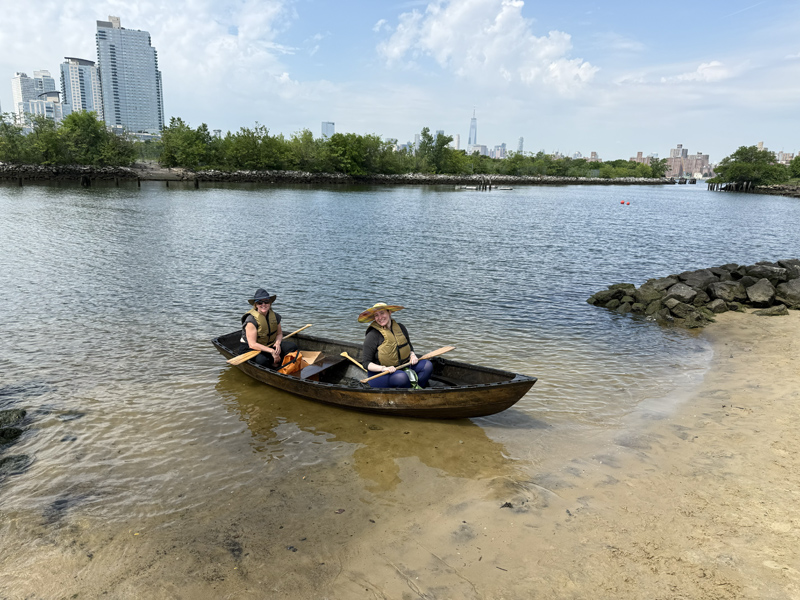
Someone airdropped us a photo of ourselves. It seemed rare and special, and also like the most natural thing in the world. “The whole East River should be like this!” we thought.

Lila is the daughter of two artists and grew up in Red Hook, a neighborhood shaped by its waterfront.

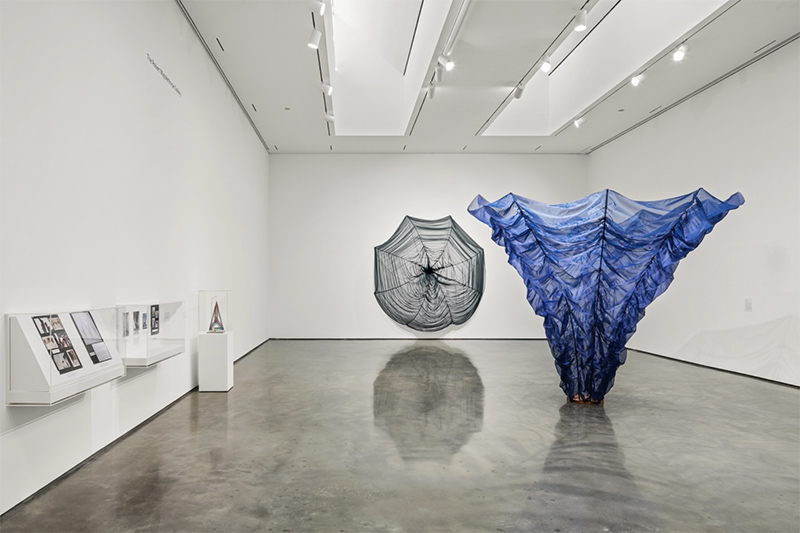
It makes sense that her recent graduate thesis exhibition at CCS Bard was with the artist Anne Healy, a show called Logic of Intuition.

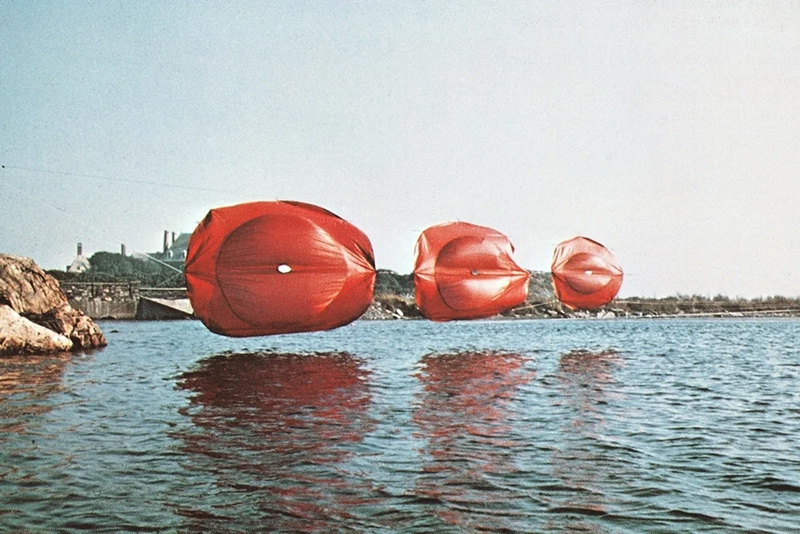
 It is the first solo exhibition of Healy’s work in decades, focused on her sculptures from the 1970s, when she was hanging enormous sculptures made of sailcloth, and connecting them to bridges and along the shore.

We talked about the amazing artwork that was being made in the 1960s in NYC by women like Anne, ephemeral and monumental at the same time. (Anne Healy’s piece Hot Lips, 1970)

We landed the boat around the other side of an iron fence, disconnected from the park,

and had lunch.

Hopefully, this part will be part of the park someday

but that day it was just for us.

Urban Omnibus with Nancy Nowacek

April 30, 2026

Nancy and I met at the end of Manhattan Avenue and paddled out through the forest of new high-rise condominiums in Greenpoint.

We let the tide carry us around the LIC peninsula and situated ourselves at Gantry Plaza State Park.

This spot wasn’t as comfortable as planned. Ferry wakes reflected off the sea walls around us, making even bigger waves inside the cove.

“Don’t worry,” I told Nancy, “we can always just jump over this gate and walk home.”

But Nancy wasn’t worried. Our job that day was to record and interview for Urban Omnibus about the 20-year arc of the Tide and Current Taxi.

Nancy knows a lot about he city’s waterways and the politics of who gets to use them, she has spent part her career on it, from The Bridge, her a proposal for a floating pedestrian crossing of the East River, which led to co-founding Works on Water in 2016, a collective of artists committed to the intersection of waterways, increasing urban density, and the changing climate.

Nancy pointed out something that I never thought of before: that the Tide and Current Taxi started the exact year that the NYC City Council approved the rezoning of the Greenpoint and Williamsburg waterfronts, 2005.

It was no coincidence that the time marked so many changes: that decision was one of the most significant land-use actions in the modern history of NYC.

With both Nancy’s and my artworks on the water, we had been there for the whole thing.

For this interview and for this post, I looked for pictures to make a side-by-side comparison of the Greenpoint waterfront then and now, but it’s complicated.

It is not just the buildings that changed, it is everything: the vantage point, places we could actually get the boat, even the things that happened were different. We were different.

But Urban Omnibus found perfect ones, and their story weaves a perfect tale of images through the decades.

Thank you, Nancy Nowacek, Ingrid Burrington, Sasha Portis, and the crew at Urban Omnibus for putting the Tide and Current Taxi in such a great context, and with such thought and attention.

Here is the article with Nancy!

Tide and Current

↑ Return to Top of Page ↑